Henna Appointment Etiquette: What to Do Before, During and After

Good henna etiquette comes down to five habits: book clearly and in writing, arrive on time with clean and dry skin, eat beforehand, plan for the paste to stay undisturbed afterward, and settle deposits and cancellations before the day. Do those, and your artist can focus on the design, which is how you get a crisp, dark stain. This guide walks through each step in order, from the first message to aftercare, and covers safety questions worth asking before anyone touches your skin.
TL;DR
Put the date, time, design scope, deposit and cancellation terms in writing when you book.
Arrive on time, fed, with clean, lotion-free skin and clothing that leaves the henna area uncovered.
Leave time after the session for the paste to dry and stay on. Do not schedule anything that needs your hands or feet right afterward.
Ask what is in the paste. Natural henna is brown or orange-brown. Never accept “black henna”, which can contain PPD.
Give notice if you must reschedule, and pay the balance the way you agreed.
Table of Contents
Booking: be specific and put it in writing
An artist’s calendar is their income, and a henna session often blocks out an hour or more for one person. Treat the booking the way you would treat any other appointment with a small business.
When you reach out, include:
The occasion and date. A casual afternoon design is a different job from a bridal or baby shower session.
Where it will happen. Studio, your home, a winery, a party room. Parking, stairs and space for a chair all matter.
How many people. For groups, say how many guests expect designs and whether children are among them.
What you want. Share a few reference images and the size and placement you picture: a palm, a forearm, a belly.
Your deadline. If the henna must look its best for a photoshoot or ceremony, say so, so the artist can work backward from it.
One piece of advice from a booking guide aimed at U.S. and U.K. brides is to compare quotes on total scope, meaning duration, coverage and backup policies, and not only the headline price (PakStyles). It is good practice for any client. A lower price that covers one small design is not the same as a higher price that covers two hands and an hour of work.
What our own pricing looks like
So you know what a clear quote can look like, here is how we publish ours for group events on our Whenna Events page: Basic starts at $25 per participant, Plus at $35 per participant, and Premium Option 1 at $35 per design per participant. Premium Option 2 is $200, and each additional hour is $85. Public events and corporate workshops are quoted on request. The point is not our numbers. It is that you should be able to see what each tier covers before you say yes.
Preparing: what to wear, eat and clean
Most problems at henna appointments come from preparation, not from the artist’s skill.
Eat first
You may sit still for a while, and once the paste is on you cannot easily use your hands. Eat a proper meal before you arrive. Plan to drink water too. A hungry or lightheaded client fidgets, and fidgeting smudges lines.
Come with clean, dry skin
Wash the area with plain soap and water and dry it. Skip lotion, oils, sunscreen and self-tanner on the henna area that day. Oils are the most common culprit: they stop paste from sitting cleanly on the skin. If you plan a manicure, schedule it before henna, not after, so your hands are not wet or scrubbed in the hours that follow.

Dress for the design
For hands and arms, wear short sleeves or sleeves that push well above the elbow. For feet, wear open sandals or flip-flops and bring them with you. For a belly design, a loose, stretchy top or a crop that lifts easily keeps fabric away from wet paste. Wear something you do not mind staining, because paste and the sealing sugar mixture can mark clothing.
Work backward from your finish time
The same booking guide advises working backward from the time you need to be finished and leaving room afterward so the paste can stay undisturbed, with no tight commitments right after (PakStyles). Practically, that means no rushing to pick up kids, drive through a long commute or start a dinner shift the moment you leave.
A few scheduling notes:
Book the session earlier in the day if you want the paste to stay on through the evening.
Do not book the same afternoon as a swim, a workout or a dishwashing shift.
For a wedding or photoshoot, book far enough ahead that the stain has time to darken. Many artists suggest one to three days before, so ask yours which they recommend for their paste and your skin.
Safety questions you can ask without offending anyone
Asking what is in the paste is not rude. It is routine, and a professional will answer easily.
The U.S. Food and Drug Administration explains that the extra ingredient used to blacken henna is often a hair dye containing PPD, which can cause dangerous skin reactions, and that PPD is not permitted in cosmetics applied to the skin (FDA). The same page notes that henna is approved only as a hair dye, not for direct application to the skin. In practice, that means you should know what you are choosing, ask about ingredients, and stay away from anything labeled “black henna” or any paste that is jet black on application.
There is also a longer-term reason to be careful. Researchers writing in a peer-reviewed review note that sensitization to PPD is lifelong, so a person who develops an allergy from a black henna tattoo may face problems later if their work involves hair dyes or rubber chemicals (Jacob and Brod, 2011). The same review says that in most U.S. states, no regulatory statute covers artists who sell such tattoos at vacation venues, and no national minimum-age position exists. So at a boardwalk stall or a pop-up, the responsibility to ask is yours.
Useful questions:
What ingredients are in your paste?
Was it made fresh, and how is it stored?
Do you use any additives besides lemon juice, sugar and essential oils?
For a deeper look, read our guides on natural henna ingredients, the henna allergy test and a 48 hour patch test for sensitive skin. If you have a history of reactions, tell your artist before the session and ask about a patch test in advance. Do not wait until you are in the chair.
If you are expecting, the stakes of paste quality are higher still, and our pregnancy henna safety guide covers it in detail. As with anything health-related, check with your own doctor or midwife if you have concerns.
For a broader overview of how henna works in the U.S., see our summary of henna rules in the U.S..
Arriving: punctuality and who comes with you
Be on time, or a few minutes early. Henna is detailed work, and the paste in a cone starts to dry. A late arrival can cut into the time of the person booked after you, or shorten your own design.
If you will be late, text as soon as you know. Say how late. Your artist can then decide whether to start with a smaller design or to move you.
Be thoughtful about bringing others:
Guests. Check first. A quiet friend is often fine. A table of extra people may crowd the artist’s workspace.
Children. If you did not book for them, ask before bringing them. Wet paste and small hands do not mix, and kids cannot always hold still.
Phones. A call mid-design means moving your hand. Put it on silent and ask a friend to hold it, or step away before the artist starts.
A quick note on tone: the person applying henna is practicing a craft that has deep cultural roots. If it is new to you, be curious and ask. Our piece on the history of henna is a good place to begin.
During the session: how to make the artist’s job easier
Once you sit down, a few small behaviors make a big difference.
Settle your body first. Get comfortable, use the restroom, and rest your hand or foot on the support the artist gives you.
Hold still, but breathe. Relax your shoulder. Tense muscles drift.
Do not touch the design. If your nose itches, ask for help.
Speak up early. If a design is not what you imagined, say so before it is finished, kindly and specifically. Saying “could the vine be thinner?” is easier than undoing a whole hand.
Trust the process on small details. Artists often adjust a design to fit your skin, the size of the area and the paste’s flow.
Chatting is welcome in most sessions. At our events it is part of the fun, and a calm, creative rhythm is what many people come for. Still, follow your artist’s lead: if they go quiet on a tight design, give them space.
Skin tone and expectations
Henna looks different on different skin. Setting realistic expectations is part of good manners toward your artist, who cannot control your melanin or your body heat. Our guide on henna on dark skin explains what to expect and how to go darker.
Paying, rescheduling and canceling politely
Money conversations are easier when they happen early. The booking guide above recommends settling in writing the deposit, the balance date, cancellation or postponement terms, and what happens if anyone runs late, and paying deposits through traceable methods while keeping the agreement and payment record (PakStyles). That is sound advice for any appointment.
In practice:
Situation | Good etiquette |
Booking | Confirm the date, time, location, scope and price by message or email. |
Deposit | Pay it on time. It holds the slot, and the artist turns other requests away because of it. |
Need to reschedule | Tell your artist as early as possible and offer two or three alternative times. |
Running late | Text with an honest estimate. Do not arrive without warning. |
Need to cancel | Give as much notice as you can and read the cancellation terms before you ask about a refund. |
Payment on the day | Bring the agreed method. If you plan to tip, it is a kind gesture, never a requirement. |
Unhappy with the result | Raise it politely, the same day if possible, with a photo. |
If your plans have a lot of moving parts, such as a baby shower with a guest list that keeps changing, tell your artist about changes as soon as they happen. Our pregnancy services include baby showers starting at $89 for Option 2 and $200 for Option 1, so the number of guests and the scope of designs shape the plan.
After the session: protect the paste and the stain
The session is not over when the last line is drawn. The next hours decide how dark the stain gets.
Let it dry fully. Do not touch, rub or cover it with tight fabric.
Follow the artist’s instructions. Each artist has a preferred aftercare routine, from sealing to wrapping to timing. Do what yours says, even if a blog says otherwise.
Leave the paste on as long as advised. We explain the reasoning in how long to leave henna on skin.
Keep the area dry early on. Avoid long showers, dishes and swimming in the first stretch.
Care for it in the days after. Our henna aftercare guide covers how to get a dark, long-lasting stain.
If your skin turns red, itchy, blistered or swollen at any point, wash the paste off and see a doctor. Tell your artist afterward, too, so they can review what they used.
Lastly, a kind gesture: if you love the result, say so, tag the artist in a photo with their permission and leave a review. It is the best way to thank a small business.
Etiquette for group events and parties
When you are the host, a few extra courtesies apply.
Share the schedule. Tell guests what time designs begin, and ask them to arrive washed and fed.
Plan time per guest. Small designs take only a few minutes, so the artist can usually serve more people with simple options. Our group tiers exist for this reason.
Set the space. A well-lit table, chairs with armrests and a wipeable surface are a gift to your artist.
Mind your guests’ comfort. Not everyone wants henna. Let people opt in.
Plan for extra time. If the party runs long, additional hours are $85 per hour with us. Discuss it before the day.
Our perspective on henna etiquette
At Henna For Fun we see the same pattern at wineries, in living rooms and in corporate workshops: the best sessions are the ones where the client and the artist both know what to expect. We run interactive events where people sit together and enjoy the process, and we also do one-to-one and pregnancy sessions where the mood is quiet and personal. In both, clear communication does more for the result than any trick of technique.

Our advice is to treat henna as a craft and a small business, not a drop-in service. Book in writing, ask about ingredients, arrive ready, and give your design time. And if you feel curious about how the artwork is made, there is no shame in learning it yourself. Our private lessons start with a 3-day option at $111, with a 5-day option at $179 and a henna mixing and cone making session at $99. Knowing how hard a clean line is makes you a more patient client.
What we want for every client is simple: to leave calm, to love the design and to feel respected, and for the artist to feel the same.
— Angana
Plan your own session with us
If you are ready to book, we host henna events at wineries, homes and offices, and we offer pregnancy henna for baby showers and maternity photoshoots. You can see tiers and prices on our Whenna Events page, or look at pregnancy services if you are celebrating a new arrival.
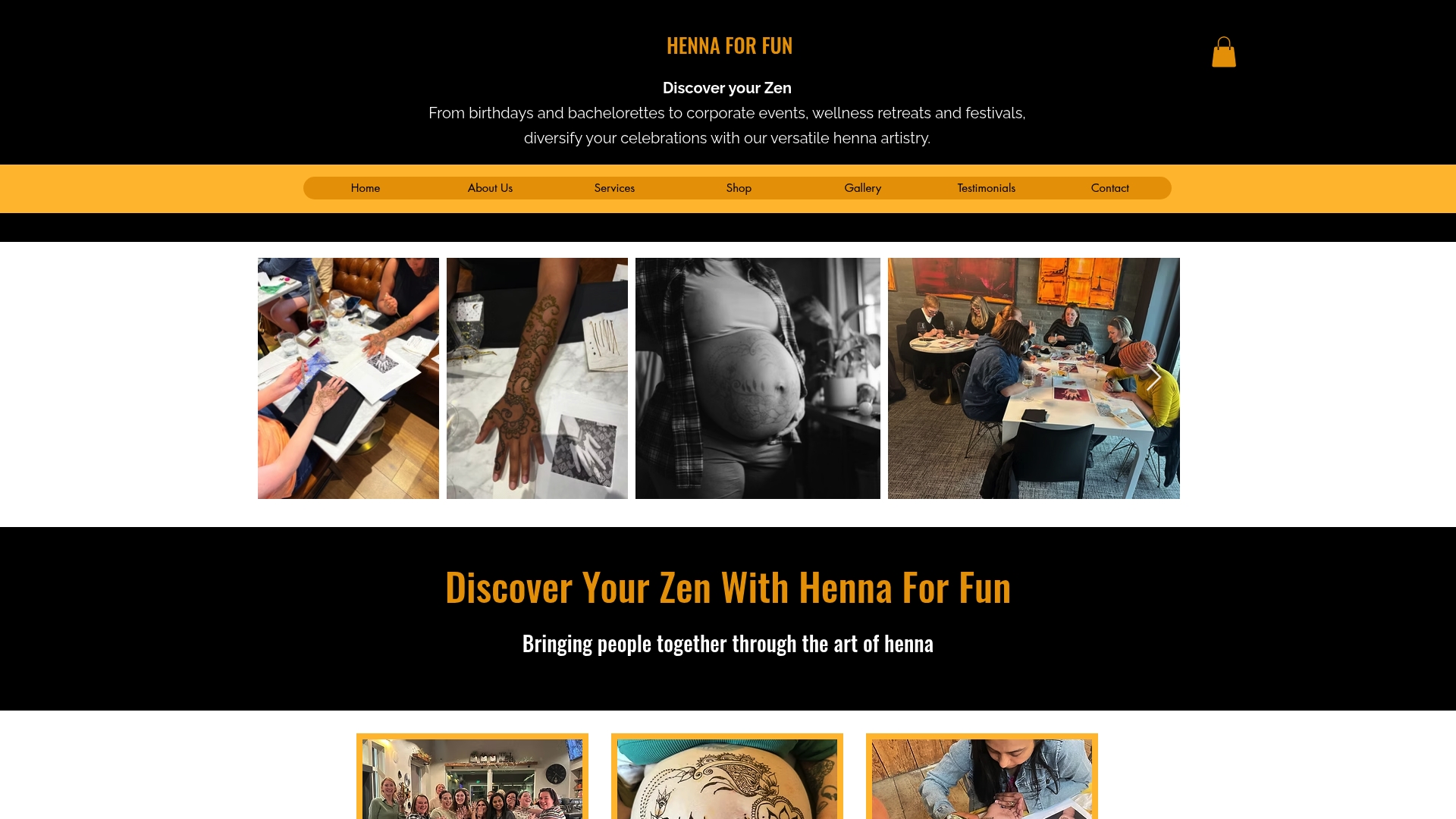
Teams can ask about corporate workshops, and you can check upcoming dates on our calendar. Prefer to try it at home? Our handmade henna cones are available online.
One more thing about appointment manners applies across many fields: showing up prepared and informed. If you want a parallel from another service, what to expect at a first appointment shows how preparation helps clients and professionals alike.
FAQ
How early should I arrive for a henna appointment?
Arrive five to ten minutes early, or exactly on time if the artist is working from your home. Late arrivals can shorten your design or push back the next client. If something goes wrong, text as soon as you know.
What should I do before a henna appointment?
Eat a meal, wash and dry the skin, and skip lotion, oils and sunscreen on the area. Wear clothing that leaves your hands, arms or feet free. Bring open shoes if you are getting a foot design, and leave time afterward so you do not need to use the area.
Is it rude to ask what is in the henna paste?
No. It is a normal safety question. The FDA warns that black henna may contain PPD, which is not permitted in cosmetics applied to skin (FDA). A good artist will tell you exactly what they use.
Do I tip a henna artist?
Tipping is a personal choice and not required. If you loved the work, a tip, a review and a referral are all appreciated. Ask your artist if they have a preference, especially for events.
What if I need to cancel or reschedule?
Contact your artist as soon as you know and offer alternative times. Read the cancellation terms you agreed to, since deposits often hold the slot. Keep every agreement in writing so both sides know what was promised.
Sources
Recommended
Comments