48 Hour Patch Test for Henna on Sensitive Skin
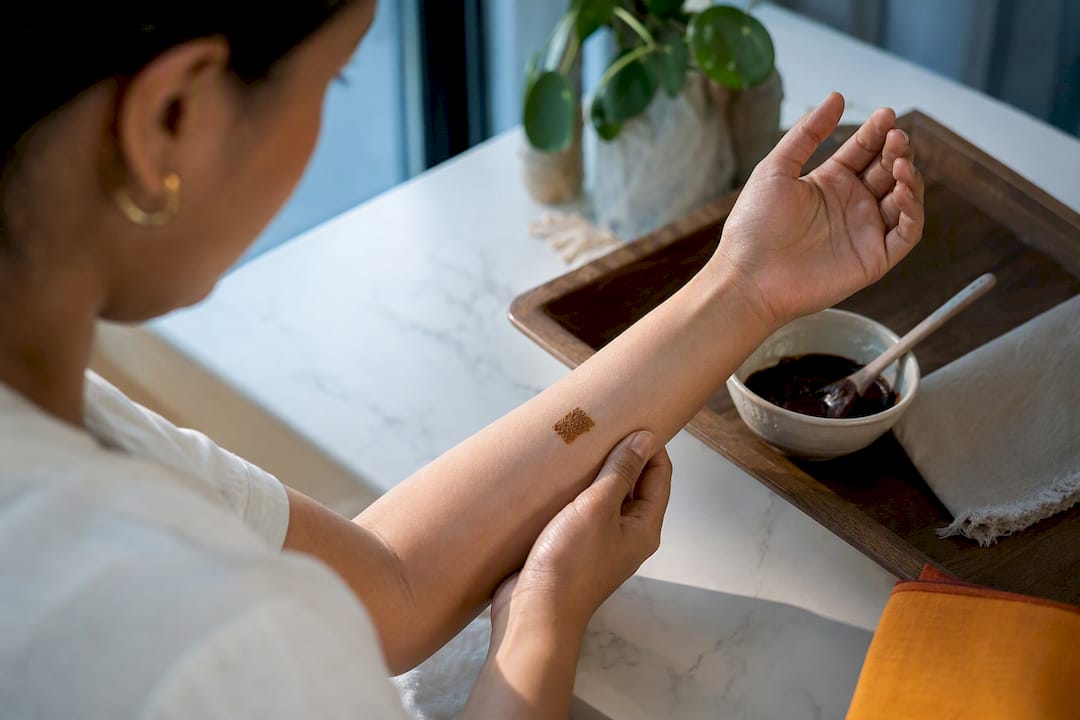
Natural henna is often safe for people with sensitive skin, but the real danger is black henna made with PPD, a chemical dye linked to severe allergic reactions. If you have G6PD deficiency or a known allergy to hair dye, skip henna altogether or check with a doctor first. Everyone else should do a 48-hour patch test before a full design.
TL;DR:
People with G6PD deficiency and those allergic to hair dye or rubber should avoid all henna products due to serious health risks and cross-reactivity.
Black henna contains PPD concentrations between 4% and 27%, much higher than safe limits, and can cause severe allergic reactions and permanent skin damage.
A patch test applied 48 hours before a full design is essential, especially for sensitive skin, to identify delayed hypersensitivity reactions.
Signs of unsafe henna include black, ammonia-like smell, instant black staining, or if the paste is not natural in color and scent, indicating PPD presence.
Proper aftercare involves avoiding sun, water, and heavy rubbing for 24 to 48 hours after application to prevent irritation and promote healing.
Table of Contents
Is Henna Safe on Sensitive Skin? Natural vs. Black Henna
Natural henna comes from the crushed leaves of the Lawsonia inermis plant. Its active dye molecule, lawsone, binds to keratin in the skin’s outer layer and produces the familiar orange to reddish-brown stain. On its own, plain henna paste (usually just leaf powder, water, and a bit of lemon juice or essential oil) causes irritation in only a small number of people, and most of those reactions are mild.
Black henna is a different product entirely. It gets its fast, jet-black color from para-phenylenediamine, or PPD, a synthetic dye used in some permanent hair colors, not a plant compound at all. PPD is one of the most common causes of severe contact allergy tied to temporary tattoos, and reactions can include blistering, oozing, and permanent scarring in the shape of the original design.
A medical review of henna’s skin effects puts the rate of PPD contact allergy from black henna tattoos at roughly 2.5%. That figure sounds small until you consider how many temporary tattoo stands sell black henna at fairs, beach boardwalks, and tourist markets without disclosing what’s in the paste. The FDA has tested black henna products sold for skin use and found PPD concentrations ranging from about 4% to 27%, far above what’s considered safe for direct skin contact. That’s the gap that matters: pure henna is a plant dye, black henna is often an industrial one wearing a henna costume.
Why Sensitive Skin Reacts: Mechanisms and Risk Groups
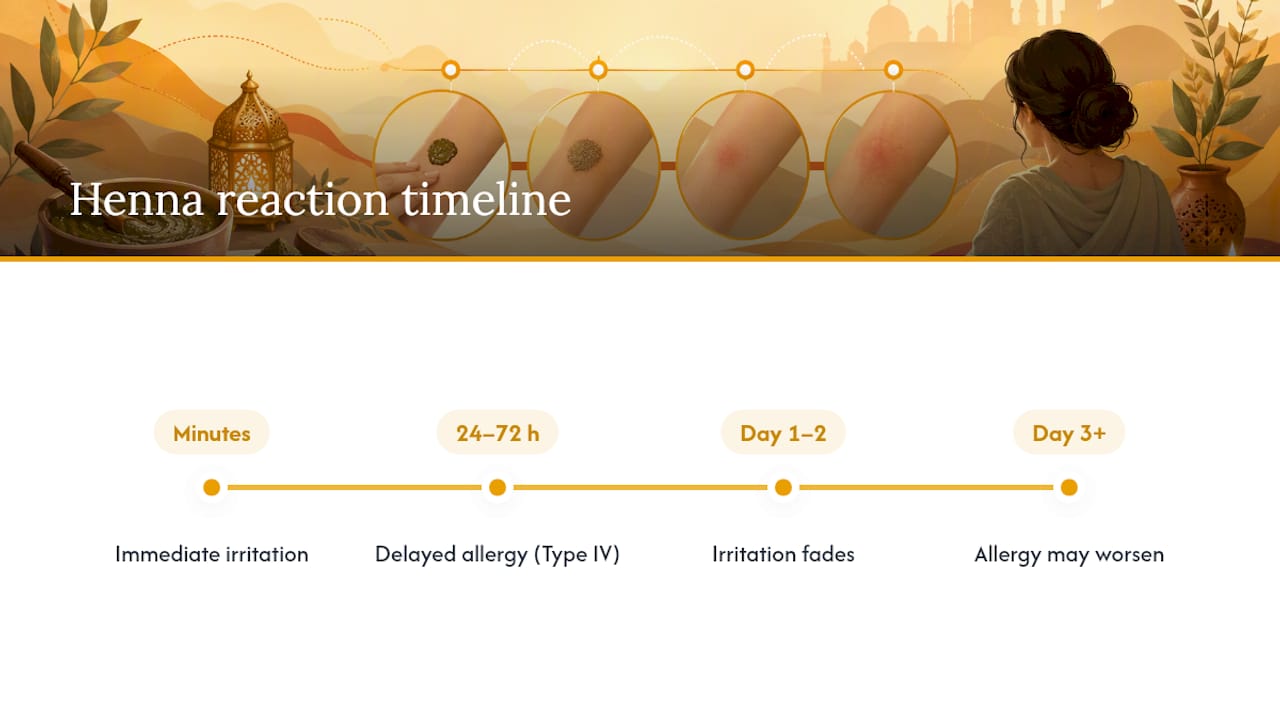
Most henna reactions are a type IV delayed hypersensitivity response, and your immune system doesn’t attack on contact. It builds a response over 24 to 72 hours, which is why a tattoo can look fine on day one and turn red, itchy, or blistered by day three. True immediate reactions (hives or swelling within minutes) are rare and usually point to a different irritant in the paste, like an essential oil.
One group needs to avoid topical henna entirely: people with G6PD deficiency, an inherited enzyme condition, particularly in infants and young children. Case reports document life-threatening hemolysis, a breakdown of red blood cells, triggered by naphthoquinone compounds in henna in G6PD-deficient individuals. If you or your child has this condition, skip henna and ask a doctor first.
People with a known allergy to hair dye, rubber accelerants, or certain sunscreens carry cross-reaction risk, since PPD shows up in all of those categories. The tell for a true allergic reaction versus simple irritation is timing and severity: irritation shows up fast and fades in a day or two, while allergy builds slowly and gets worse before it gets better.
How to Patch Test and Spot Unsafe Henna Before You Commit
A supervised patch test is the single best safeguard against a bad reaction, and it takes almost no effort to do right.
Apply a small dot of the actual paste you’ll be using to the inner forearm, not a random henna product from a different batch.
Leave it undisturbed for at least 48 hours, since delayed hypersensitivity often doesn’t show up until day two or three.
Check the site at 24 hours and again at 48 hours for redness, swelling, blistering, or intense itching.
If nothing shows up, proceed with a small design first, rather than a large one, especially the first time you try a new artist’s paste.
Watch the paste itself, too. Pure henna paste is olive green to dark brown and smells earthy, like tea leaves or eucalyptus. It stains skin slowly, starting as pale orange and deepening over 24 to 48 hours. A paste that’s jet black straight out of the tube, smells like bleach or ammonia, or leaves an instant black stain within minutes is a red flag for PPD. Ask any henna artist directly what’s in their paste, and don’t book with someone who won’t answer or who calls their black paste “natural.”
Pro Tip: If you have active eczema, broken skin, a sunburn, or any known chemical dye allergy, the safest move is to skip henna for that session entirely rather than test around damaged skin.
For a full walkthrough of proper patch testing, see this henna allergy test guide.
What to Do If Your Skin Reacts to Henna
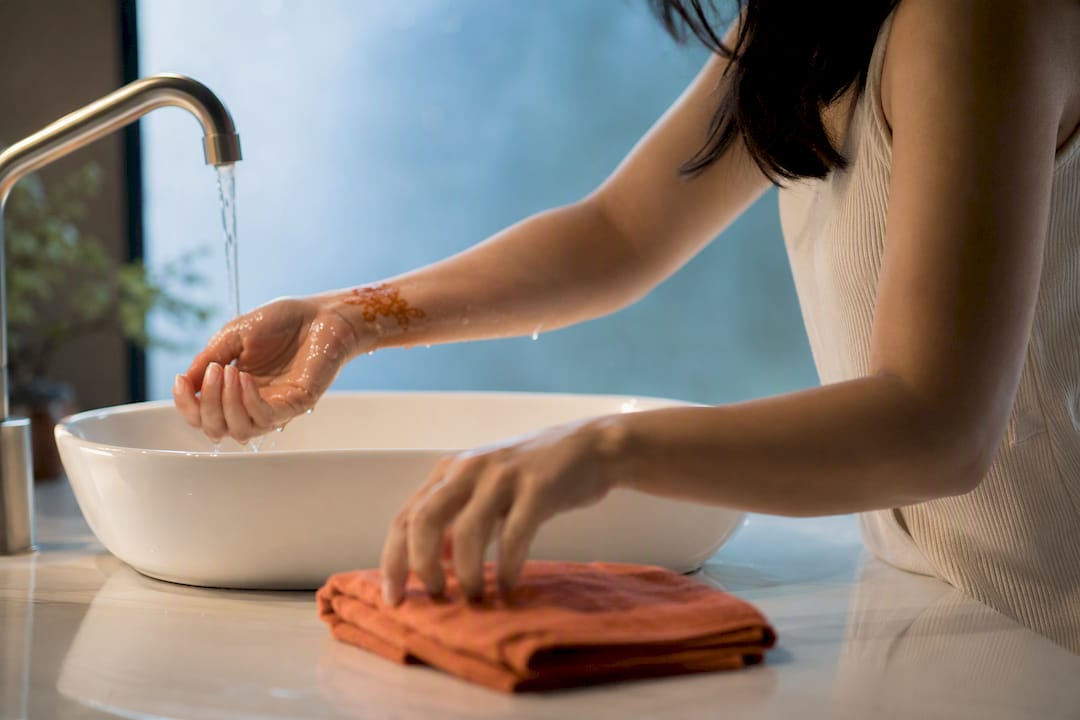
If you feel burning, stinging, or notice blistering during or after application, wash the area immediately with cool water and a mild, fragrance-free soap. A dermatologist quoted on the reaction notes that burning during application usually signals an allergic response, not a normal part of the process, and that quick washing plus a cool compress is the right first move.
Follow with a gentle emollient, like plain petroleum jelly or a fragrance-free moisturizer, to protect the skin barrier while it calms down. A topical corticosteroid or an oral antihistamine can ease itching and swelling for mild to moderate cases, but treat this as a call for your doctor or a dermatologist, not a DIY project. Seek urgent care immediately if you have difficulty breathing, facial swelling, or widespread hives, since these point toward a more serious systemic reaction.
Most contact reactions resolve within one to three weeks, though severe PPD reactions can leave temporary hyperpigmentation or, in rare cases, permanent scarring in the shape of the design. Take a photo of the reaction as it progresses and hang onto the leftover paste or packaging if you can. Both make a dermatology visit faster and more useful.
Gentle Aftercare Tips for Sensitive Skin
A slow-developing stain is usually a good sign, not a bad one. Pure henna needs time, generally leaving paste on for two to six hours before it flakes off, and the color keeps deepening for 24 to 48 hours afterward as it oxidizes. If a design goes fully dark within minutes, that speed is exactly what should raise concern about additives.
Once the paste is off, sensitive skin needs a light touch while the stain sets and the skin recovers:
Keep the design out of direct sun and avoid the pool or a long hot bath for the first 24 to 48 hours.
Skip heavy sweating and hard scrubbing near the design during that window.
Moisturize with a fragrance-free, low-irritant product rather than anything scented or alcohol-based; a simple skincare routine for sensitive skin is a useful reference for picking gentle everyday products.
Start with a small design on a new artist’s paste before committing to a large one, especially on already reactive skin.
Hennaforfun’s Approach to Sensitive-Skin Safety
Some henna providers follow a no-PPD policy and offer supervised 48-hour patch testing before full designs for clients with sensitive or reactive skin. That practice reflects the same standard dermatologists recommend for spotting delayed reactions before they become a problem.
For readers who want more hands-on guidance, private lessons let you learn safe mixing and application directly, and the pregnancy henna service is built around gentle, small-scale designs for clients who want extra caution during a sensitive life stage. Full studio safety practices, including U.S. regulatory considerations and booking policies, are outlined in this henna rules guide, and aftercare specifics live in this henna aftercare guide.
A Safety-First Take on Henna and Sensitive Skin
Most of the fear around henna is misdirected. People worry about the plant when the actual danger sits in an unlabeled black paste sold at a boardwalk stand. Pure henna, sourced and tested properly, is one of the gentler body art options available. The mistake is treating “henna” as one product when it’s really two: a centuries-old plant dye and a modern synthetic one wearing the same name.
If you have sensitive skin, the patch test isn’t optional caution. It’s the difference between a design you enjoy for two weeks and a reaction that scars for months. Ask questions, watch the paste, and give it 48 hours before you commit to anything larger than a coin-sized dot. If you’d rather have that testing supervised by someone doing it daily, book a lesson or session and skip the guesswork entirely.
— Angana
Henna for Sensitive Skin: Where Hennaforfun Fits
Skipping henna out of fear isn’t the only option, and neither is rolling the dice with an unknown paste at a street stand. Some henna providers run supervised 48-hour patch testing and hold a strict no-PPD policy on the pastes used in sessions, addressing major risks for people with sensitive skin.

For expectant parents wanting a gentle, celebratory design without added risk, the pregnancy henna service is built specifically around smaller, low-irritant applications. Hobbyists who want to control every ingredient themselves can start with private art lessons, where patch testing and paste mixing are taught hands-on. If you’d rather test the waters first, a handmade henna cone made without PPD is a low-commitment way to see how your skin responds. Book a patch test or a small session before your next event and know exactly what’s going on your skin.
This article is general information, not a substitute for advice from a qualified doctor. Consult a qualified healthcare professional about your own circumstances before acting on anything here.
Sources
FAQ
Who Should Avoid Henna Entirely?
People with G6PD deficiency should avoid topical henna because it can trigger dangerous hemolysis, and anyone with a known allergy to PPD, hair dye, or rubber chemicals should avoid black henna specifically.
How Long Does a Henna Allergy Last?
A contact allergy reaction to black henna’s PPD typically resolves within one to three weeks, though severe cases can leave temporary dark or light patches on the skin, and rare cases scar permanently in the shape of the design.
Does Henna Get Into Your Bloodstream?
Pure henna dye stays in the top layer of skin and doesn’t enter the bloodstream in typical use, but the naphthoquinone compounds in henna can trigger a systemic reaction like hemolysis in people with G6PD deficiency.
Can Henna Irritate Sensitive Skin Even Without PPD?
Yes. Lawsone, the natural dye in pure henna, can sensitize some people even without any added chemicals, which is why a 48-hour patch test matters even for products marketed as fully natural.
Recommended
Comments