4,000 Years of Henna History: What Archaeology Teaches About Safety
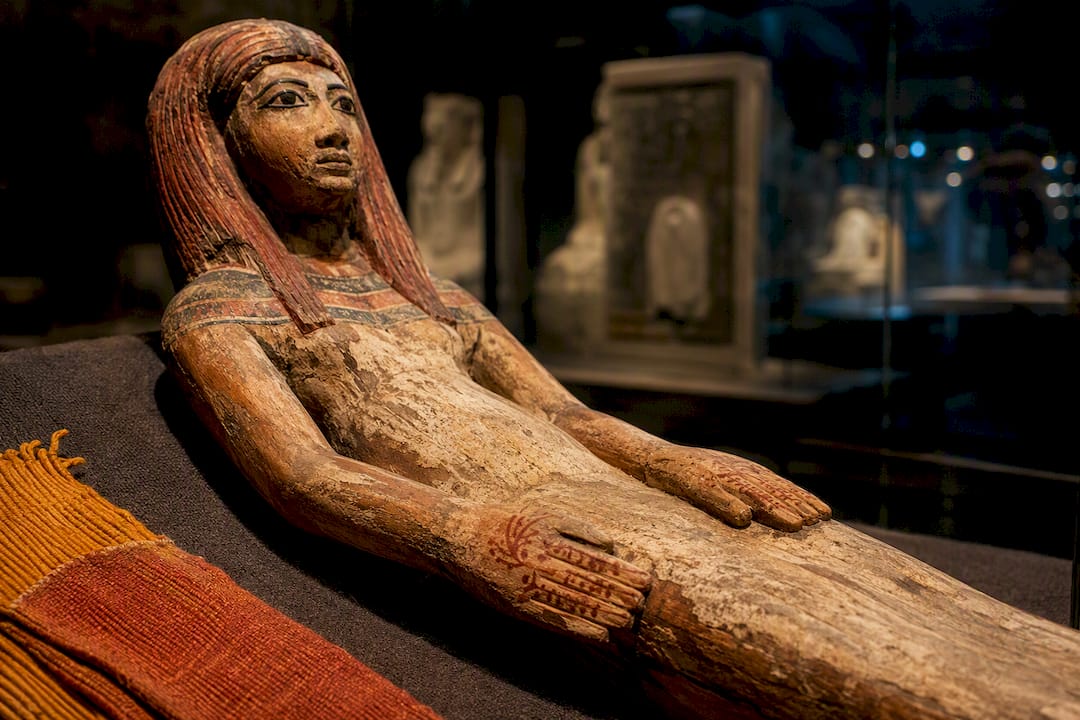
Henna comes from the leaves of Lawsonia inermis, a flowering shrub native to a belt stretching from North Africa through the Middle East to South Asia, and people have used it to dye skin, hair, and cloth for at least 4,000 years. Its reddish stain has marked brides, warded off bad luck, and treated wounds across dozens of cultures long before “mehndi” became an Instagram aesthetic. The story that follows traces that arc, from Bronze Age tombs to the ingredient labels you should actually read before your next henna appointment.
TL;DR:
Lawsone concentration varies significantly depending on climate, soil, and harvest timing, leading to inconsistent stain strength across regions and seasons.
Black henna products containing PPD pose serious health risks, including allergic reactions, scarring, and severe toxicity, especially when applied without disclosure.
Henna use in ancient Egypt, Babylonia, and the Eastern Mediterranean was widespread and often linked to medicinal and ritual purposes, dating back roughly 4,000 years or more.
The spread of henna accelerated during the medieval period through Islamic trade routes and regional adaptations, shaping diverse styles for weddings and ceremonies.
Authentic henna application emphasizes respect for cultural rituals, proper paste ingredients, and understanding of its historical significance, avoiding unsafe black henna substitutes.
Table of Contents
Where Henna Comes From: The Plant Behind the Dye
Lawsonia inermis is the only species in its genus, a member of the loosestrife family that grows as a shrub or small tree, usually somewhere between six and twenty feet tall. It goes by many names depending on where you are standing: henna in English and Arabic, mehndi in Hindi and Urdu, and al khanna in older Arabic sources, which is where the English word likely descends from. The plant produces small, fragrant flowers and leaves that contain lawsone, a reddish orange molecule that binds to keratin, which is exactly why it stains skin, hair, and fingernails so effectively.
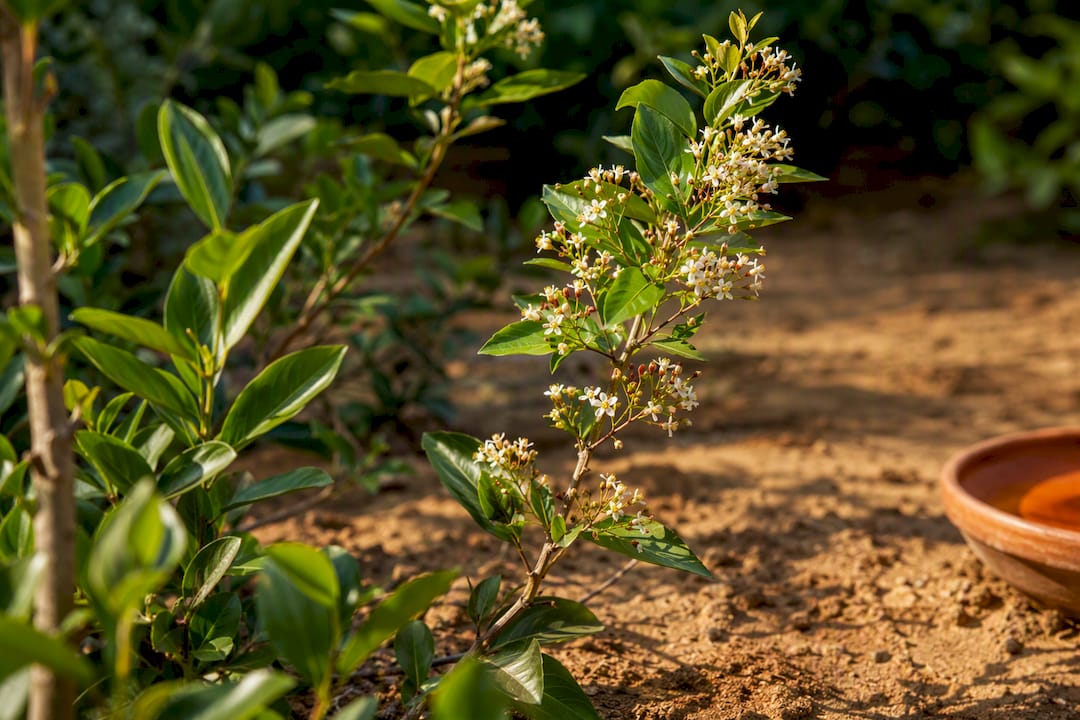
Its native range covers a wide arc of arid and semi-arid land: North and East Africa, the Arabian Peninsula, and across South Asia into parts of northern Australia. Kew Gardens points to a more specific origin zone within that range, an area running from Baluchistan, in modern Iran and Pakistan, through to western India. That corridor sits at a natural crossroads of ancient trade and migration, which likely explains why henna use appears simultaneously across so many early civilizations rather than spreading slowly from a single point.
The plant thrives in heat and poor soil, tolerating drought better than most dye crops, which made it easy to cultivate in exactly the regions where it became culturally central. It needs a long growing season and hard frost kills it, so its natural range essentially maps onto the belt of countries where henna traditions run deepest.
Dating the very first human use is harder than dating the plant itself. Most sources converge on a working estimate of roughly 4,000 years, based on physical evidence discussed in the next section, but some researchers have floated far older estimates, ranging from 5,000 to 9,000 years, based on residue analysis and indirect evidence. Those older claims remain contested rather than settled fact.
A few things worth knowing about the plant and its spread:
Lawsonia inermis is the sole species in its genus, so “henna” always refers to the same botanical source, not a family of similar plants.
Lawsone concentration, and therefore stain strength, varies significantly by climate, soil, and harvest timing, which is why henna quality differs so much between regions and growing seasons.
The plant’s natural range overlaps almost exactly with the world’s oldest henna-using cultures, a pattern that supports (though doesn’t prove) an origin somewhere in that Baluchistan-to-India corridor.
Cultivation later expanded well beyond the native range, into places like Morocco and Sudan, through trade and deliberate planting rather than natural spread.
Ancient Evidence: Egypt, Babylon, and the Bronze Age
The oldest physical evidence for henna use comes from Ancient Egypt, where mummies have been found with hair dyed a distinctive reddish tone consistent with henna application. The Natural History Museum documents this alongside references in the Ebers Papyrus, one of the oldest surviving medical texts, which mentions henna in the context of treating various ailments rather than purely cosmetic use.
That dual purpose, medicine and adornment, shows up again and again in the historical record. Ancient Egyptians weren’t decorating bodies for aesthetics alone; they were using a plant they believed had genuine therapeutic properties, and the coloring effect was a visible bonus.
Bronze Age evidence pushes the story into the Eastern Mediterranean. Wall paintings and statuettes from sites like Akrotiri, on the Greek island of Santorini, depict figures with markings on their hands and feet that scholars have interpreted as henna decoration, dated to roughly the second millennium BCE. Babylonian marketplace records from a similar era mention henna-related goods being traded, which suggests a commercial dye trade was already established rather than henna being a purely local or ceremonial substance confined to a single region.
Here’s where honesty matters more than a tidy narrative: not every ancient artifact linked to henna is airtight proof. The Natural History Museum’s own scholarship notes that some identifications, particularly the oldest and most dramatic claims, rest on circumstantial evidence rather than direct chemical residue testing. A red mark in a 3,500-year-old painting could be henna, ochre, or something else entirely, and reasonable archaeologists disagree on specific interpretations even while agreeing broadly that henna use in the ancient world was widespread.
What the evidence supports without much argument:
Egyptian mummies show hair coloring consistent with henna application, alongside written medical references in the Ebers Papyrus.
Bronze Age Eastern Mediterranean art, including finds at Akrotiri, depicts body markings that most scholars read as henna decoration.
Babylonian trade records place henna-related commerce in ancient Near Eastern markets.
Some older or more specific claims about exact dates and locations remain debated rather than confirmed, and that uncertainty is worth respecting rather than glossing over.
What this pattern tells you is that henna wasn’t invented once and exported outward. It was likely used independently, or through overlapping trade networks, across a wide swath of the ancient world at roughly the same time, which fits the plant’s own wide native range.
How Henna Traveled: Trade Routes and Regional Adaptation
Henna’s spread accelerated dramatically during the medieval period, largely riding on the same networks that carried spices, textiles, and religious ideas across continents. Islamic trade routes connecting North Africa, the Arabian Peninsula, and South Asia carried henna alongside other goods, and as Islam spread, so did associated customs around henna for celebrations and personal care. The Mughal court in South Asia, from the 16th century onward, became a major center for elaborate henna artistry, refining application techniques and popularizing the intricate floral and paisley motifs many people now associate with Indian mehndi.
Regional adaptation is really the story here, not a single unified tradition. Moroccan henna developed geometric patterns tied to Berber design traditions, often applied more heavily and boldly than the finer linework seen elsewhere. Persian and later Iranian henna practices leaned into symbolic placement, particular designs for particular life events, tied closely to Zoroastrian and later Islamic customs around purity and celebration. South Asian mehndi, shaped heavily by Mughal patronage, evolved into the dense, lace-like floral compositions that dominate wedding henna today.
Europe’s relationship with henna is a more complicated, and at times darker, chapter. Henna use appeared in parts of medieval Sicily and Al-Andalus, particularly Granada, where centuries of Islamic rule had normalized the practice among local populations regardless of religion. That changed sharply after the Christian reconquest. Inquisition-era authorities in Spain treated henna use, along with other visibly “Moorish” customs, as suspicious behavior that could mark someone as a secret Muslim or insufficiently converted, and restrictions followed. Scholarship compiled in botanical and regional reference works like PlantUse/PROTA documents this broader pattern of medieval production and regional variation in more technical detail.
A quick map of that medieval divergence:
Islamic trade networks carried henna from the Middle East and North Africa into South Asia and back, cementing it as a shared regional custom rather than a purely local one.
The Mughal court elevated henna artistry into a refined visual tradition, shaping the dense floral style still dominant in South Asian bridal mehndi.
Morocco and North Africa favored bolder geometric patterns rooted in Berber design.
Sicily and Al-Andalus adopted henna under Islamic rule, only to see it suppressed under the Inquisition as a marker of suspected religious nonconformity.
Weddings, Rites of Passage, and What Henna Symbolizes
Henna’s deepest cultural role has never been decorative alone. It functions as a ritual marker for life’s biggest transitions, most visibly weddings, but also births, circumcisions, and seasonal festivals across the Middle East, North Africa, and South Asia. UNESCO formally recognizes henna rituals as intangible cultural heritage, framing the practice not just as body art but as a social mechanism that transmits knowledge between generations and strengthens community bonds.
That framing matters more than it might sound. The night before a wedding in much of North Africa and the Middle East, a “henna night” gathers women together, often for hours, singing, preparing paste, and applying it to the bride in a process that is as much about bonding and blessing as it is about decoration. UNESCO’s documentation notes that these gatherings often include specific songs and proverbs passed down orally, meaning the ritual carries linguistic and musical heritage alongside the visual art itself.
Symbolic meanings vary by region, but several themes repeat across unrelated cultures:
Fertility and blessing. In much of South Asia and the Middle East, henna applied before a wedding is meant to bless the union and invoke fertility, often applied in patterns that deliberately leave the bride’s initials or a hidden symbol for the groom to find.
Protection from harm. Across North Africa, henna is frequently understood as protective, warding off the evil eye or bad luck, particularly around vulnerable life moments like childbirth or a new marriage.
Marking transition. Rites-of-passage use, at births, circumcisions, and coming-of-age moments, treats henna less as decoration and more as a visible marker that someone has moved from one life stage to another.
Community and joy. Festival use, especially during celebrations like Eid in many Muslim-majority regions, treats henna as a marker of festivity itself, applied simply because it signals celebration is happening.
Regional stylistic differences track fairly closely with the symbolic emphasis of each culture. Indian and Pakistani mehndi tends toward dense floral and paisley coverage, often extending up the forearm, reflecting an aesthetic built around abundance and intricacy. Moroccan and broader North African henna favors bolder geometric shapes and symmetry, sometimes applied to the palms and feet in isolated motifs rather than full coverage. Sudanese and Gulf traditions often incorporate very dark, almost black stains achieved through longer paste application and post-treatment steaming, alongside distinctive negative-space designs that leave large areas of skin unmarked between motifs.
Placement itself carries meaning in many traditions. Palms and soles are common because those areas absorb the dye most deeply and hold the stain longest, but they’re also symbolically significant as points of contact with the world, the hands that will do the work of a marriage or a household, the feet that will carry someone into a new life stage. That practical and symbolic overlap isn’t a coincidence; it’s likely part of why those placements became standard in the first place.
What UNESCO’s recognition really underscores is that henna’s cultural weight comes from the process, not just the final design. A machine-stamped, stencil-perfect pattern applied in five minutes carries none of the transmission value that a slow, hand-applied design created during a multigenerational gathering does. The cultural etiquette around mehndi that many newer henna enthusiasts overlook usually comes down to exactly this: understanding that the ritual context is often the point, not an afterthought to the artwork.
How Henna Paste Was Made and Used Through History
Traditional henna paste has always relied on a fairly simple formula: dried, powdered henna leaves mixed with an acidic liquid, most commonly lemon juice or a similar citrus, combined with an essential oil like eucalyptus, tea tree, or lavender. The acid helps release lawsone from the plant matter more efficiently, which produces a darker, longer-lasting stain, while the essential oils help the paste adhere to skin and can subtly deepen the final color.
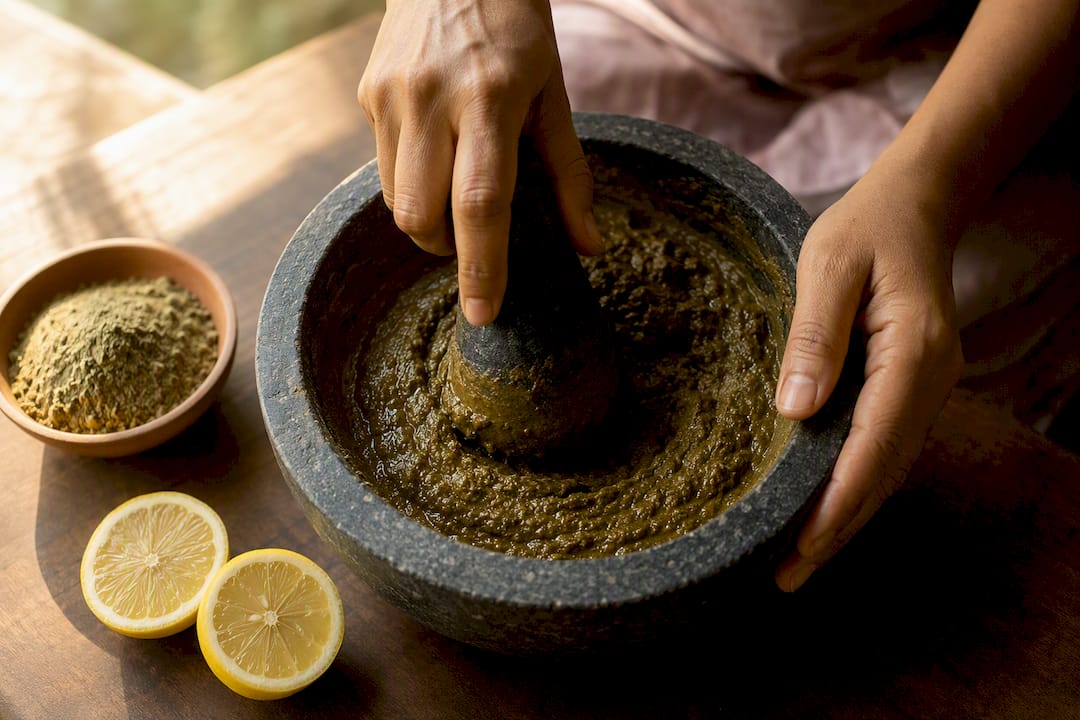
Regional recipes diverge from there. South Asian paste recipes often rest the mixture overnight to let the dye release fully before application, while some North African traditions use sugar or other additives to change the paste’s texture for the bolder, thicker lines common in Moroccan design. The core chemistry stays the same across every regional variation; what changes is texture, working time, and how dark the final stain runs.
Application technique differs by use case in ways that matter practically. Body art, or mehndi, uses a cone or fine applicator to draw detailed lines directly onto skin, left on anywhere from one to eight hours depending on how dark a stain someone wants, since longer contact time produces a deeper, longer-lasting color. Hair dyeing uses a much thicker, more liquid paste applied across the full head and typically left for one to four hours, coloring hair a reddish or auburn tone rather than the near-black some commercial dyes promise. Textile dyeing is its own separate process entirely, historically involving dye baths rather than paste, often combined with mordants like alum to help the color bind permanently to fabric fibers, a technique documented in botanical reference sources covering Lawsonia inermis) production history.
One historical admixture deserves particular attention because it still causes confusion today: indigo. Genuine “black henna” effects in traditional practice were achieved by layering natural indigo dye over a henna stain, a two-step process that produces a very dark brown to near-black tone using two plant-based dyes rather than one. That’s meaningfully different from the modern products marketed simply as “black henna,” which is covered in the next section.
A few practical notes worth knowing:
Lemon juice or another mild acid speeds up dye release, which is why most traditional recipes include it rather than using plain water.
Essential oils aid adhesion and can deepen color slightly, but they aren’t strictly necessary for the dye reaction itself.
Longer skin contact time produces a darker stain up to a point of diminishing returns, generally somewhere past six to eight hours.
Textile dyeing historically used mordants like alum, a chemically different process from paste-based skin application.
Pro Tip: If you’re mixing your own henna paste at home for the first time, resist the urge to add extra lemon juice hoping for a darker stain fast. Too much acid can actually break down the paste’s consistency and make it harder to apply cleanly, without meaningfully improving color depth.
The Real Risk Behind “Black Henna” and PPD
Natural henna stains skin a reddish brown, never true black, and that single fact is the most important thing to know before booking any henna application. Products marketed as “black henna” achieve their fast, dark result by adding para-phenylenediamine, or PPD, a chemical dye ingredient that the FDA explicitly warns against for direct skin application. The FDA has not approved henna itself as a cosmetic colorant for skin use in the first place, and black henna compounds that concern considerably, since PPD is a recognized skin sensitizer.
PPD sensitization occurs in a notable portion of exposed populations, and lab testing has found PPD concentrations in black henna samples have been found at various levels, some exceeding recommended limits, according to findings cited in the FDA’s fact sheet. That range is enormous, and it means two “black henna” applications from two different vendors could carry wildly different risk levels with no visible way to tell the difference beforehand.
A peer-reviewed review published in Wiley’s contact dermatitis literature backs this up with clinical detail: natural henna is generally safe for most people, but PPD-adulterated black henna has caused documented cases of severe allergic contact dermatitis, permanent scarring in some reactions, and even rare instances of systemic toxicity. The same review flags a separate, less commonly discussed risk: people with G6PD deficiency, a genetic condition affecting red blood cells, face a documented risk of hemolysis, a breakdown of red blood cells, from topical henna exposure. That risk applies specifically to babies and young children with G6PD deficiency and is rare, but it’s serious enough that parents in affected populations should know about it before any henna application on infants.
Health Canada’s guidance offers a useful, low-tech way to spot the difference before you ever get near a chemical test. Natural henna paste smells earthy, like hay or dried leaves, and needs hours of skin contact to develop a moderate reddish stain. Black henna typically has little to no natural scent, sets within twenty to sixty minutes, and produces an immediate, unnaturally dark result. If a henna artist’s paste stains your skin black within the hour, that speed is the warning sign, not a selling point.
Practical steps worth taking before any henna session:
Ask directly what ingredients are in the paste, and be wary of any artist who won’t answer clearly or specifically.
Request a small patch test at least 48 hours before a full application, particularly if you’ve never had henna before or have sensitive skin, following a process like this 48-hour patch test guide.
Avoid any product or artist advertising “black henna” or unusually fast, dark results.
If you or your child has G6PD deficiency, talk to a doctor before any henna application, given the documented hemolysis risk.
Trust your nose. Genuine henna paste smells like plant matter, not chemicals.
From Pre-Raphaelite Fascination to Festival Culture
Western interest in henna isn’t new, but it has come in distinct waves. Nineteenth century Pre-Raphaelite painters became fascinated with henna-red hair as an aesthetic ideal, associating the color with a romanticized, exoticized vision of the Middle East and Mediterranean world, even though most of what they painted had little connection to how henna was actually used in the cultures they were referencing. That fascination stayed mostly decorative and painterly for over a century.
The real explosion came later, through the 1990s and 2000s, when temporary henna tattoos became a mainstream Western trend, driven heavily by celebrity adoption and festival culture. That’s also when commercial “black henna,” the PPD-laced version covered in the previous section. It started showing up at beach resorts, fairs, and boardwalks worldwide, marketed for its speed and dramatic color with little regard for the health risks or the cultural traditions it was borrowing from.
That commercialization created a real tension that hasn’t fully resolved. On one hand, DIY henna kits and mainstream availability introduced millions of people to a beautiful, genuinely ancient art form who otherwise never would have encountered it. On the other, mass-market black henna has caused real, documented harm, and stripped much of the ritual and cultural meaning covered earlier down to a five-minute boardwalk transaction.
The healthier version of this coexistence is visible in how traditional practice and modern commercial use now run in parallel rather than one replacing the other. Wedding henna nights, apprenticeship-based skill transmission, and community ritual continue largely unchanged in the regions where they originated, while festival booths, corporate events, and casual body art fill a completely different, lower-stakes cultural slot. Neither cancels the other out, but conflating them, treating a boardwalk black henna stand as equivalent to a wedding henna night, is where most of the cultural friction actually comes from.
Learning and Booking Henna the Right Way
Understanding henna’s history changes how you approach getting it done. Henna events and lessons are built around the principle of using real henna applied with respect for its origins, not rushed or low-quality imitations.
For groups wanting a shared experience, whether at a home, a winery, or an office, henna events bring an artist and genuine henna paste to the gathering itself. Expectant parents looking for something more personal can explore pregnancy henna services designed around maternity photoshoots and baby showers. Anyone wanting to learn the craft directly can look into private henna lessons, which cover paste mixing and application technique rather than just handing someone a stencil.
A short etiquette checklist worth keeping in mind, whether you’re booking an artist or attending a cultural event: ask before assuming a design carries specific religious or regional meaning, avoid requesting culturally sacred bridal patterns for casual events, and if you’re hosting a henna night as a nod to a tradition that isn’t your own, take a moment to understand what you’re borrowing rather than just what looks nice.
On the safety side, the same rules from earlier apply here directly: ask what’s in the paste, request a patch test if you have sensitive skin, and understand local henna regulations before booking a public event. Sourcing matters too. Handmade henna cones made from real, checked ingredients are a meaningfully different product than an unlabeled tube from an unknown vendor.
Why the Backstory Changes How You Treat Henna
Knowing that henna carries four thousand years of medical, ceremonial, and protective meaning changes the stakes of getting it wrong, whether that’s buying a PPD-laced kit or requesting a sacred bridal pattern for a bachelorette party without a second thought. History here isn’t trivia. It’s the difference between appreciating a tradition and hollowing it out.
The safety side and the cultural side aren’t actually separate conversations, even though most articles treat them that way. A culture that spent millennia refining henna as both medicine and ritual never intended it to sting, blister, or scar, which is exactly what PPD-laced black henna does. Respecting the history and respecting your own skin turn out to be the same instinct.
If you’re curious enough to have read this far, you’re already past the boardwalk-tattoo mindset. Consider working with an artist who can explain their paste, their process, and where the design you’re asking for actually comes from, whether that’s through ceremony-focused practitioners or a local henna lesson.
— Angana
Sources
The historical and safety claims throughout this article draw on museum scholarship, botanical authorities, and regulatory guidance rather than general internet consensus, which matters given how much misinformation circulates around black henna specifically.
FAQ
What Is the Spiritual Meaning Behind Henna?
Henna’s spiritual meaning varies by culture but commonly centers on fertility, protection from harm, and blessing during major life transitions like weddings, births, and rites of passage, a role UNESCO formally recognizes as intangible cultural heritage.
Is It Disrespectful to Get Henna Done?
Getting henna applied generally isn’t disrespectful, since the practice has spread across many cultures and religions for centuries, but it becomes a problem when someone mocks the tradition, uses sacred bridal-specific patterns casually, or wears unsafe PPD-based “black henna” that ignores the real plant’s cultural roots entirely.
Is Henna Mentioned in the Bible?
Henna is generally identified with the plant referred to as “camphire” in some older English Bible translations, most notably in the Song of Solomon, though scholars debate the precise botanical identification given the text’s age and translation history.
Is Henna Part of Black Culture?
Henna has historical roots in North and East Africa and holds cultural significance in various African communities, but it’s not exclusive to any single racial or ethnic group. It spans Middle Eastern, South Asian, and North African traditions, with distinct regional meanings in each.
Where Did Henna Originate?
Botanical and linguistic evidence points to an origin area for the henna plant running from Baluchistan, in modern Iran and Pakistan, through western India, according to Kew Gardens, with recorded use in Ancient Egypt and the Bronze Age Near East dating back roughly 4,000 years.
Recommended
Comments