Henna Rules in the U.S.: Safety, Booking & Application
Yes, there are henna rules that matter — and the most important ones come down to three things: what the FDA says, what’s in the paste, and whether your artist offers a patch test. Under 21 CFR 73.2190, the FDA approves henna only as a hair dye, not for skin application — which puts body-art henna in a regulatory gray area. That doesn’t make it dangerous, but it does mean you need to ask the right questions before you book.
What’s generally safe:
Pure, natural henna (red-brown paste made from Lawsonia inermis) used by professional artists with full ingredient disclosure
Patch testing offered before any full application
What to avoid:
“Black henna” or any paste promising an instant dark or jet-black stain
Any artist who refuses to share an ingredient list or skips the patch-test conversation
Hennaforfun operates with mandatory patch-test availability and full ingredient transparency — no PPD, no mystery additives — which is exactly the standard every U.S. client should expect.
Table of Contents
What U.S. law actually says about henna on skin
The FDA’s position is specific: henna is a color additive approved for hair dye only. Using it on skin for body art technically falls outside that approval, which means no single federal regulation explicitly greenlights the practice. Body-art henna exists in a gray area — widely practiced, culturally significant, and generally safe when pure, but not covered by a formal skin-application standard.
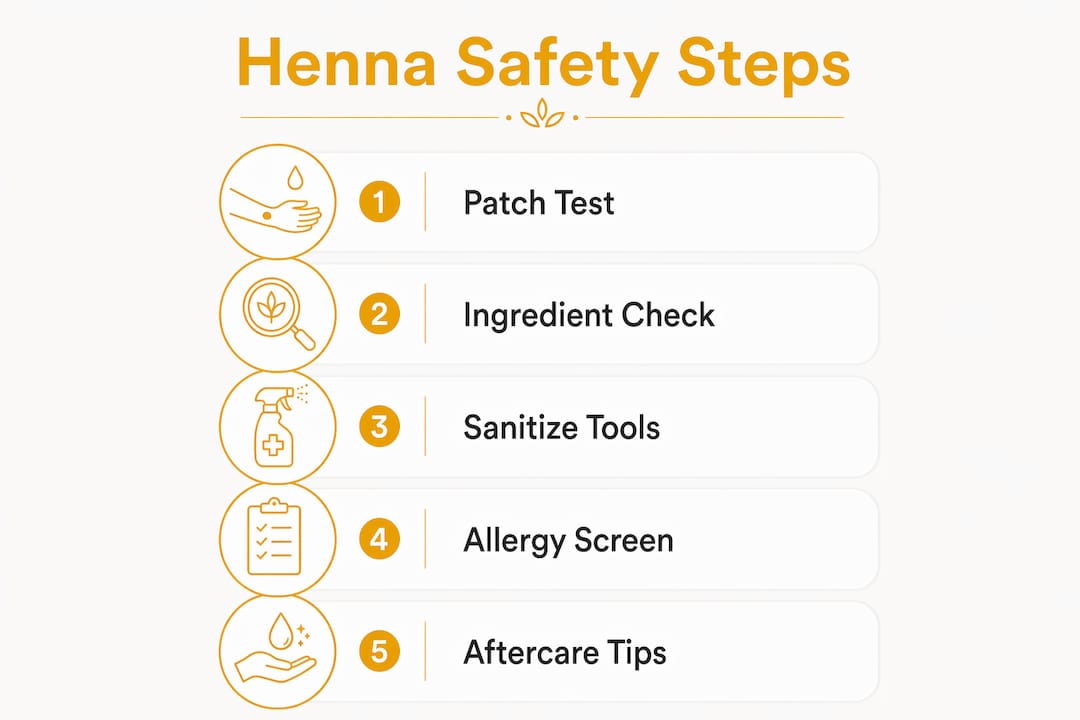
The practical implication is straightforward. Because sellers aren’t operating under a skin-use approval, ingredient transparency and supplier documentation become your primary protection. Ask for both.
State and local rules add another layer. Some health departments regulate body-art vendors at markets, fairs, or public events — requiring permits, sanitation standards, or vendor registration. If you’re hosting a henna event at a venue, check local health department requirements for your county or city before the event date.
Pro Tip: Ask your artist for their supplier’s Certificate of Analysis or product documentation. A professional using Body Art Quality (BAQ) henna — triple-sifted, tested for heavy metals — can usually produce this without hesitation.

Safety and allergy protocols every artist and client should follow
According to the FDA, additives like PPD (para-phenylenediamine) found in black henna products can cause severe blistering and permanent scarring. Pure natural henna carries a much lower risk profile, though a small percentage of people may experience mild sensitivity even with clean products.
Before you book, ask these questions:
Do you offer a patch test, and how far in advance?
What’s in your paste — full ingredient list, please?
Do you use single-use applicator tips or reusable tools?
Are you insured for body-art services?
Can I see your portfolio and any references?
Red flags to walk away from:
Jet-black paste or any promise of an “instant dark stain”
Vendors who won’t name their ingredients
Reusable applicator tips with no visible sanitation protocol
Unknown “accelerants” added to speed up color development
Two groups require extra caution: infants and anyone with G6PD deficiency. WHO guidance is clear that henna exposure in G6PD-deficient individuals can trigger severe hemolysis. Reputable artists screen for this and document client consent accordingly. Pregnancy henna is generally considered lower-risk with pure paste, but enhanced patch testing and small, localized designs are the recommended approach.
How to prepare your skin and care for a fresh stain
Getting a dark, long-lasting stain isn’t luck. It’s prep and patience.
Before application:
Wash the area with soap and water to remove oils and residue.
Lightly exfoliate — a gentle scrub the night before works well.
Skip lotion, sunscreen, and oils on the site the day of your appointment.
Arrive with dry, clean skin.
During and after:
The paste needs to stay on skin long enough to transfer dye. Leaving it on for several hours produces a noticeably darker and longer-lasting result than a short sit. When it’s time to remove, scrape or flake the dried paste off — don’t wash it. Then avoid water on the stained area for at least 24 hours. The stain deepens from orange to reddish-brown over the following 24–48 hours.
Do’s and don’ts:
✓ Moisturize daily with coconut or almond oil once the stain has set
✓ Protect the design with a thin layer of balm before swimming or showering
✗ Don’t scrub or exfoliate the stained area
✗ Don’t apply lotion immediately after paste removal
Pro Tip: Seal fresh paste with a lemon-sugar solution or a light spray gel once it’s fully dry to the touch. Keeping the area warm — wrapping loosely with paper tape or a cotton glove overnight — deepens the stain significantly.
For a deeper look at timing, Hennaforfun’s guide on how long to leave henna on covers the variables by skin type and body location.
What to expect when booking henna for events or classes
A two-hour henna event for 20 guests needs more planning than most hosts expect. Here’s a realistic sample timeline:
Phase | Time |
Artist setup and sanitation check | several hours |
Guest service (approx. 5 min per guest) | two hours |
Drying, sealing, and wrap-up | several hours |
Pricing varies by region, design complexity, and event type. Private lessons, group workshops, and per-guest walk-up rates each carry different structures — contact artists directly for current quotes, since rates shift with travel, duration, and guest count.
Contract checklist before you sign anything:
Written ingredient disclosure (no PPD, no unlisted additives)
Patch-test policy stated explicitly
Cancellation and refund terms
Liability and insurance confirmation
Guest capacity and minimum booking requirements
For venue setup, artists need a well-lit table, seating for both artist and client, and ideally an outlet for warming tools. Outdoor events in direct sun can dry paste too fast and reduce stain quality — shade or an indoor option matters.
Religious and cultural rules to respect when offering henna
Henna carries deep cultural and religious significance across South Asian, Middle Eastern, and North African communities in the U.S. Getting this right as a host or artist isn’t optional.
On the question of Islamic ritual purity, the IslamWeb fatwa is clear:
That means natural henna, which leaves color but no impermeable film, does not invalidate wudu or ghusl. Chemical products that form a physical barrier are a different matter.
Practical accommodations artists should offer:
Private application spaces for women who observe modesty guidelines
Female-only artists available for events where that’s requested
Gloves or coverings for hennaed hands when clients need to be in mixed company
No pressure to display designs publicly after application
At multicultural events, ask guests about preferences before assuming. Not every attendee from a South Asian background wants henna, and not every Muslim guest follows the same interpretation. Offer, don’t insist.
Myths to ignore and dangerous practices to avoid
The biggest myth: natural henna produces a black stain. It doesn’t. Pure henna stains orange to reddish-brown. A jet-black result means something was added — usually PPD, which the FDA flags as capable of causing severe blistering and permanent scarring.
Unsafe additives to refuse outright:
PPD (para-phenylenediamine)
Heavy metals (lead, silver nitrate)
Petroleum-based solvents
Unlabeled “black” or “instant” dye compounds
If a reaction occurs — blistering, swelling, intense itching, or open sores — seek medical attention promptly. These are not normal henna responses; they signal a chemical reaction to an adulterant.
To verify a product is safe: smell it (pure henna smells earthy and slightly herbal), check the color (dark green paste, not black), read the full ingredient list, and confirm the supplier provides documentation. BAQ henna — Body Art Quality, triple-sifted — is the standard worth insisting on.
How Hennaforfun runs safe henna experiences and lessons
Hennaforfun offers a full range of henna services across the greater Seattle area, including Kirkland, Bellevue, Snohomish, Lynnwood, Edmonds, and Bothell:
Whenna Events: henna at wineries, homes, corporate workshops, and private parties
Pregnancy henna: maternity designs for baby showers and photoshoots, with enhanced safety protocols
Private and group lessons: in-person instruction covering technique, paste preparation, and design
DIY kits and cones: handmade henna cones, DIY kits, and stencils for home practice
Every Hennaforfun service includes patch-test availability, full ingredient transparency (no PPD, no unlisted additives), and single-use applicator tips. Artists bring their own sanitary setup to every event. For pregnancy henna specifically, pure paste only — no essential oil accelerants — and small, localized designs are the standard.
Age restrictions and parental consent for henna on minors
No federal law sets a minimum age for henna, but professional artists follow clear internal guidelines. Infants should never receive henna — their skin is highly sensitive to the acidic paste, and any undetected G6PD deficiency creates a serious hemolysis risk. For children three years and older without G6PD deficiency, a very small design with pure henna is generally considered safe by experienced practitioners.
In practice, reputable artists require a parent or guardian to be present and to give verbal or written consent before applying henna to anyone under 18. Some artists set their own minimum age (often 5 or older) and limit designs on young children to small, simple patterns on hands or wrists. Always ask about an artist’s specific policy when booking for a children’s event.
Environmental considerations when disposing of henna paste and materials
Pure henna paste is plant-based and biodegradable, which makes disposal relatively straightforward. Leftover paste can go into compost or be rinsed down the drain in small amounts — it won’t harm a standard municipal water system. Dried paste crumbles are fine for trash or compost.
The concern shifts when additives are involved. Paste containing PPD, heavy metals, or petroleum solvents should be treated as chemical waste and disposed of according to your local hazardous waste guidelines. Applicator cones and tips made from plastic or cellophane go in the trash; paper cones and natural wrapping materials can be composted. Store unused paste in a sealed container in the refrigerator and use it within the recommended window — henna powder shelf life varies by storage conditions, so check guidance before using older stock.
Key Takeaways
Safe, legal henna in the U.S. requires pure ingredients, a patch test, and clear communication with your artist before any application.
Point | Details |
Avoid black henna and PPD | Jet-black paste signals chemical additives that can cause blistering and permanent scarring. |
Insist on a patch test | Even pure henna can cause mild sensitivity in about 0.4% of people; a patch test a day or two before is the professional standard. |
Follow prep and aftercare rules | Clean, oil-free skin before; scrape (don’t wash) paste off; avoid water for 24 hours after removal. |
Confirm contract safety clauses | Require written ingredient disclosure, patch-test policy, and insurance confirmation before booking. |
Book with Hennaforfun | Hennaforfun provides PPD-free, patch-test-ready henna events, lessons, and DIY kits across greater Seattle. |
The part of henna safety most people skip
Most henna safety conversations stop at “avoid black henna.” That’s necessary but not sufficient. The subtler risk is the gray area itself: because the FDA hasn’t approved henna for skin use, there’s no mandatory labeling standard for body-art paste. That gap is where adulterated products slip through. A vendor can sell “natural henna” with no legal obligation to list every additive.
The real protection isn’t a regulation — it’s the artist’s sourcing habits and willingness to be transparent. An artist who can name their supplier, show a Certificate of Analysis, and explain why they use BAQ-grade paste is demonstrating something a label can’t: actual accountability. That’s what separates a professional from someone who bought a bulk pack online and set up a table at a fair.
Cultural respect deserves the same attention. Henna isn’t just a design trend; for many clients it carries ritual, familial, and spiritual weight. An artist who understands wudu implications, offers private application space without being asked, and doesn’t treat modesty requests as inconveniences is providing a genuinely different service. That’s the standard worth holding.
Ready to book a safe, professional henna experience?
Hennaforfun brings PPD-free, patch-test-ready henna to events across greater Seattle — from intimate home gatherings to corporate workshops and pregnancy henna sessions. Every booking includes artist time, supplies, and travel within the service area, with no mystery ingredients and no pressure to skip the safety steps.
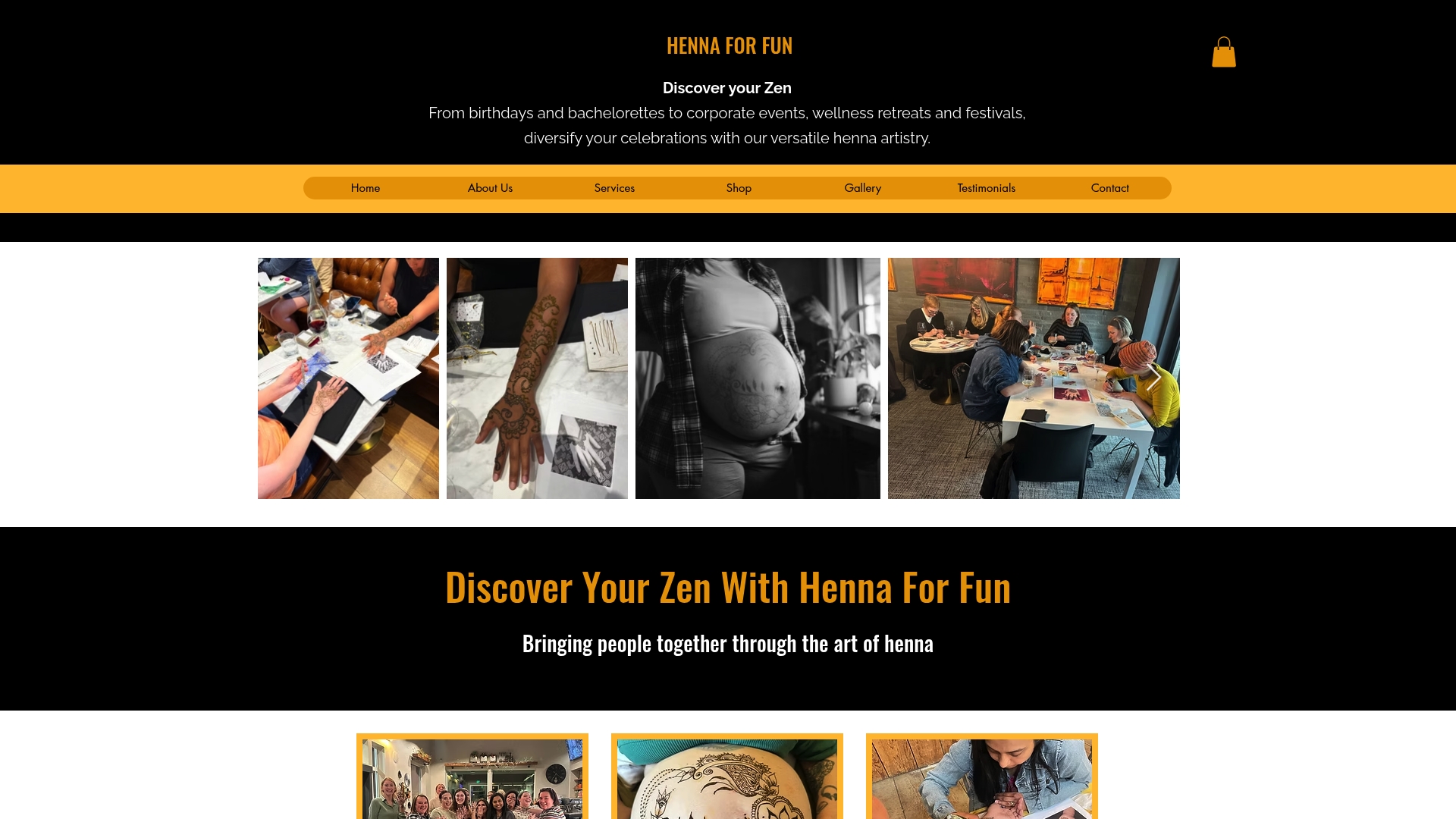
Whether you want to host a Whenna Event, take a private henna lesson, or pick up a DIY kit to practice at home, Hennaforfun has a clear path for you. Visit hennaforfun.com/services to see current packages and check availability for your date.
Authoritative sources and references
FDA: Temporary Tattoos, Henna (Mehndi), and Black Henna — Primary federal guidance on henna’s approved uses, PPD risks, and black henna warnings.
21 CFR § 73.2190 — Henna (e-CFR / Cornell LII) — The actual regulatory text restricting henna to hair-dye use only.
ScienceInsights: How to Use Henna on Skin — Practical guidance on application, paste-on timing, and aftercare.
World Health Organization — General guidance on G6PD deficiency and henna exposure risk.
IslamWeb Fatwa 307549: Henna color does not invalidate wudu or ghusl — Scholarly consensus on ritual purity and henna.
IslamWeb Fatwa 5399: Henna is permissible; hiding dyed parts from non-Mahram men is obligatory — Guidance on modesty and henna display.
SimpleMehendi: The Complete Guide to Natural Henna Safety — Industry reporting on product adulteration, patch testing, and pregnancy precautions.
Rustic Roots Living: How to Use Henna — Practical notes on BAQ henna selection and application technique.
Recommended
Comments