Pregnancy Henna Safety: Limit Paste to 1 Teaspoon, Avoid PPD
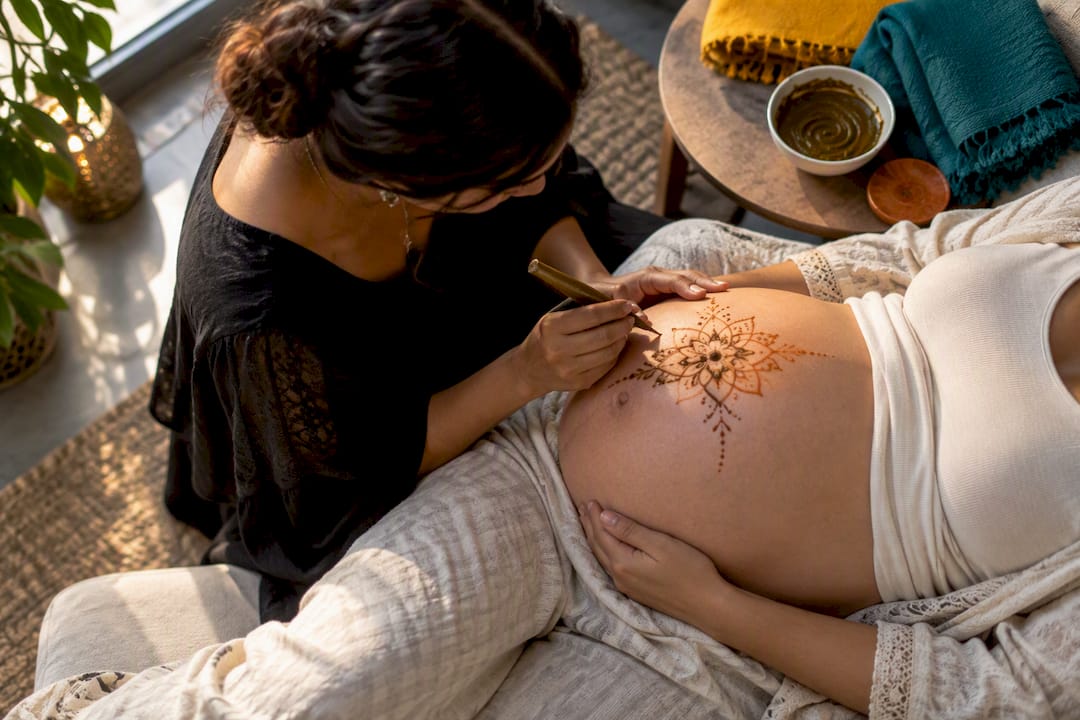
Pure, additive-free henna applied in small patches is generally low-risk during pregnancy, but black henna is not. The real danger comes from p-phenylenediamine, or PPD, a chemical dye that shows up in “black henna” and has nothing to do with the plant henna comes from. If you stick to natural red-brown henna, patch test first, and check in with your prenatal provider before booking anything, belly art is one of the safer ways to mark this stage of pregnancy.
TL;DR:
Pure henna used in small, fresh patches during pregnancy is low-risk, but black henna containing PPD can cause severe allergic reactions and should be avoided.
Patch testing at least 48 hours prior to application reduces allergy risk, especially since pregnancy increases skin sensitivity and reactivity.
Experts recommend limiting henna application to about one teaspoon of paste and avoiding prolonged flat-lying positions to prevent dizziness and ensure safety.
Professional artists should use fresh, ingredient-transparent paste and support pregnant clients in side-lying positions for safer, more reliable results.
Pregnant individuals should consult healthcare providers about their specific circumstances before booking a belly henna session.
Table of Contents
Pregnancy Henna Safety Starts With Knowing Your Henna
The word “henna” gets used loosely, and that’s where the risk hides. Pure henna paste comes from the ground leaves of Lawsonia inermis, a flowering shrub, and its active pigment, lawsone, binds to keratin in the skin’s outer layer. That’s why a fresh stain looks orange when the paste comes off, then darkens to reddish brown over 24 to 48 hours. Nothing about that process involves synthetic dye or bleach.
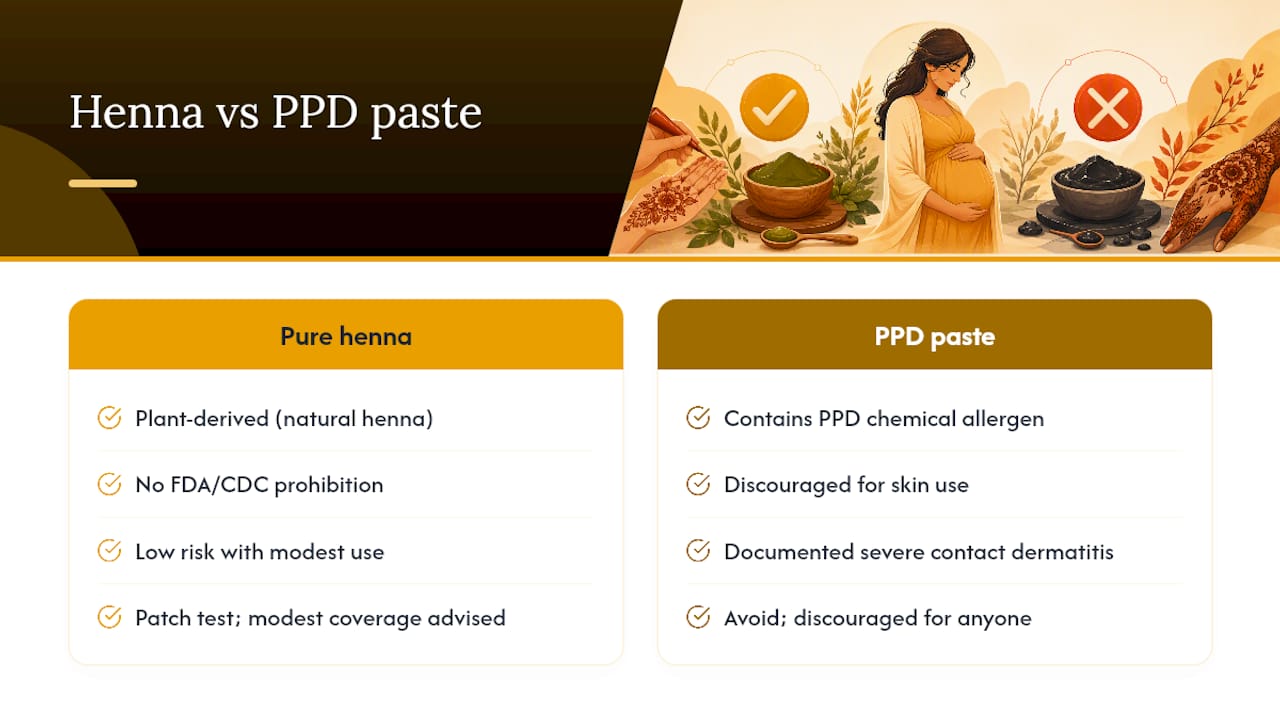
Black henna is a different product wearing the same name. Vendors add PPD, coal tar dyes, or other darkening agents to get an instant jet black stain that pure henna simply cannot produce on its own. The NHS specifically warns against black henna or any formulation listing PPD as an ingredient, and that warning applies to everyone, not just pregnant people, because PPD is a recognized skin sensitizer.
Here’s how to spot the difference before paste ever touches your skin:
Pure henna paste is olive green to brown, never black, and smells earthy or slightly like hay.
A stain that appears jet black within minutes, rather than developing gradually over a day or two, signals added chemical dye.
Labels or verbal descriptions using “black henna,” “henna tattoo ink,” or unnamed “extra ingredients” deserve a hard pass.
Reputable henna artists will tell you exactly what’s in the cone: henna powder, water or lemon juice, and usually a fixative like sugar or an essential oil.
What the Evidence and Clinical Guidance Actually Say
Research on henna use specifically during pregnancy is thin. No large clinical trials have tracked outcomes for pregnant people using henna, so most of what clinicians rely on is general dermatology data plus caution around known allergens. That gap matters: absence of evidence isn’t the same as evidence of safety, and it’s part of why guidance leans conservative rather than definitive.
Pure, additive-free henna used in small, modest amounts carries low risk, according to a cautious but consistent clinical consensus built from dermatology and maternal health sources reviewed by BumpBites. There’s no formal prohibition on natural henna from the FDA or CDC, but PPD is treated differently. It’s a known allergen with documented cases of severe contact dermatitis, and it’s discouraged for skin use in anyone, pregnancy or not.
The practical guidance that follows from this gap is fairly uniform: be more careful, not less, in the first trimester, when nausea, skin sensitivity, and hormonal shifts are all peaking at once. Clinicians favor a “use with caution” stance precisely because systemic absorption data is sparse, which pushes the recommendation toward small test patches and modest coverage rather than full-belly murals in week 6.
Skin also changes during pregnancy in ways that affect how it reacts to anything topical. Increased blood flow and hormonal shifts can make skin more reactive than it was before you were pregnant, even to products you’ve used safely in the past. That’s a reason to repeat a patch test even if you’ve had henna done before, not just a first-timer’s precaution.
Allergic Reactions and Red Flags to Watch For
Most henna reactions are mild and local, but you need to know what a real problem looks like before it happens. Allergic reactions to henna typically show up as redness, itching, swelling, or blistering at the application site, usually within a day or two of exposure.
If you notice any of these signs, here’s the order of operations:
Wash the area immediately with mild soap and lukewarm water to remove remaining paste or residue.
Apply a cool, clean compress to the skin for 10 to 15 minutes to calm swelling and itching.
Avoid scratching or rubbing the site, which can break skin and invite infection.
Seek medical care promptly if you notice spreading redness, blistering, or any systemic symptoms like difficulty breathing, facial swelling, or dizziness.
That last point isn’t just boilerplate. Signs of a systemic reaction, including symptoms suggestive of anaphylaxis, require emergency attention, not a wait-and-see approach. True anaphylaxis from henna is rare, but pregnancy raises the stakes on any allergic response, since your circulatory and immune systems are already working overtime.
Pro Tip: Take a photo of the reaction site every few hours. If you end up calling your provider or urgent care, a visual timeline helps them judge how fast something is progressing.
How to Patch Test and Apply Henna Safely
A patch test isn’t optional theater. It’s the single best predictor of how your skin will handle henna this pregnancy, even if you’ve worn it a dozen times before.
Run the test this way:
Mix or request a small amount of the exact henna paste you plan to use for the full design.
Apply a dime-sized amount to the inside of your forearm or behind your ear.
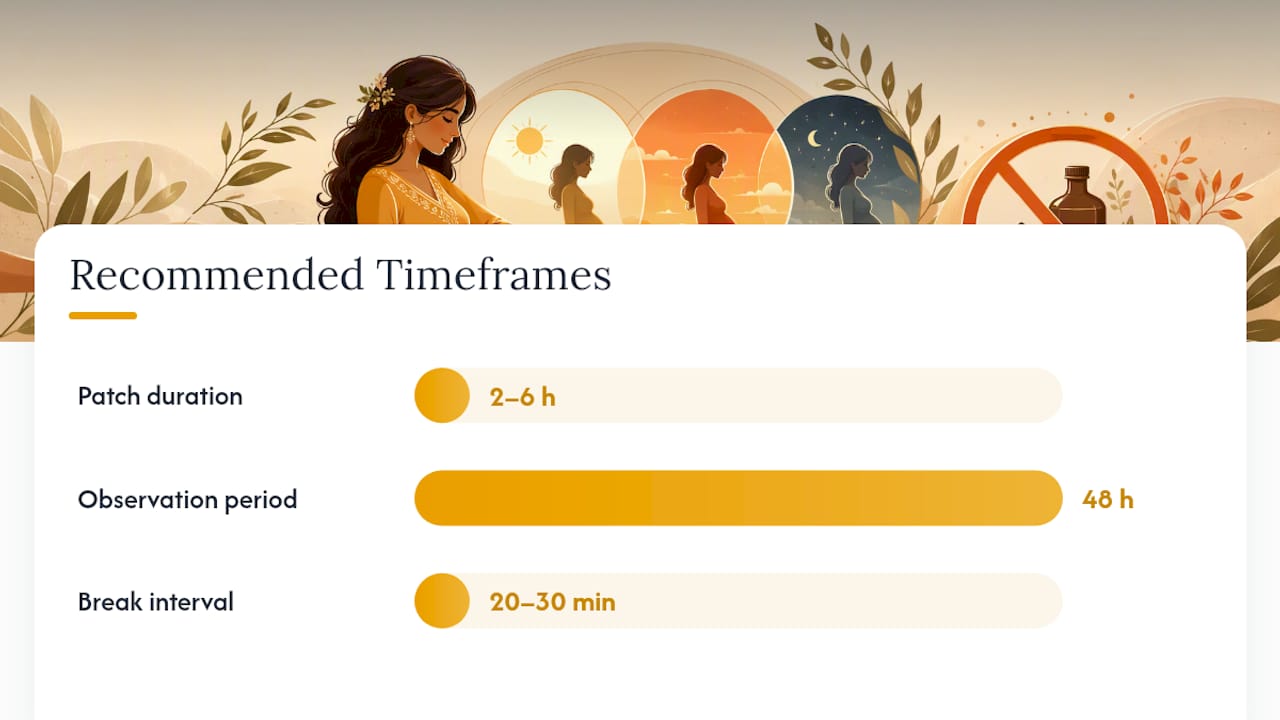
Leave it on for the same amount of time you’d leave the real design (usually 2 to 6 hours), then remove it.
Watch the site for 48 hours, checking for redness, itching, bumps, or swelling before moving forward with a larger piece.
Performing a patch test before broader henna use is standard guidance for exactly this reason. Our own step-by-step patch test walkthrough covers what to look for if your skin runs sensitive even outside of pregnancy.
Once you’ve cleared the patch test, keep the actual application conservative:
Limit a single session to roughly 5 grams of dry henna powder, about one teaspoon of mixed paste, and keep the design to a palm-sized area or smaller.
Apply in a well-ventilated room. Henna paste isn’t toxic to breathe, but the room shouldn’t feel stuffy or overheated.
Avoid lying flat on your back for extended periods after the first trimester, since that position can reduce blood flow and leave you dizzy or short of breath.
Take breaks every 20 to 30 minutes if the session runs long, and keep water nearby.
These aren’t arbitrary numbers. They come from the same conservative logic that shapes every other piece of pregnancy skin-care advice: when data is limited, you err toward less exposure, not more.
Choosing Safe Henna Products and Artists
The person mixing your paste matters as much as the paste itself. Before booking anyone, ask these questions directly, and don’t feel awkward doing it. A confident, experienced artist will answer without hesitation.
What’s in the paste? The answer should be henna powder, a liquid (water, lemon juice, or tea), and a fixative like sugar or a mild essential oil. Nothing else.
Is it freshly mixed? Freshly mixed paste, rather than paste that’s sat premixed for days, is a hallmark of careful practice and tends to stain more evenly with fewer irritants.
Do you patch test pregnant clients? If the answer is no, or if they seem unfamiliar with the concept, keep looking.
How will I be positioned? An artist experienced with pregnant clients should offer side-lying or supported seating rather than asking you to lie flat for an hour.
Can I see or request a certificate of analysis? Not every artist will have one on hand, but transparency about sourcing is a good sign.
If you’re still uneasy about any topical product, safer alternatives exist: temporary belly stickers, plant-based body paint marketed as pregnancy-safe, or booking a professional pregnancy henna session where the artist already builds these precautions into the process. Our guide to pregnancy henna designs walks through placement options that avoid high-sensitivity areas.
Aftercare, Timing, and Hospital Considerations
Good aftercare protects both the stain and your skin. Once the paste flakes off, avoid harsh exfoliants or sealants loaded with synthetic chemicals. A light coat of natural oil, like coconut or olive oil, keeps skin comfortable without introducing anything questionable.
Timing matters more than most people expect:
Consider getting large belly designs done a few weeks before your due date, since comfort and mobility both shift fast in the final stretch.
Henna does not interfere with pulse oximetry readings, so hospital monitoring equipment will read normally even with a stained belly or hand.
Hospital staff may still ask you to remove gel nail polish or acrylics for medical monitoring reasons, so check your birth facility’s policy ahead of time if you’re getting hands done too.
Pro Tip: If you’re due within a month, ask your artist for a smaller design or one placed away from areas where IV lines or monitors typically go, just to sidestep any last-minute removal requests. Our aftercare guide has more on getting a dark, long-lasting stain without occlusive sealants.
Why Professional Pregnancy Henna Practices Matter
Years of doing belly henna for expecting parents taught the Hennaforfun team something that generic safety articles rarely capture: the biggest risk usually isn’t the henna itself, it’s guesswork. A DIY kit with unclear ingredients, or an artist who’s never adjusted their setup for a pregnant client, introduces variables that professional practice is built to remove.
Every pregnancy session follows the same core habits: paste mixed fresh the day of the appointment, a patch test offered before any design goes on, and seating that keeps clients upright or supported rather than flat on their backs. These aren’t marketing points. They’re the same precautions outlined in professional henna guidelines for pregnant clients generally, applied consistently rather than left to chance.
If you’d rather learn the technique yourself, Hennaforfun’s private and group henna lessons cover mixing ratios and application from the ground up.
An Artist’s Honest Note on Henna and Pregnancy
Belly henna sessions are some of the most meaningful bookings we do. Most worries clients bring in are easy to resolve once they see fresh paste and a quick patch test in action. The real advice is simple: check the ingredients, test your skin first, and ask your prenatal provider if anything about your pregnancy makes you unsure. That short conversation settles more nerves than any article can.
— Angana
Book a Pregnancy-Aware Henna Session
You don’t have to choose between celebrating your pregnancy and staying cautious about what touches your skin. Professional pregnancy henna services include precautions such as freshly mixed paste, a pre-session patch test, and side-lying or supported positioning instead of flat-on-the-back sessions that can become uncomfortable in the third trimester.

The pregnancy henna services page covers dedicated options, including the Baby Showers Option 1 package starting at $200 and the more compact Baby Showers Option 2 starting at $89, plus maternity photoshoot henna for expecting parents who want documentation of the moment. If you’re planning a larger celebration with friends or family, the Whenna Events lineup includes group sessions starting at $25 per participant for the Basic package, with add-on hours available at $85. Check current dates and book a session that fits your due date and comfort level.
This article is general information, not a substitute for advice from a qualified doctor. Consult a qualified healthcare professional about your own circumstances before acting on anything here.
Sources
FAQ
Is it safe to use henna while pregnant?
Pure, additive-free henna applied in small amounts is generally considered low-risk during pregnancy, though pregnancy-specific research remains limited. Avoid black henna entirely, since it typically contains PPD, a known skin allergen the NHS explicitly warns against, and always patch test first.
What if you accidentally get a tattoo while pregnant?
A black henna “tattoo,” meaning one made with PPD or synthetic dye rather than pure henna, is mainly a concern if you develop an allergic reaction. Wash the area, watch for redness, swelling, or blistering, and contact your provider if symptoms spread or you notice any systemic reaction.
What is the safest way to dye my hair during pregnancy?
Pure henna is one option some people use as a plant-based alternative to synthetic hair dye, since it doesn’t contain the ammonia or peroxide found in many chemical dyes. Even so, patch test on skin first and confirm the product has no added PPD or metallic salts before applying it to your scalp.
Is it okay to get henna if you’re not Indian?
Yes. Henna is a traditional art form with roots across South Asia, the Middle East, and North Africa, and many artists, including Hennaforfun, welcome clients from any background who want to celebrate an occasion like pregnancy. The safety precautions in this guide, patch testing, ingredient checks, and pregnancy-aware positioning, apply the same way regardless of who’s getting the design.
How much does professional pregnancy henna cost?
Pricing depends on the package. Hennaforfun’s Baby Showers Option 2 starts at $89, while the more involved Baby Showers Option 1 starts at $200, and maternity photoshoot henna pricing is available on request through the same page.
Recommended
Comments