Henna Allergy Test: How to Patch Test Safely
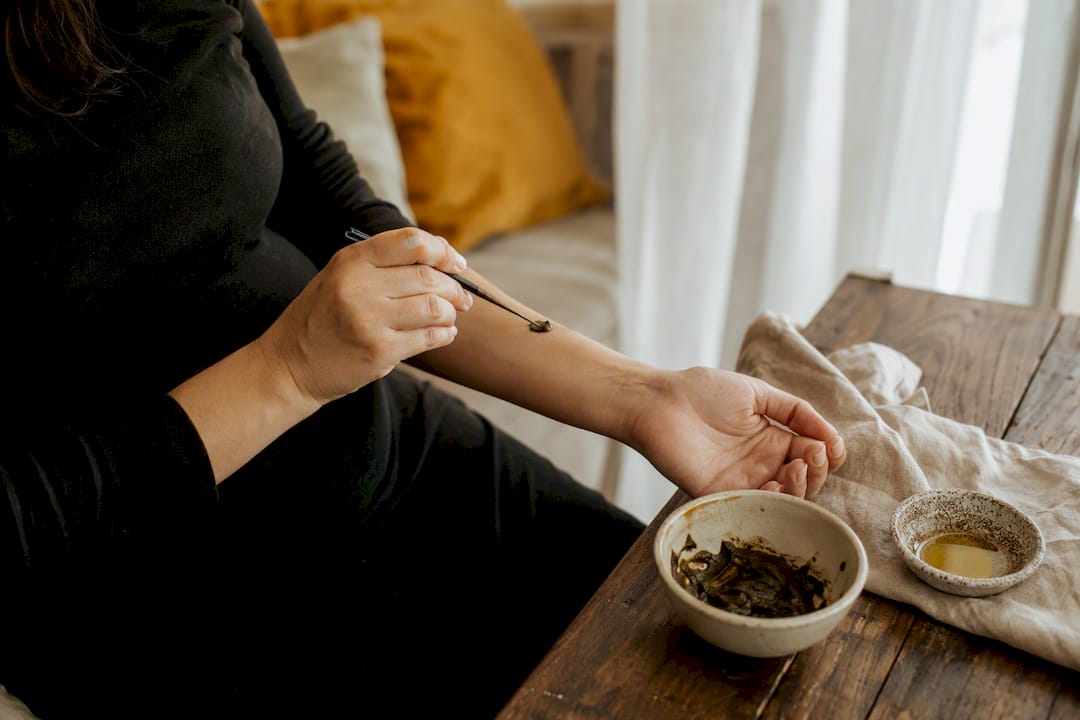
Yes, you should patch test any henna product before it touches your skin, and the safest method is a 48-hour patch test on the inner forearm. If the product is dark, dries in minutes, or has no ingredient list, skip it entirely. That’s usually black henna, and it carries a real risk of severe allergic reaction tied to a chemical called PPD.
Always patch test new henna, brow henna, or henna hair dye before full application.
Never use a product marketed as “black henna” without full ingredient disclosure.
Watch the test site for at least 48 hours, and up to a week for delayed reactions.
Stop immediately and seek care if you develop swelling, blistering, or trouble breathing.
Quick fact: PPD sensitization from black henna occurs in an estimated 2.5% of people exposed, and it can happen after a single exposure.
Key Takeaways
A safe henna experience starts with a 48-hour patch test and ends with a firm no to any product labeled black henna.
Point | Details |
Patch test first | Apply a quarter-sized amount to your inner forearm and monitor for 48 hours, up to a week. |
Avoid black henna | PPD-based black henna causes an estimated 2.5% sensitization rate and lifelong cross-reactivity. |
Know the red flags | Instant color, fast drying, no ingredient list, and chemical smell all signal an unsafe product. |
Escalate real reactions | Blistering, spreading redness, or breathing trouble means it’s time for a dermatologist or the ER. |
Choose disclosed ingredients | Products with clear ingredient lists let you test and react with confidence, not guesswork. |
Table of Contents
How Do You Do a Henna Patch Test at Home?
A henna patch test doesn’t need special equipment, but it does need to be done the right way to actually mean something. Here’s the protocol dermatologists and henna educators generally agree on.
What you’ll need:
A small amount of the product as sold, or about 1 teaspoon (roughly 5 grams) of prepared paste
Clean water and mild soap
A bandage or gauze strip
A marker or pen to label the test site
The steps:
Pick a sheltered spot. The inner forearm, behind the ear, or the inside of the elbow work well. Avoid areas that get washed often or rub against clothing, since that can wipe off the sample or irritate the skin for unrelated reasons.
Clean the site. Wash with mild soap and water, then dry completely before applying anything.
Apply a small amount. A quarter-sized dab of paste is enough. You don’t need to recreate a full design.
Cover and wait. Leave the paste on for about 4 hours, then rinse gently with water. Don’t scrub.
Monitor for 48 hours minimum. Check the site periodically for redness, itching, or swelling. Some reactions take longer to show up. A common home protocol recommends watching the area for up to a full week before calling it clear.
Label everything. Note the product name, batch number, and date directly on your skin near the test site or in your phone. If a reaction shows up days later, you want to know exactly what caused it.
If you’re testing more than one product, say a natural henna cone and a separate brow henna, use different, clearly marked spots on opposite arms. Stagger your tests by a day or two when you can, so a delayed reaction from one product doesn’t get confused with an immediate one from another.
Pro Tip: Darker brow henna shades tend to carry more additives than lighter ones, so if you’re testing a brow tint, test the darkest shade in the line you plan to use, not just whatever sample happens to be on hand.
A quick note on labeling: “natural” or “herbal” printed on a box means very little on its own. Pure henna is a relatively mild sensitizer, but the paste you buy is rarely pure henna alone. Essential oils, dyes, and preservatives get mixed in, and any of those can trigger a reaction independent of the henna itself.
What Does a Henna Allergic Reaction Actually Look Like?
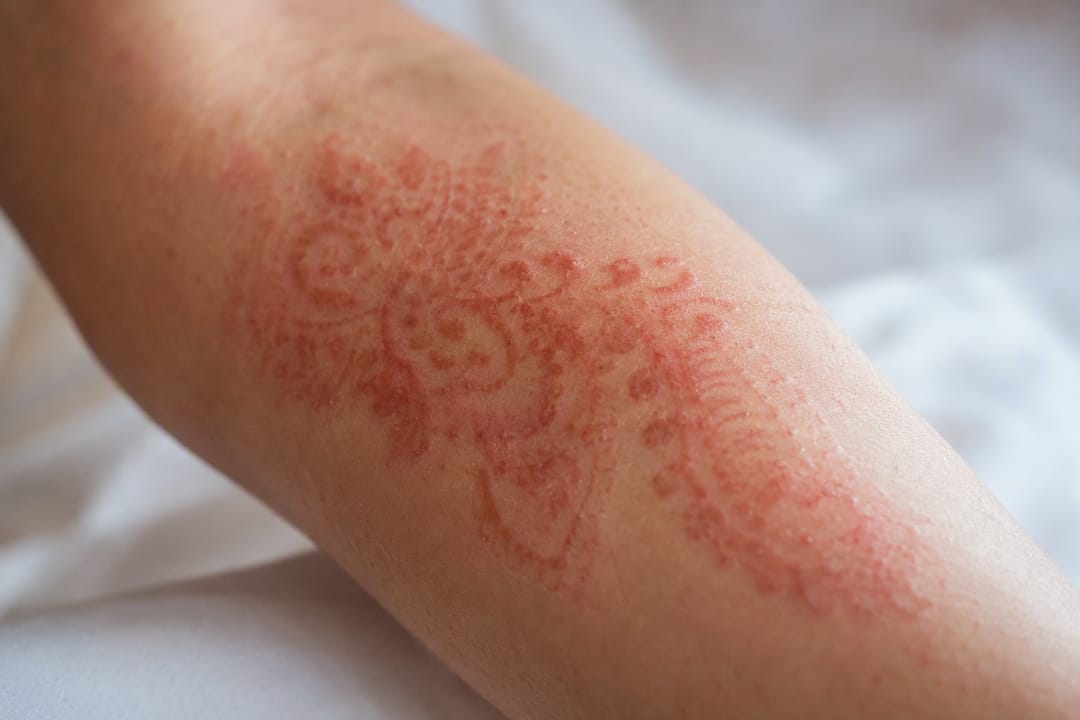
Not every red mark after henna is an allergy. Most people get mild, temporary redness or itching where the dye sat, and that clears up on its own within a day or two. A genuine allergic reaction tends to look and behave differently.
Redness, swelling, or blistering that follows the exact outline of the design
Oozing or crusting at the site, sometimes days after application
Itching that gets worse rather than better over 24 to 48 hours
Spreading redness beyond the original pattern
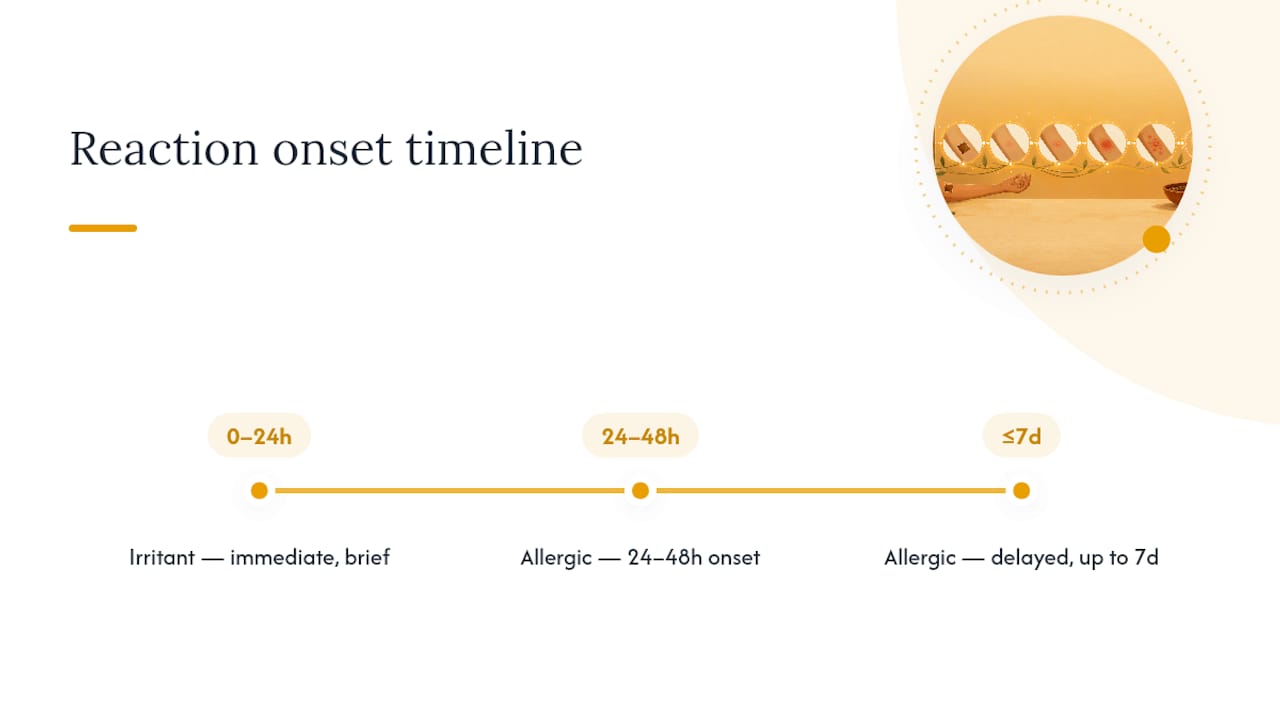
Timing matters here. Irritant reactions, caused by friction or a strong but non-allergic ingredient, usually show up fast and fade fast. True allergic contact dermatitis is delayed. DermNetNZ documents onset anywhere from 48 hours to 7 to 14 days after exposure, with features like erythema, itching, and blistering that can spread beyond the tattoo itself.
The number that matters: PPD sensitization from black henna is estimated at 2.5%, and once sensitized, you can react to hair dyes and other PPD-containing products for life. That cross-reactivity is why a positive black henna reaction is worth taking seriously even if the rash itself fades.
Why Is Black Henna More Dangerous Than Regular Henna?
Black henna isn’t henna. It’s typically a mixture that includes p-phenylenediamine, or PPD, added to create a fast, jet-black stain that pure henna simply cannot produce on its own. PPD is a coal-tar derivative approved for use in hair dye at regulated concentrations, but it’s not meant for prolonged skin contact, and that’s exactly how black henna tattoos are applied.
The FDA warns that temporary “black henna” tattoos may contain PPD at levels that can cause severe allergic reactions, including blistering, scarring, and lasting sensitization.
Watch for these red flags before you let anyone apply a “henna” tattoo:
Instant or near-instant black or blue-black color
Dries in minutes instead of the hour or more real henna paste needs
No ingredient list, or vague terms like “natural dye blend”
Strong chemical smell instead of the earthy scent of real henna paste
Sold at street fairs, beach vendors, or markets with no labeling at all
Health Canada and the FDA both advise avoiding black henna outright. If you’re unsure whether a product you already own contains real henna, check how it looks once it fully oxidizes. Genuine henna stains reddish brown to deep auburn, never true black.
When Should You See a Dermatologist Instead?
Some reactions need more than a cool compress and patience. Get medical attention right away, call 911, if you notice difficulty breathing, swelling of the face or throat, or dizziness after henna exposure. Those are signs of a systemic allergic reaction, not just skin irritation.
Book an appointment with a dermatologist or allergist if:
Your patch test caused blistering, oozing, or spreading redness
You suspect PPD sensitization from a past black henna tattoo
You need a definitive answer before repeat exposure at a wedding, event, or job that requires henna application
Professional patch testing goes further than what you can do at home. A clinician applies multiple standardized allergens under adhesive patches, leaves them in place for 48 to 72 hours, and reads the results in person, which catches delayed reactions a self-check might miss entirely.
How Do You Treat a Reaction After a Positive Test?
If your test site reacts, act fast but calmly. Most reactions resolve with basic care, though a few warrant a call to your doctor.
Wash the area immediately with mild soap and water to remove any leftover paste or dye.
Cool it down. A cool, damp compress for 10 to 15 minutes helps with swelling and itching.
Take an oral antihistamine if itching is significant, and consider an over-the-counter hydrocortisone cream per the label instructions.
Call a doctor if you notice pus, worsening pain, or fever. That can signal a secondary infection needing antibiotics or a prescription-strength steroid.
Label and avoid. Write down the exact product name and batch number, and steer clear of it and anything with similar ingredients going forward.
A Note From Henna For Fun on Safe Testing
I’m Angana, and safety is the first thing we talk about with every client at Hennaforfun, before design ideas ever come up. We’ve built our entire approach around ingredient-disclosed henna, because “natural” on a label isn’t a guarantee, and testing is still worth doing every time.
Test every new product, even ones you’ve used before from a different batch
Never use black henna, on yourself or anyone else, regardless of how it’s marketed
Practice with a DIY henna kit with known, listed ingredients rather than an unlabeled cone
Consider a private lesson if you want hands-on guidance on safe application technique
Ready to Practice Henna Safely?
Reading about patch testing is one thing. Doing it with a product you actually trust is another. Hennaforfun sells handmade henna cones with disclosed, natural ingredients, so you know exactly what’s going on your skin before you test it. If you’d rather learn hands-on, our private art lessons in the Kirkland, Bellevue, and Snohomish area walk you through safe application from the very first stroke, patch test included.
Where to Read More on Henna Safety
What the Research Actually Tells You About Henna Safety
Most henna safety advice online treats patch testing as an afterthought, a quick footnote before the “real” content about design and application. That’s backwards. The evidence points to patch testing as the single highest-leverage thing you can do, precisely because pure henna is a weak allergen but the products sold as henna often aren’t pure at all.
The bigger failure in conventional advice is treating black henna as a variation of henna rather than a different substance entirely. It isn’t a stronger version of the same dye. It’s a PPD-based product wearing henna’s name, and that distinction should be the first thing anyone learns before booking a temporary tattoo.
If you take one thing from this article, let it be this: test the product you’re actually going to use, not a similar one, and don’t assume a past henna experience without reaction means you’re in the clear forever. Sensitization can build over time and show up on exposure number five, not number one.
Frequently Asked Questions
How long should I wait after a henna patch test before applying a full design? Wait at least 48 hours, and ideally monitor the site for up to a week if you can plan ahead. Delayed allergic reactions sometimes don’t appear until several days after exposure.
Can I be allergic to natural henna even if it’s not black henna? Yes, though it’s less common. Pure henna is a relatively weak sensitizer, but additives like essential oils or preservatives in a commercial paste can trigger a reaction on their own.
What’s the difference between an irritant reaction and a true henna allergy? Irritant reactions appear fast and fade fast, usually mild redness from friction or a strong ingredient. A true allergic reaction is delayed, tends to follow the design’s exact shape, and can worsen over 48 hours instead of improving.
Is a henna allergy test the same as a professional allergy patch test? No. A home test checks one product on a small skin area for 48 hours. A dermatologist’s professional patch test uses multiple standardized allergens left on the skin for 48 to 72 hours and interpreted by a clinician, which catches sensitivities a home test can miss.
Should I still test henna if I’ve used it before without a reaction? Yes. Sensitization can develop after repeated exposure, so a clean history doesn’t guarantee a clean result the next time, especially with a new batch or brand.
This article is general information, not a substitute for advice from a qualified doctor. Consult a qualified healthcare professional about your own circumstances before acting on anything here.
Sources
Recommended
Comments