Remove Henna From Skin Fast Without Bleach: U.S. Dermatologist Tips
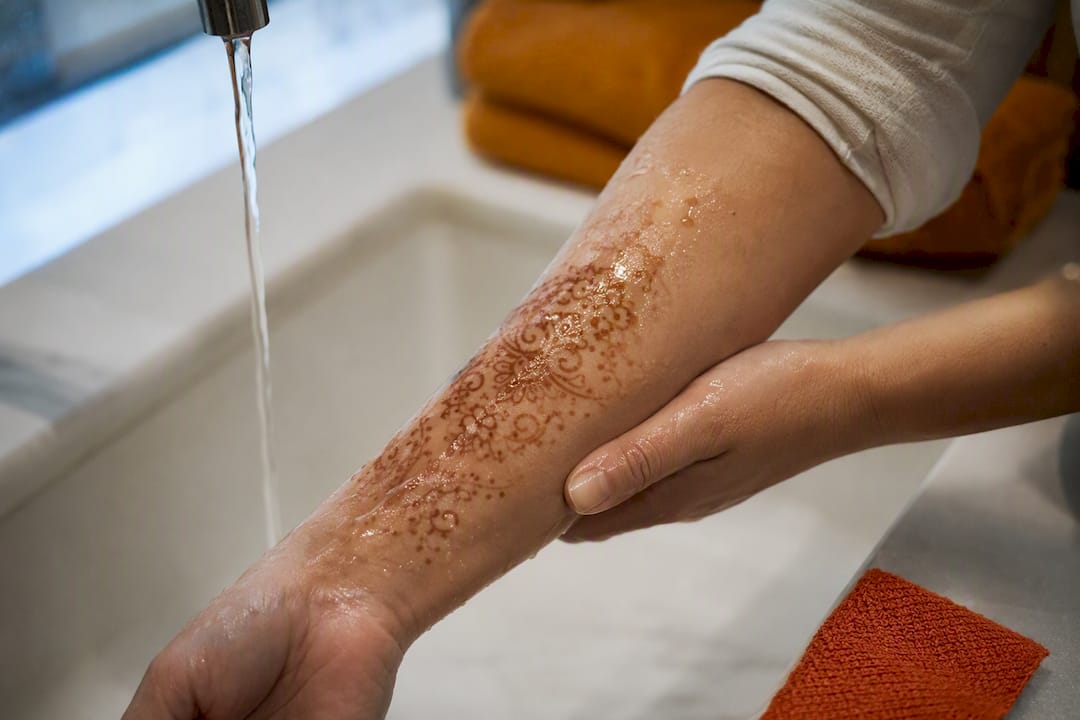
You can speed up how fast henna fades, but you can’t erase it in one shot. The most reliable approach combines oil-based cleansing or micellar water with gentle, repeated exfoliation over several days. Skip bleach and acetone entirely, and stop any method the moment your skin turns red or irritated. Palms and soles take longer than the rest of your body, so patience matters more there than anywhere else.
TL;DR:
The most effective methods involve oil-based cleansers combined with gentle exfoliation, especially for tougher stains on palms and soles.
Harsh abrasives like baking soda, lemon paste, or whitening toothpaste should be used cautiously and only on healthy, unbroken skin to prevent irritation.
Most henna stains take one to three weeks to fade naturally, with thicker skin and certain skin types prolonging the process.
Rubbing alcohol is ineffective at removing lawsone pigment since it dries the skin without breaking down the stain.
Proper application and technique from the start are crucial to avoid difficult removal, with professional lessons helping to prevent uneven or overly dark stains.
Table of Contents
What’s the Fastest Way to Remove Henna From Skin?
Speed and gentleness pull in opposite directions here, so the “fastest” method depends on how much skin damage you’re willing to risk. Start at the top of this list and only move down if the milder options aren’t cutting it.
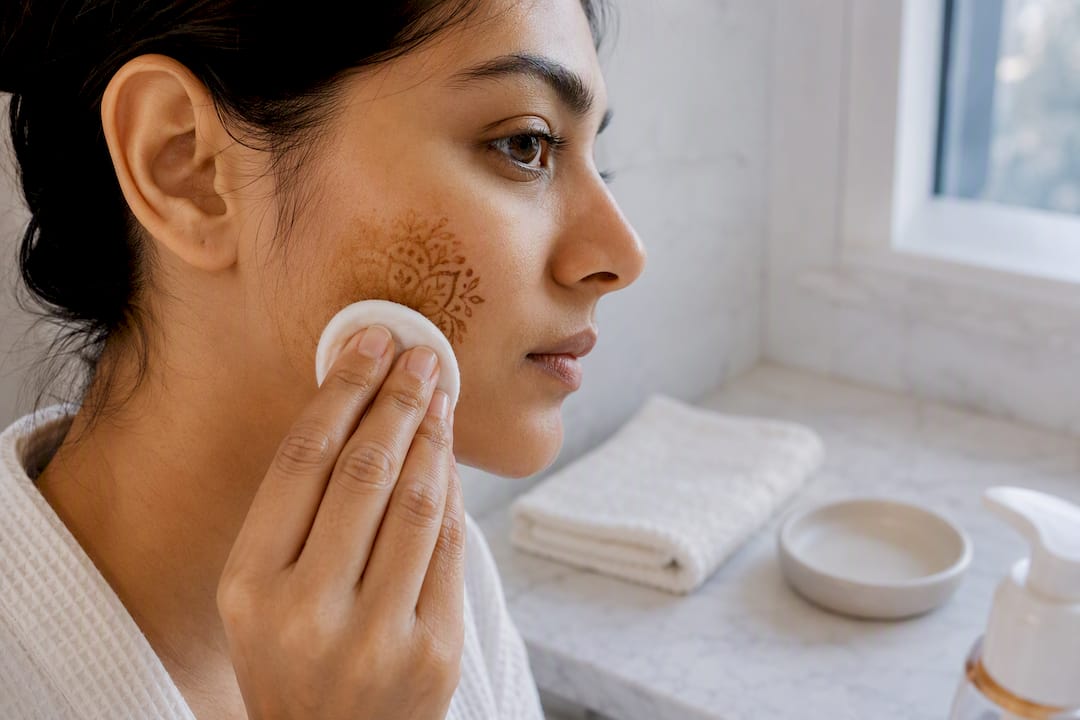
Micellar water or cleansing oil. This is the safest starting point, especially for the face, neck, or hairline. Soak a cotton pad and hold it against the stain for a few minutes, or let a cleansing oil sit for 10 to 20 minutes before wiping away, a timing window dermatologists commonly recommend for oil-based removal.
Oil plus a salt or sugar scrub. For tougher areas like palms and the backs of hands, warm olive or coconut oil softens the top skin layer, then a fine salt or sugar scrub physically lifts stained cells.
Baking soda and lemon paste, or whitening toothpaste. These work as mild abrasives on stubborn palm stains, but they’re harsher on skin and should never touch broken or irritated areas.
Salt-water soak. A warm salt-water bath softens skin before you exfoliate, making the mechanical scrubbing step more effective and less abrasive.
Hydrogen peroxide, used sparingly. It works as a mild exfoliant that can loosen surface stains, but it belongs on small, stubborn spots only, after a patch test.
Shaving. On arms and legs, a fresh razor with shaving cream removes the top layer of stained skin fast. Never use this on the face or thin-skinned areas.
Pro Tip: Test any new method on a small patch of skin first and wait 10 minutes. If it stings, turns your skin bright pink, or feels tight and dry, that method is too aggressive for that spot.
Face and neck stains respond best to method one alone; palms often need methods two through four in combination. Rubbing alcohol shows up constantly in forum advice, but it dries skin without actually breaking down the lawsone pigment bound to your keratin, so it’s largely a waste of a cotton ball.
How Do You Apply Each Removal Method Correctly?
Technique matters as much as the ingredient. Rushing any of these, especially the abrasive ones, is how people end up with irritated skin instead of faded henna.
Micellar water: Saturate a cotton pad, press it flat against the stain for 30 to 60 seconds, then wipe in one direction instead of scrubbing back and forth. Repeat two or three times a day on the face; a cloth works better than a pad for larger areas like forearms.
Oils: Baby oil, coconut oil, olive oil, and mineral oil all work similarly. Massage in, let it sit 10 to 20 minutes, then wash with a mild cleanser so the oil doesn’t clog pores overnight.
Mechanical scrubs: Fine sugar is gentler than coarse salt. Steam your hands over a warm bowl of water or take a warm shower first to loosen the skin before you scrub, and use light, circular pressure rather than digging in.
Baking soda and lemon paste: Mix to a thick paste, apply, and let it dry for 10 to 15 minutes before scrubbing off with a washcloth. Skip this entirely on cracked skin, sunburned areas, or anywhere near the eyes.
Whitening toothpaste: Apply a thin layer and let it dry for about 15 minutes before scrubbing gently with a soft cloth. The abrasive particles do the work, not the whitening chemicals, so don’t expect this to bleach the stain.
Hydrogen peroxide: Use a low concentration (3% is standard), patch test on your inner arm first, and rub gently with a soaked cotton ball for no more than a minute at a time, once or twice a day at most.
Shaving: Apply shaving cream, use short strokes with a sharp razor, and moisturize immediately afterward with a fragrance-free lotion to prevent razor burn on top of the fading stain.
Pro Tip: If you’re mixing your own oil blends for aftercare or removal, certain essential oils pair well with henna without drying out the surrounding skin, unlike straight rubbing alcohol.
Micellar water is also a solid substitute if you’re sensitive to fragrance in cleansing oils, and a partner option like this gentle makeup remover works the same way on facial henna as it does on stubborn eye makeup.
When Should You Stop Trying to Remove Henna?
Your skin will tell you when a method has gone too far. Watch for these warning signs and stop immediately if you notice any of them.
Redness that spreads beyond the stained area or doesn’t fade within an hour
Swelling, blistering, or oozing at the site
Pain, burning, or a rash that wasn’t there before you started
Any sign of a spreading reaction, especially near the eyes, mouth, or throat
If your skin reacts, rinse the area with cool water, apply a fragrance-free moisturizer or barrier cream, and stop all further treatment. Black henna mixed with PPD dye causes far more severe allergic reactions than natural henna, so blistering, intense itching, or systemic symptoms warrant a visit to a clinician, not another home remedy. Seek urgent care right away if you notice facial or throat swelling or any trouble breathing. Never reach for bleach, acetone, or hair-bleaching kits. These cause chemical burns and can leave permanent scarring, which is a far worse outcome than a stain that takes an extra week to fade. If you’re unsure whether your skin will tolerate henna at all, a patch test before your next application is worth the five minutes it takes.
How Long Does Henna Actually Take to Fade?
Most natural henna stains fade on their own within 1 to 3 weeks as your outer skin cells shed and renew. That’s the real mechanism behind every method in this guide: lawsone binds to keratin, and nothing dissolves it instantly, so every technique here is really just accelerating your skin’s normal turnover.
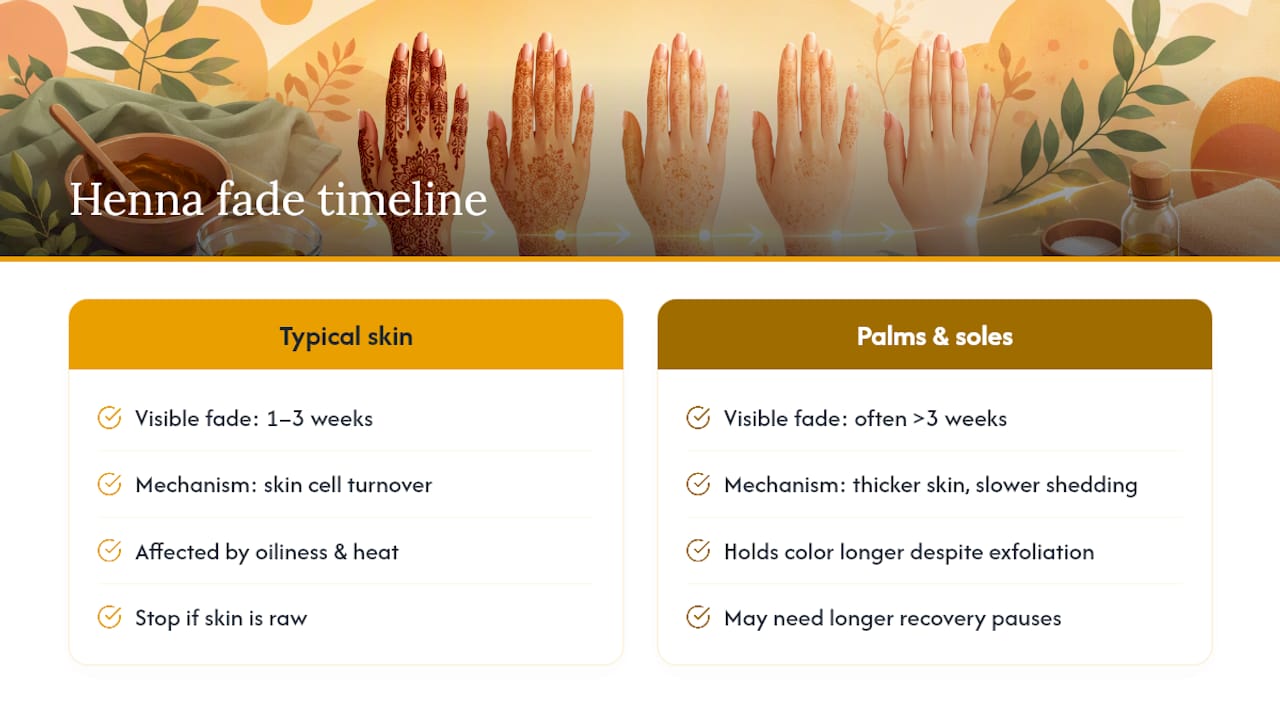
Palms and soles hold color longer than the rest of your body because the skin is thicker there, sometimes stretching well past three weeks even with regular exfoliation. Skin type plays a role too. Oily skin tends to shed the pigment a bit faster than dry skin, and recent sun exposure or frequent hot showers can also speed things along. If you’ve scrubbed daily for three or four days and your skin feels raw or tight, that’s your cue to pause for a day or two and let the barrier recover before continuing. Skin tone and thickness also affect how long a stain reads as visible in the first place, which is worth knowing before you judge your progress against someone else’s timeline.
What’s the Smartest Way to Approach Henna Removal?
Most people reach for the harshest option first because they’re impatient, and that’s backward. Start with oil or micellar water, move to a gentle sugar scrub if that’s not enough, and save baking soda paste or hydrogen peroxide for small, stubborn spots that won’t budge. Your skin barrier recovers faster from one mild pass than from three aggressive ones stacked in a single afternoon.
Good aftercare, consistent moisturizing, and skipping repeated harsh scrubbing does more for your skin long term than any single removal trick. Honestly, the best fix is prevention. Learning proper application technique cuts down on the uneven, overly dark, or oddly placed stains that make people reach for toothpaste and baking soda in the first place.
— Angana
Want to Skip the Removal Guesswork Next Time?
If you’re tired of scrubbing at uneven lines or stains that landed somewhere you didn’t want them, the fix usually isn’t a better removal method. It’s better application. Private and group henna lessons are available where you can learn placement, timing, and aftercare directly from an experienced artist instead of troubleshooting mistakes afterward.

Handmade henna cones and DIY stencils are available, built for clean, controlled lines, to help hobbyists and event hosts get consistent results without the trial and error. Pair either with our aftercare guidance and you’ll spend a lot less time hunting for removal tips down the road. Ready to get it right the first time? Book a private lesson and see what proper technique actually looks like.
Sources
This guide draws on dermatologist-reviewed advice and medical references, including Healthline, Medical News Today, Byrdie, and the Acibadem Hospitals Group health library. These sources anchor the safety warnings and step-by-step methods above.
FAQ
Does Rubbing Alcohol Take Off Henna?
Not effectively. It dries the skin without breaking down the lawsone pigment, so it does little beyond irritating skin that’s already trying to heal.
Does Toothpaste Actually Remove Henna?
Whitening toothpaste can help fade stubborn stains because of its mild abrasive particles, not because of any bleaching ingredient. Let it dry for about 15 minutes before scrubbing gently with a soft cloth.
What’s the Easiest Way to Remove Henna?
Micellar water or a light cleansing oil is the easiest and gentlest starting point, especially on the face and other sensitive areas. Escalate to a salt or sugar scrub only if the stain is stubborn.
How Can You Remove Henna in Five Minutes?
You can’t remove it completely that fast without risking your skin. A quick oil or micellar water wipe can lighten the top layer slightly, but full fading still takes repeated treatments over several days.
Does Vinegar Remove Henna?
Vinegar isn’t a recommended method in dermatologist-backed guidance, and its acidity can irritate skin without meaningfully speeding up fading compared to oil-based cleansing or gentle exfoliation.
Recommended
Comments