Henna Date Night: How to Plan One at Home or Out

A henna date night is an evening where you and your partner decorate each other’s hands with henna paste, share food and music, and photograph the designs before they fade. You can do it at home with a cone and a few supplies, or book an artist to guide you. Either way, it is a calm, screen-free date that leaves you with something to look at for a week or two afterward.
This guide covers what the evening is (and is not), how to keep it safe, what to buy, which designs work for beginners, and how to run the night from first cone to final photo.
TL;DR
A henna date night is a hands-on creative date: draw small designs on each other, let the paste dry, and photograph the result.
Use only real henna paste. The FDA warns that “black henna” can contain PPD, which can cause serious skin reactions.
Start on paper, choose two or three simple motifs in advance, and protect your table and clothes.
Henna night and mehndi are wedding traditions with deep roots. A date night borrows the art, so learn a little about where it comes from.
Prefer a guided version? Our Whenna Events start from $25 per participant.
Table of Contents
What a henna date night actually is
Search for “henna night” and you will mostly find wedding content: Pinterest boards of decor, stock photos, and planning guides for brides. That is because a henna night is traditionally a pre-wedding celebration. The Knot describes a mehndi ceremony as a gathering where loved ones join the couple, henna is applied, and music and dancing celebrate love and togetherness.
A henna date night is a smaller, quieter cousin of that idea. There is no guest list, no dress code, and no ritual sequence to get right. It is two people, a cone of paste, and an hour or two of focused, slightly silly creativity.
The core activity is simple. According to one date idea write-up on a henna art exchange, couples can pick up a henna cone or visit a booth, draw a small freehand design on each other’s hand, compare the designs once dry, and take photos before they fade. That is the whole formula, and it works because:
It levels the field. Neither of you is likely to be good at it, so nobody is showing off.
It forces slowness. Henna needs steady hands and time to dry, which means real conversation.
It leaves a souvenir. The stain stays on your skin for days, a small reminder of the evening.
If you like the idea of a creative first or fifth date in general, our piece on couples art activities backed by research goes into why shared making tends to bring people closer.
Henna, mehndi, and why the words matter
People often ask whether mehndi and henna are the same thing. Mostly, yes, with a cultural difference in naming. Harper’s Bazaar Arabia explains that henna is the celebratory art form in Arab communities, while mehndi is its South Asian equivalent. The paste is made from the same plant, the festive feeling is shared, and the designs differ by region.
In practice, you will see Arabic-style henna with bold florals and open space, and Indian mehndi with dense, intricate patterning. Moroccan, Sudanese, and other traditions each have their own look. When you plan your date, you can say “henna” for the art in general and use “mehndi” when you are referring to the South Asian tradition specifically.
Respecting the tradition while borrowing the art
Another question readers ask is whether getting henna is disrespectful. Henna is a living tradition for millions of people, and trying it is not a problem in itself. Treating it thoughtfully is what matters.
A few habits help:
Don’t invent a ceremony. Customs differ widely. CairoScene’s account of henna nights across Arab homes stresses that music, dress, food, and rituals vary by family and generation. If you want to recreate a specific tradition, research it from the community it belongs to rather than mixing pieces together.
Learn what the ritual means. The University of California, Berkeley’s Magnes Collection describes the Mizrahi Jewish henna ceremony as a pre-wedding celebration rooted in Middle Eastern and North African Jewish communities, with blessings, protection, good fortune, music, dancing, and festive meals.
Call your date what it is. A “henna date night” is a creative date. It is not a mehndi ceremony or a henna night in the wedding sense, and saying so keeps the distinction clear.
Credit the style. If you copy an Indian bridal pattern or an Arabic floral, name where the style comes from when you share the photos.
If you are planning an actual wedding henna night, hire an artist who works within that tradition. A date night does not replace it.
Safety first: real henna versus “black henna”
This is the one part of the evening that is not optional. Natural henna is a plant paste, and it stains the skin a shade of brown. Anything else needs a closer look.
The FDA’s fact sheet on temporary tattoos, henna, and black henna says henna is approved only as a hair dye, and that it typically stains brown, orange-brown, or reddish-brown. It adds that “black henna” often contains PPD (para-phenylenediamine), which is not permitted in cosmetics applied to the skin and which can cause dangerous reactions. The agency says it has received reports of skin injuries from products sold as henna and black henna.
The agency’s 2018 consumer warning lists blisters, scarring, and lasting sensitivity among the possible reactions. The FDA’s consumer factsheet also notes that henna stains can last from 3 days to a few weeks, while black henna may contain hair dye or another dye to make it darker and longer lasting.
What that means for your date:
Be suspicious of jet-black paste. Real henna goes on dark green or brown and develops into orange-brown, then deeper reddish-brown.
Be suspicious of a stain that is instant or appears within an hour. Natural henna develops over time.
Check the ingredients. Look for a short list: henna, a liquid such as lemon juice or water, sugar, and essential oils. Our guide to natural henna ingredients shows what a safe paste looks like and how to avoid PPD.
Patch test first. If either of you has sensitive skin or allergies, do a small test 48 hours ahead. We walk through it in our posts on the 48 hour patch test for sensitive skin and the henna allergy test.
Stop if it burns, itches, or blisters. Wash the area and see a doctor or pharmacist, especially if a rash develops.
If one of you is pregnant, check our guidance on pregnancy henna safety before you start, and talk with your own provider.
One more point for anyone booking an outside artist: the FDA says the practice of tattooing is generally regulated by local jurisdictions, and its page on tattoos and temporary tattoos is where that is spelled out. Henna art is not the same as a tattoo, but it is a good reason to ask any artist what is in their paste.
What you need for a henna date night at home
You do not need much, and most of it is already in your kitchen. A practical home setup, as laid out by a henna supply company, includes henna paste cones, stencils, coconut oil, wooden spatulas, step-by-step instructions, scissors, newspaper or another surface covering, plastic wrap, towels, and a freezer for storing leftover paste.
Here is how we would build the kit for two people:
Item | Why you need it |
2 to 4 henna cones | One each, plus spares for mistakes or a second round |
Stencils (optional) | Clean shapes for anyone nervous about freehand |
Paper and a pen | Practice and planning before skin |
Washable table cover or newspaper | Paste stains fabric and wood |
Towels and wipes | For drips, and for resting hands |
Plastic wrap or medical tape | Protects designs afterward |
Coconut or olive oil | Used later when you remove the dried paste |
Good lighting | A bright lamp makes fine lines far easier |
If you would rather skip sourcing, we sell handmade henna cones, DIY henna stencils, and a DIY henna kit that puts the basics in one box.
Designs that work for beginners
Keep your first round small. wikiHow’s beginner designs include single vines, dots, leaves, and mandalas, and the advice is to practice on paper first. We agree: a vine along the side of a finger or a ring of dots around the wrist looks intentional even when your hand shakes.
For couples, matching or complementary motifs make the night feel personal. A henna supplier’s Valentine’s guide suggests roses for romance and new beginnings, yin-and-yang designs for complementary partners, geometric patterns for shared intentions, and small sun, sand, lotus, or evil-eye motifs. Other easy ideas:
Each of you draws half of a simple shape that completes when your hands touch.
Initials hidden inside a leaf or flower.
Two small moons or suns, one on each partner.
A tiny repeated symbol, such as a heart or star, that you both choose.
For a deeper look, see our post on matching couple henna designs. If you want to understand how pattern work is built from repeated shapes, this overview of how nail artists create patterns offers ideas on spacing and repetition that translate well to henna lines.
How to run the evening, step by step
Here is a flow that fits into about two to three hours, including drying time.
Set the scene (20 minutes). Cover the table, set a bright lamp, put on a playlist, and lay out towels. Choose a spot where each of you can rest your forearm on something soft.
Warm up on paper (15 minutes). Squeeze a few lines, dots, and leaf shapes onto paper. You will quickly learn how much pressure the cone needs.
Choose your designs. Pick two or three options each in advance, so nobody is deciding with a loaded cone in hand. Offering a short menu of floral, minimalist, or bracelet-style designs is a tip from a henna evening guide, and it removes the pressure of inventing something on the spot.
Draw on each other. Take turns, one hand at a time. Work from the base of the hand toward the fingertips so you do not smudge finished lines. Make skin application optional: if one of you is nervous, they can draw on paper or decorate a stencil instead.
Let it dry. Plan for the paste to dry before anyone handles objects or moves around, which is standard advice from a henna party planning guide. This is your conversation window.
Photograph and compare. Once dry, take photos together. The color will be pale orange at first and deepen over the next day or two.
Wait, then remove. Leave the paste on as long as you comfortably can, then scrape or rub it off with oil. Our guide on how long to leave henna on skin covers timing in detail.
Food, drinks, and mood
The golden rule is that you will not have free hands. Choose food you can eat without fine motor skills. Based on one henna night planning guide, finger foods, dates, nuts, fruit, small savory bites, tea, juice, and mocktails work well because guests can eat and drink while avoiding freshly applied henna. Have your partner feed you a few bites if you are mid-drying. It is part of the fun.
For atmosphere, you could:
Pick a theme, such as tropical, with matching outfits and a playlist to suit. One couple’s date night idea pairs decorating each other’s hands with themed snacks, music, favorite-memory conversation, and a movie marathon.
Light candles and dim everything except your work lamp.
Keep a question list nearby: first impressions, best trip together, a goal for the next year.
Pair it with another creative activity, such as making rangoli, if you want to extend the evening.
Making the stain last
A good date-night stain should still look good on the weekend. Keep the area dry for the first few hours after removing paste, avoid scrubbing, and moisturize gently with an oil-based balm. Our full guide on henna aftercare for a dark, long-lasting stain has the steps. If you are heading to a pool or ocean, read about swimming with henna first.

Stain life also depends on where it is. Thick-skinned areas such as palms and fingers take color best. If you like the idea of fine, delicate lines and wondering how long they hold, this look at fine line floral designs and how to help them last is a good read on why thin linework fades faster and how to look after it. Henna on darker skin tones develops differently, and we explain it in henna on dark skin.
Prefer a guided henna date? Book a Whenna Event
If you would like an artist to handle the paste, the setup, and the cleanup, we host Whenna Events at wineries, homes, and other venues in Washington. You get a professional artist, safe natural paste, and a relaxed group setting, which works well for a couple, a double date, or a few friends.
Published pricing starts at $25 per participant for Basic and $35 per participant for Plus. Premium Option 1 starts at $35 per design per participant, Premium Option 2 is $200, and each additional hour is $85. Details on what each level includes are on the Whenna Events page.
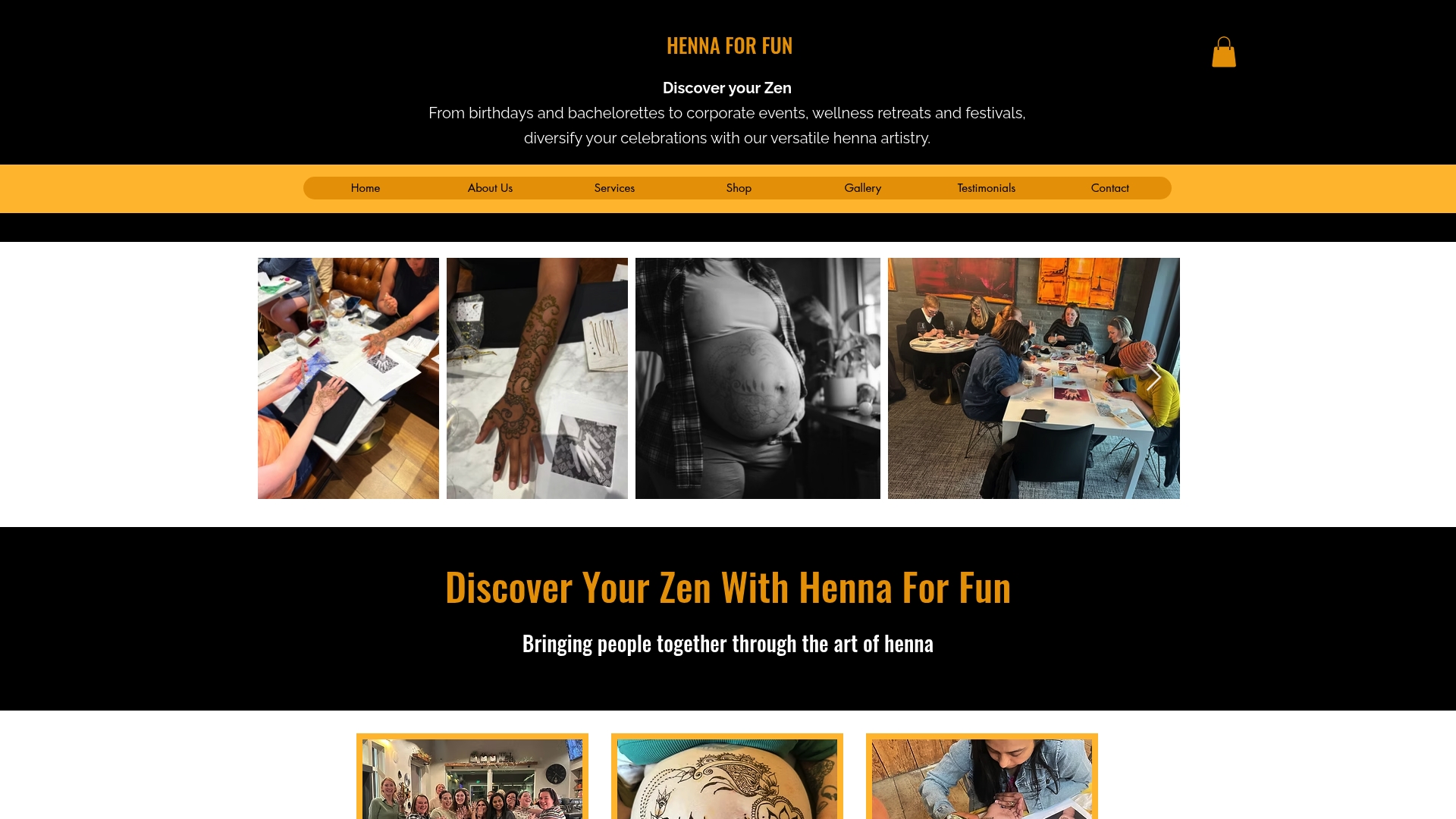
If you want to learn to draw the designs yourself, we also teach private lessons: a 3-day course for $111, a 5-day course for $179, and a henna mixing and cone making session for $99, all on our learn page. For dates already on the calendar, check our calendar and events page. Booking for a group at work instead? See our corporate workshops.
Our perspective on henna as a date
We have run henna events in wineries, living rooms, and offices, and the pattern is the same each time: within ten minutes people stop looking at their phones. Henna asks you to slow down, hold still, and pay attention to another person’s hand. That is rare on a date, and it is why we think it works better than a dinner where everyone is performing.
We also believe the art deserves respect. Henna comes from traditions that are still alive, and we teach it as an art with a history, not a trend. Use natural paste, learn the names of the styles you borrow, and do not be afraid to start small. A single vine drawn by someone who loves you will always look better than a perfect pattern from a stranger.
Our advice for a first henna date: keep the designs simple, keep the paste natural, and keep the evening unhurried.
— Angana
FAQ
How long does a henna date night take?
Plan for two to three hours at home. Setup and practice take about 30 minutes, drawing takes roughly an hour for two people, and drying is when you eat, talk, and listen to music. The paste then stays on for as long as you can manage before you remove it.
How long will the stain last?
According to the FDA’s consumer factsheet, henna stains can last from 3 days to a few weeks. Palms and fingers hold color longest, and careful aftercare helps. A stain that promises to last far longer or looks jet black is a warning sign.
Is a henna date night safe if I have sensitive skin?
Natural henna is generally used on skin in many communities, but allergies can occur. Do a patch test 48 hours ahead and avoid any paste with unclear ingredients. If you have a history of reactions or a medical condition, ask your doctor or dermatologist first.
What do people wear to a henna party or date?
At a traditional henna party, CairoScene notes that outfits can be themed and vary by family. For a date night, choose something comfortable with loose sleeves or short sleeves, and wear something you do not mind staining.
Can we do a henna date night if we have never drawn before?
Yes. Start on paper, pick simple shapes such as vines, dots, and leaves, and use stencils if you want a cleaner result. If you would like help, book a guided session or one of our lessons.
Sources
Recommended
Comments