The Best Essential Oils for Henna and How to Mix Them Right
- angana0403
- 11 minutes ago
- 8 min read
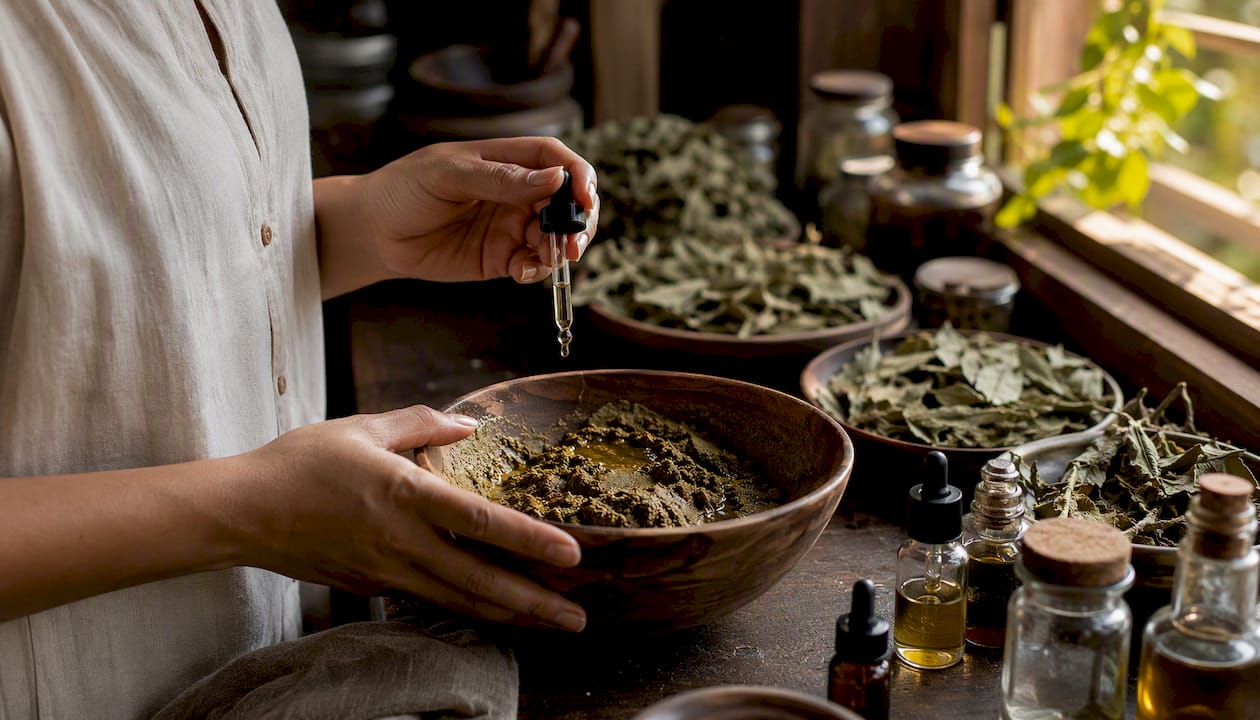
Tea tree, cajeput, lavender, geranium, and rosemary are the most reliable essential oils for henna, and most practitioner recipes call for a moderate amount of essential oil per 100 g of henna powder. Tea tree and cajeput push stains darker and faster. Lavender, geranium, and rosemary add scent and gentleness for sensitive skin or hair use. Skip clove, cinnamon, camphor, and citrus oils unless you know exactly what you’re doing.
Tea tree: strong terpineol content, reliable darkening
Cajeput or ravensara: close cousin to tea tree, similarly effective
Lavender: milder, good for sensitive skin and scalp
Geranium: adds fragrance, gentle on skin
Rosemary: conditioning, popular for hair henna
Small batch equivalent: a small measured amount per 25 g of henna
Always patch-test any new oil 24 to 48 hours before applying paste to skin.
Key Takeaways
The best essential oils for henna are terpineol-rich options like tea tree and cajeput, used at roughly 15 to 30 ml per 100 g of henna, with a mandatory patch test beforehand.
Point | Details |
Best color-boosting oils | Tea tree, cajeput, and ravensara contain high terpineol and cineol content for darker stains. |
Gentler alternative oils | Lavender, geranium, and rosemary suit sensitive skin and hair application. |
Standard mixing ratio | Use a moderate measured amount of essential oil per 100 g of henna powder. |
Oils to avoid or limit | Clove, cinnamon, camphor, and citrus oils carry irritation or phototoxicity risks. |
Safety step before use | Patch-test any new oil for 24 to 48 hours before full application. |
Table of Contents
Which Essential Oils for Henna Actually Improve Color
Henna’s stain comes from lawsone, a molecule that needs help migrating out of the leaf powder and binding to keratin in your skin or hair. Essential oils rich in monoterpene alcohols, sometimes called “terps” in henna circles, dissolve lawsone more efficiently and help it bind to keratin, which is why the right oil can mean the difference between a pale orange smudge and a deep burgundy stain.
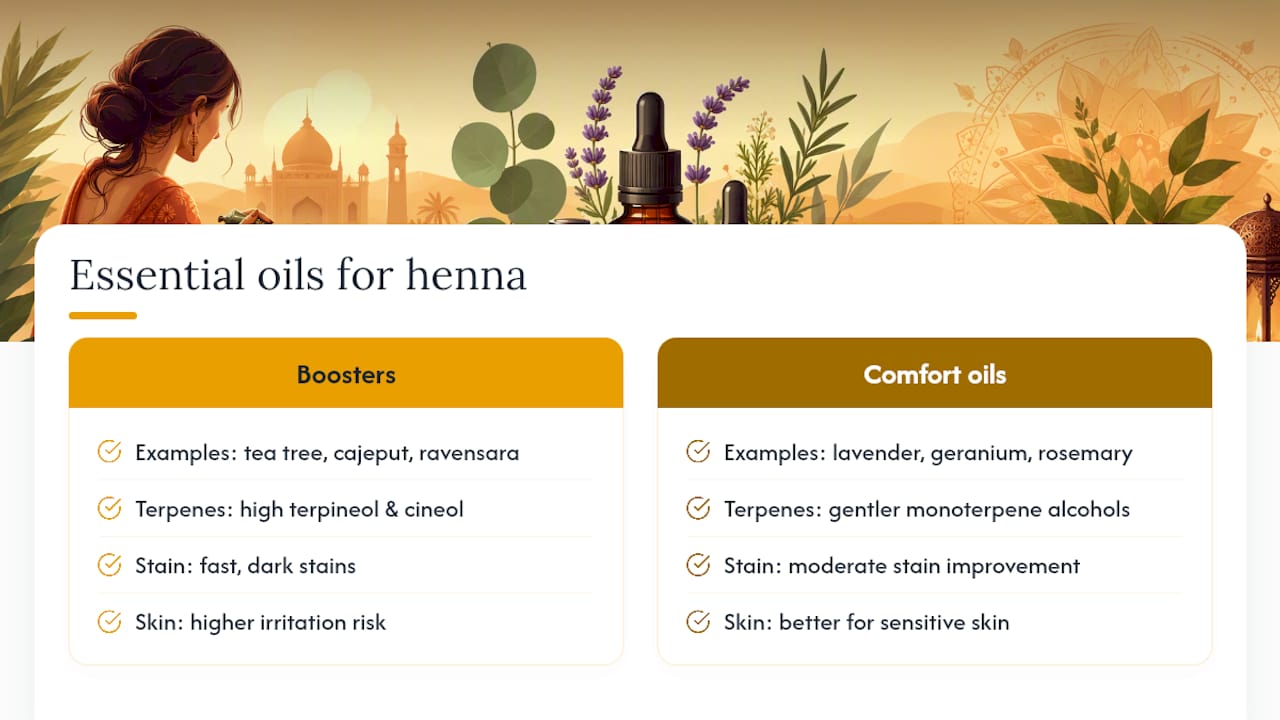
Tea tree, cajeput, and ravensara sit at the top of the list because they carry high concentrations of terpineol and cineol. Henna artists have used these three reliably for fast, dark stains for decades, and they remain the default choice for anyone serious about body art color.
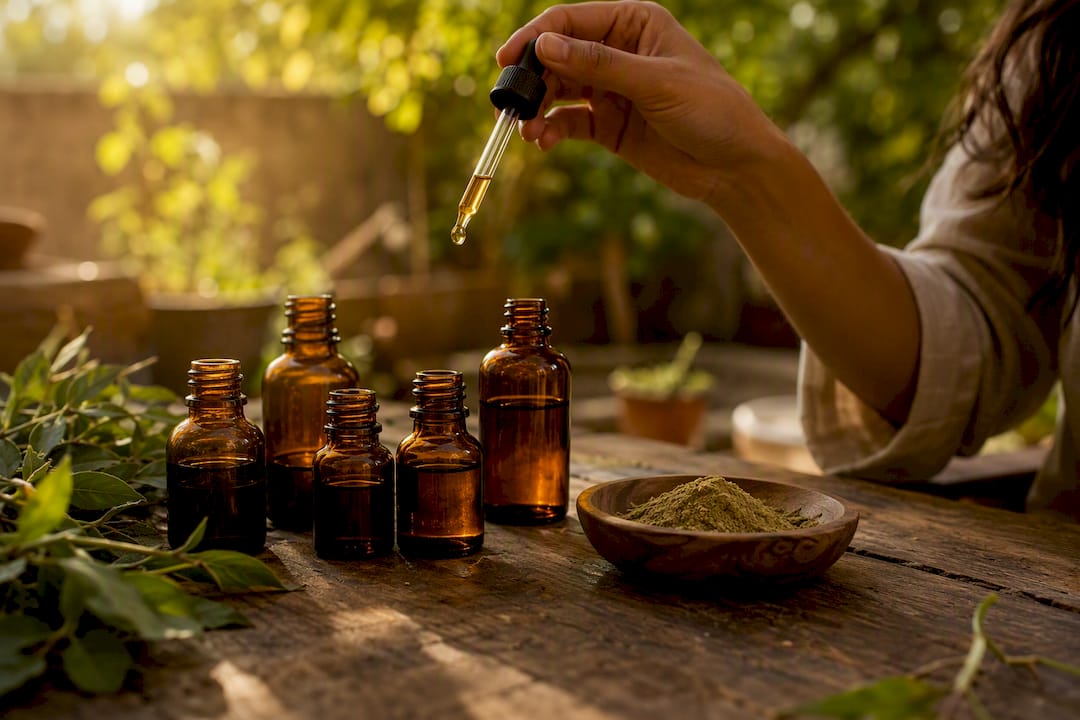
Lavender, geranium, and rosemary work a little differently. They still contain useful monoterpene alcohols, but in gentler concentrations. That makes them better suited to sensitive skin, scalp application, or anyone who finds tea tree’s medicinal smell overwhelming. Think of tea tree and cajeput as your color boosters, and lavender, geranium, and rosemary as your comfort oils that still pull double duty on stain quality.
Now the caution list. Clove leaf oil and cinnamon bark oil can darken henna paste, but they’re also common causes of contact dermatitis and should be used sparingly, if at all. Camphor is worse: it can be absorbed through skin in enough quantity to cause toxicity. Citrus oils (lemon, orange, bergamot) are phototoxic, meaning they can cause burns or discoloration when skin is exposed to sunlight after application. Some eucalyptus varieties carry similar irritation risks depending on chemotype, so not every “eucalyptus oil” on a shelf behaves the same way.
Before buying anything, check three things on the label: the full botanical name (not just “tea tree oil” but Melaleuca alternifolia), the chemotype if listed, and whether the supplier states a country of origin or extraction method.
Pro Tip: If a label only says “fragrance oil” or doesn’t list a botanical name at all, put it back. That’s a synthetic blend, not a therapeutic-grade essential oil, and it won’t do anything for your stain.
How to Mix Henna Paste With Essential Oils
Getting the ratio right matters more than most people expect. Too little oil and you barely notice a difference. Too much, and you risk skin irritation without any real color gain.
Measure your henna powder. For a standard body-art batch, start with 100 g of sifted henna powder in a non-metal bowl.
Add your liquid and acid. Mix in enough lemon juice or strong black tea (roughly 100 to 150 ml) to form a paste, plus a spoonful of sugar for tack, as most practitioner recipes recommend.
Add essential oil after the paste rests, not before. Most artists let the paste sit for 6 to 24 hours to release dye first, then stir in 15 to 30 ml of your chosen terp oil (about 1 to 2 tablespoons). For a small test batch, use 2 to 3 ml per 25 g of powder.
Let it mature again. Give the paste another hour or two after adding oil so everything blends evenly.
Store properly. Refrigerate unused paste in an airtight container; it typically keeps for about a week, though color strength fades a little each day.
For hair henna, the process is nearly identical, but many people skip the strong terp oils altogether and use rosemary or lavender for conditioning instead, since scalp skin tends to be more reactive than forearm skin. Consistency matters too. A yogurt-thick paste that’s left on longer and kept warm (wrapped or covered) develops a noticeably deeper stain than a runny paste applied and immediately exposed to cool air.
Patch Testing and Safety Before You Apply Henna Paste
Treat every essential oil like a medicine, not a garnish. Concentrated plant oils are potent, and “natural” doesn’t mean “risk-free.”
Apply a small dot of diluted paste to your inner forearm and wait 24 to 48 hours before doing a full application.
Watch for redness, itching, swelling, or blistering. Any of these means stop and do not use that oil batch.
Pregnant or breastfeeding readers should be extra cautious. Some oils, particularly camphor and certain high-terpene blends, carry cautions during pregnancy. Lavender is generally considered one of the milder, more commonly tolerated options, but check with a healthcare provider if you have any underlying conditions or are on medication.
Never apply undiluted essential oil directly to skin. It should always be blended into the paste at the ratios above, never used straight.
If irritation does occur, wash the area gently with mild soap and cool water, apply a fragrance-free moisturizer, and avoid scratching. Seek medical attention if you notice swelling, blistering, or symptoms that spread beyond the application site. For broader safety context around henna application in general, see our henna safety and booking guide.
How to Choose Quality Essential Oils for Henna
“Aromatherapy grade” is not a regulated term, and it tells you almost nothing about purity. A bottle can carry that label and still be diluted, adulterated, or extracted with residual solvents. Instead of trusting the label, ask suppliers directly whether they have GC/MS testing available and whether they can confirm the plant’s chemotype, since lavender grown in different regions varies enough in monoterpene alcohol content to change how well it performs in paste.
Confirm the full botanical name, not just the common name on the front label
Ask about chemotype, especially for lavender and eucalyptus
Buy small test sizes before committing to a large bottle
Favor suppliers who specialize in henna or aromatherapy over general craft stores
Pro Tip: Order a small 5 to 10 ml bottle first and test it in a single batch before buying in bulk. A cheap oil that underperforms is a waste of powder, time, and patience.
Fixing a Weak Henna Stain and Aftercare That Preserves It
Disappointing stains almost always trace back to one of four things: old or poorly stored henna powder, a missing or weak acid component, not enough terp oil, or an oil batch that’s gone stale or was mislabeled.
Check your powder first. Henna loses potency over time, so a stain that comes out orange instead of brown is often just old stock, not an oil problem.
Increase your acid, not just your oil. A weak lemon juice or tea base won’t release lawsone properly no matter how much tea tree you add.
Reapply for a boost. If a stain looks patchy a day later, a fresh thin layer of paste over the same design can deepen color, as long as skin isn’t irritated.
Seal and protect afterward. Once you scrape off dried paste, dab on a sugar-lemon mix or coconut oil to seal, avoid water for several hours, and skip exfoliating scrubs for at least three days. Our guide to deepening henna stains covers this in more depth.
Discard any oil batch that smells off or has changed color. Oxidized essential oils are more likely to irritate skin and less likely to help your stain.
Why This Henna Oil Guidance Comes From Real Practice
This guidance reflects Angana’s hands-on experience mixing and testing henna paste through Hennaforfun’s private lessons, DIY kits, and event work across hundreds of applications.
Private henna lessons where students mix paste and test oils firsthand
DIY kits and handmade cones built from tested recipes, not guesswork
Repeated event and workshop settings that surface what actually works on real skin
Readers can book a private lesson to practice these ratios under guidance
Book a Henna Lesson or Skip the Mixing Entirely
Mixing your own paste with the right terp oils gives you control over color and scent, but it takes practice to get the ratio and timing right every time. If you’d rather learn hands-on instead of troubleshooting alone, Hennaforfun’s private henna lessons in the Seattle and Snohomish area walk you through paste-making, oil selection, and application technique with someone watching your consistency and timing in real time.
Prefer to skip the mixing altogether? Hennaforfun’s handmade henna cones are made with tested ratios so you get consistent color without measuring a single milliliter yourself.
What Most Henna Guides Get Wrong About Oils
Most advice online treats essential oils as a magic darkening trick and stops there. That’s backwards. The oil is a supplement to good technique, not a substitute for fresh henna powder, a proper acid, and adequate paste maturation. I’ve seen plenty of frustrated beginners dump extra tea tree oil into a weak paste made with stale powder, expecting a miracle stain, and getting disappointed instead.
The bigger blind spot is sourcing. Everyone talks about ratios, almost nobody talks about chemotype variability. Two bottles labeled “lavender oil” can behave completely differently depending on where the plant grew and how it was distilled. If you’re serious about consistent results, spend more energy vetting your supplier than debating whether to use 20 ml or 25 ml.
Prioritize this order: good powder first, acid and sugar second, oil selection third, exact ratio last. Get the first three right and the oil becomes the finishing touch it was always meant to be.
Frequently Asked Questions
What is the best essential oil for henna body art? Tea tree oil is generally considered the most reliable choice because of its high terpineol content, which helps darken and deepen the stain.
Can I use essential oils in hair henna paste? Yes. Rosemary and lavender are popular for hair henna because they condition the scalp gently while still contributing some staining benefit.
How much essential oil should I add per 100 g of henna? Most practitioner recipes call for 15 to 30 ml, or roughly 1 to 2 tablespoons, per 100 g of henna powder.
Are essential oils safe to use during pregnancy for henna? Some oils, especially camphor and highly concentrated terp blends, carry pregnancy cautions. Lavender is often considered milder, but check with a healthcare provider first.
Why did my henna stain come out light even with essential oil added? Old henna powder, a weak acid, or too little oil are the most common causes. Fix the powder and acid first before adding more oil.
Sources
Recommended
Comments