Pride Event Activities That Actually Work in Any Setting
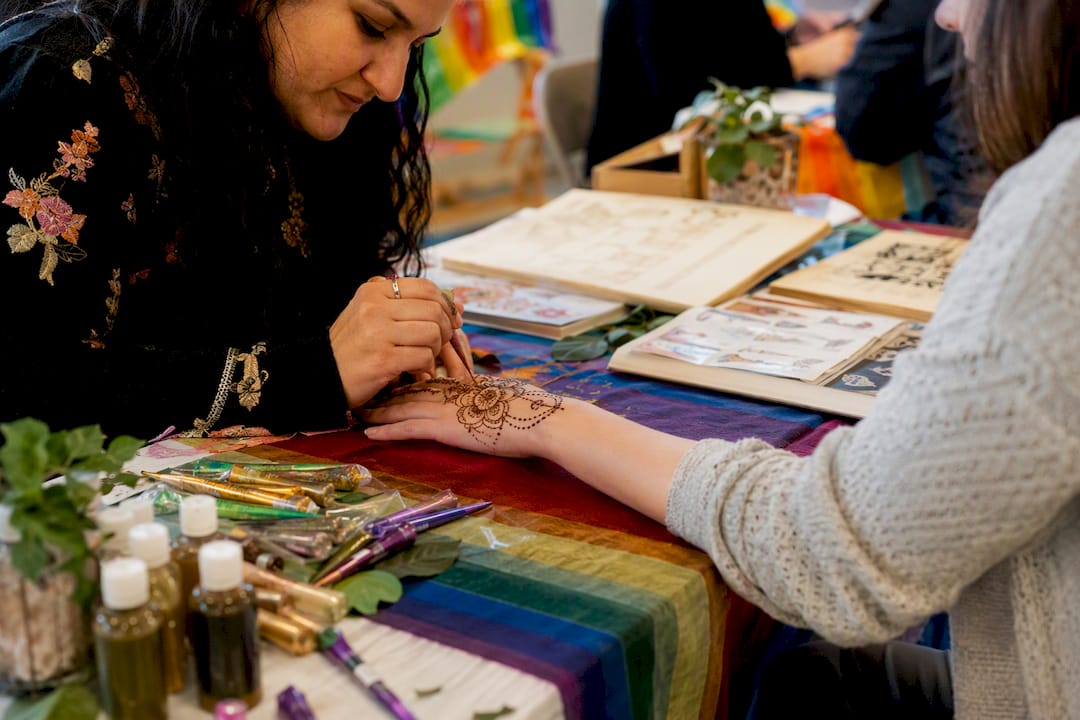
The best Pride event activities cover six settings at once: large public festivals, community fairs, workplace celebrations, virtual gatherings, family programming, and arts-and-activism spaces. A strong shortlist mixes multi-stage festival elements, voluntary workplace lunch-and-learns, drag bingo for hybrid crowds, storytime for kids, film screenings, and a hands-on activation like a henna booth or mural table.
If you only have time to plan a handful of things, start here. A neighborhood Pride fair works well for community groups wanting foot traffic and vendor variety, similar to the multi-block model used at Davie Village Pride. A curated Spotify playlist and a 30-minute lunch-and-learn cover workplaces where mandatory participation would backfire. Drag bingo or trivia hosted over Zoom keeps remote teams connected. A rainbow craft table and scavenger hunt handle family zones without needing a stage. A documentary screening with a guided discussion satisfies the activism crowd. And a henna booth, sourced from a vendor like Hennaforfun, gives any setting a quiet, tactile activity that doesn’t require anyone to perform.
Major festivals now build in specialized zones for this exact reason. Austin Pride’s 2026 festival includes youth areas, wellness alleys with free health testing, and multiple music stages, while Oakland Pride runs an alcohol-free “Generations” zone alongside its main stages. Community and youth organizations like Human Rights Campaign, The Trevor Project, GLAAD, and ACLU show up again and again as trusted resource partners across these events, not as afterthoughts.
Key Takeaways
The strongest Pride programming pairs at least one high-energy public activity with several voluntary, low-pressure options across community, workplace, virtual, and family settings.
Point | Details |
Build a mixed shortlist | Cover festivals, workplace, virtual, family, and activism settings rather than one format alone. |
Make participation voluntary | Workplace and public activities work best when nobody is required to disclose identity or perform. |
Run the accessibility checklist early | Confirm quiet zones, captioning, pronoun options, and consent policies before finalizing any activity. |
Budget for paid roles | Fund at least one or two paid staff or performer positions instead of relying only on volunteers. |
Consider a henna booth for low-pressure engagement | Hennaforfun offers bookable henna activations, corporate workshops, and private lessons suited to Pride events of any scale. |
Table of Contents
Pride event activities grouped by setting
Different settings call for different energy levels, budgets, and risk tolerance. Here’s how the ideas break down by where you’re actually hosting.
Large public festivals. These draw the biggest crowds and need the most infrastructure. Think multi-stage entertainment, vendor markets, and dedicated resource zones for health screenings or youth programming, the model NYC Pride’s calendar follows with its march, PrideFest, StageFest, and separate Youth Pride programming running in parallel. Best for city-scale organizers with permit budgets. Low-cost alternative: partner with an existing local festival and sponsor a single booth rather than building your own stage.
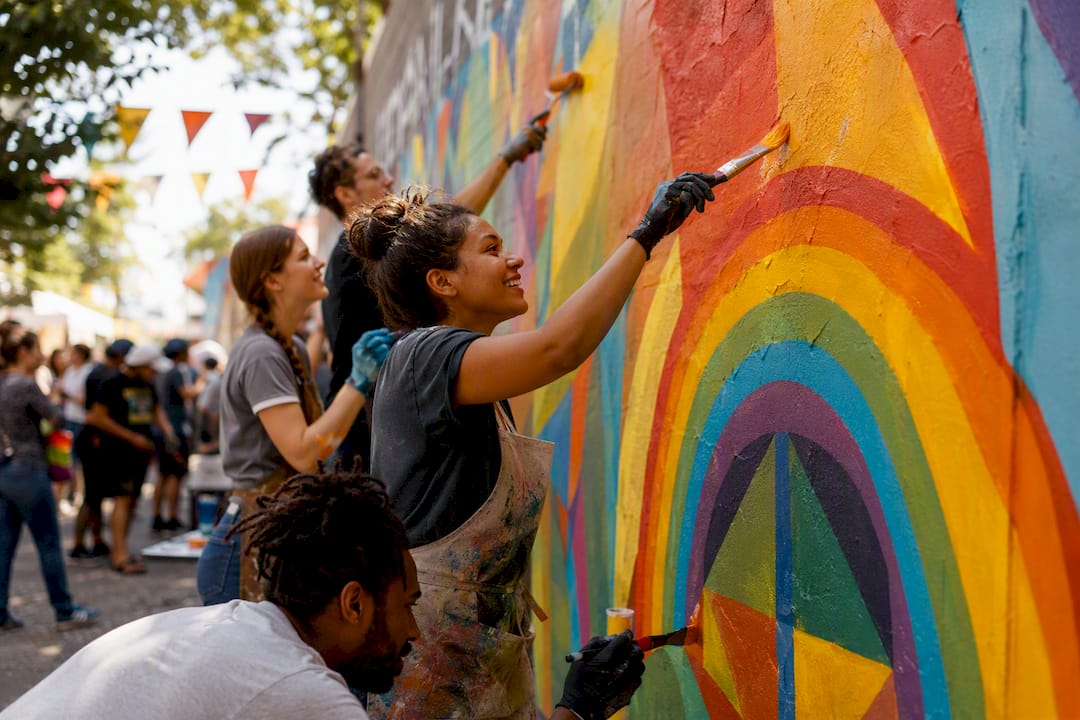
Community events. Neighborhood fairs, mural projects, and small-scale markets fit organizations without a six-figure budget. A single city block with local vendors and a paint-by-numbers community mural creates the same sense of gathering as a festival at a fraction of the cost. Accessibility tweak: keep at least one quiet zone away from speakers for anyone who needs a sensory break.
Workplace celebrations. This is where mandatory fun does the most damage. Workhuman’s research on Pride Month programming found the most effective workplace activities are voluntary and substantive: curated playlists employees can opt into, a 30 to 45 minute lunch-and-learn with an outside speaker, or a department-wide donation drive matched by the company. Skip anything that puts an individual employee’s identity on display without their explicit choice. Low-cost alternative: a shared Slack channel where people can post recommended books, films, or podcasts.
Virtual and hybrid formats. Drag bingo, trivia nights, and streamed panel discussions travel well over video call. Cap sessions at 60 to 90 minutes and record them for time zones that can’t attend live. Accessibility tweak: turn on live captioning by default rather than waiting for someone to request it. Low-cost alternative: a moderated group chat running alongside a free livestream instead of a paid platform subscription.
Family and youth activities. Storytimes, scavenger hunts, and collaborative art projects let kids participate at their own pace. The Whitney Museum’s Pride programming builds sensory-friendly artmaking stations into its family offerings, letting any age contribute to a shared piece without pressure to perform. Best fit: family zones adjacent to, but separated from, higher-volume stage areas. Low-cost alternative: a coloring station with printed rainbow templates instead of a hired art instructor.
Arts and activism. Film screenings with a guided post-discussion, community panels, and voter registration booths give the activism-minded crowd something substantive to do besides watch a parade go by. Pair a screening with a 15-minute Q&A instead of a long panel if attention spans are short. Low-cost alternative: a printed reading list and QR code linking to registration resources instead of a full booth setup.
Pro Tip: Take whatever draws the biggest crowd at your city’s festival, a live band, a drag stage, a big vendor market, and ask what the miniature version looks like. A full drag show becomes a 10-minute lip-sync set in a workplace break room. A festival stage becomes a livestreamed set piped into a virtual happy hour. Scale down the production, not the inclusion.
How do you choose which Pride activities to prioritize?
Start with what you actually want the event to accomplish, not what looks impressive on a flyer.
Name the outcome first. Visibility calls for a public-facing activity like a march contingent or a storefront window display. Education calls for a panel, lunch-and-learn, or a resource table staffed by someone who can answer questions. Fundraising calls for a silent auction or ticketed brunch. Community building calls for shared, low-pressure activities like a mural table or henna booth where conversation happens naturally.
Match the activity to your actual audience. A 200-person workplace doesn’t need a stage. A citywide festival can’t run on a single volunteer folding table.
Check your risk tolerance before you commit. Anything involving alcohol, live performance, or public spotlighting carries more liability than a craft table or film screening.
Run every candidate activity through this checklist before it makes the final program:
Does it require mandatory participation, or can someone opt out without consequence?
Is the space physically accessible, including restrooms and seating?
Does it need a permit, insurance rider, or security plan?
Can you staff it without burning out the same three volunteers?
Does the budget stretch to cover it, or does it need a sponsor first?
Budget-wise, spend on staffing and entertainment when the activity is public-facing and high-visibility, a stage, a hired DJ, security. Save money on internal, low-stakes engagement: a craft table, a Slack playlist, a volunteer-run info booth cost little beyond materials and time. A balanced program mixes at least one high-energy anchor activity with two or three low-stimulus options, so guests who want to dance and guests who want a quiet corner both have somewhere to go.
The inclusion and accessibility checklist every activity needs
Every activity on your list, no matter how small, should clear the same bar before it goes on the schedule.
Voluntary participation, always. No employee or guest should be required to disclose identity, dance, or speak publicly to take part.
Pronoun guidance built in. Offer pronoun pins or name tag fields without making them mandatory to fill out.
Gender-neutral restroom access clearly marked on any site map or venue diagram.
A quiet or sensory-friendly zone away from speakers, strobing lights, and crowds, especially at multi-stage festivals.
Mobility access for stages, vendor rows, and seating areas, checked in person, not just on paper.
Captioning for any virtual panel or livestream, turned on by default.
Language access where your community includes non-English speakers.
A clear photography and consent policy, with visible opt-out signage for anyone who doesn’t want to appear in event photos.
A safeguarding contact for youth programming, ideally someone trained to refer families to a resource like The Trevor Project if a young person needs support beyond what a volunteer can offer.
Run a five-minute pre-event walkthrough using this list, then send a short post-event survey asking specifically how inclusive the activity felt, not just whether people had fun. The two questions measure different things, and only one of them tells you whether to repeat the activity next year.
Pro Tip: Budget for at least one or two paid staff or performer roles instead of running the entire event on volunteer labor. Unpaid community members burn out fast, and paying even a small stipend to a drag performer, henna artist, or workshop facilitator signals that their contribution has real value, not just goodwill.
Planning timeline: permits, staffing, and typical costs
Pride events, even small ones, run smoother with a fixed countdown instead of a loose to-do list.
12 weeks out: Lock your venue or workplace space, apply for any required permits, and start vendor outreach. Public street festivals need police and public-safety coordination well ahead of time, especially where local ordinances have shifted, a real concern the ACLU’s tracking of LGBTQ+ legislative activity makes worth checking with local authorities early rather than assuming last year’s rules still apply.
6 weeks out: Confirm staffing, book entertainment or activity vendors, and finalize your accessibility plan, including signage and interpreter needs. Send marketing to internal or community channels.
2 weeks out: Confirm headcounts, run a site walkthrough, brief volunteers and staff on emergency procedures, and send final reminders with accessibility details included.
Typical budget buckets, in rough order of priority: permits and insurance first, since an uninsured public event is a liability nobody should take on. Staffing and paid talent second. AV and equipment rentals third. Accessibility supports, captioning services, ramps, sign language interpreters, fourth. Marketing fifth.
Staff these roles even for a mid-sized event: an accessibility liaison who owns the checklist above, a volunteer lead who manages shift schedules, a designated emergency contact who isn’t also running a booth, and, for any event with family or youth programming, a safeguarding lead who knows how to handle a distressed young person or a safety concern without improvising.
Fundraising and partnerships that don’t compromise your values
Money for Pride events tends to come from four places: local business sponsorships, grant funding, ticketed or vendor fees, and nonprofit partnerships. Structure sponsorships in clear tiers so businesses know exactly what they’re buying and what’s expected of them.
In-kind sponsors provide goods or services, printing, catering, a sound system, in exchange for logo placement.
Small cash sponsors fund a specific activity, like a craft table or a stage hour, and get named signage at that activation.
Title sponsors fund the bulk of the event and expect prominent branding, but should never get veto power over programming content.
Before signing any partner, ask direct questions: Does this business have a public non-discrimination policy? Have they supported LGBTQ+ causes beyond this one event? Would their presence make attendees feel safer or more exposed? A vendor market, silent auction, or paid workshop series can generate revenue on top of sponsorship, and donating a portion of proceeds to a nonprofit partner turns a vendor fee into a visible community contribution.
Run-of-show templates you can copy
A 2 to 4 hour community event breaks cleanly into blocks: 30 minutes for setup and volunteer briefing, a 15 minute welcome, alternating 45 minute activity blocks with 15 minute breaks between them, and a 30 minute wind-down for cleanup and safety check-ins. A 60 to 90 minute workplace session needs far less: a 10 minute intro, a 30 to 40 minute main activity or panel, and 15 minutes left open for questions or informal mingling.
For icebreakers that don’t put anyone on the spot, skip the microphone. Try an anonymous sticky-note wall where people share a favorite song for the group playlist, a silent art table where contributions build up over the course of the event, or a micro-volunteering station where guests can staple zines or assemble resource packets while chatting. For hybrid formats, schedule the live-streamed portion during the middle of your in-person program, not the very start or end, so remote attendees in different time zones catch the highest-energy segment instead of empty setup time.
How a henna booth works as a Pride activation
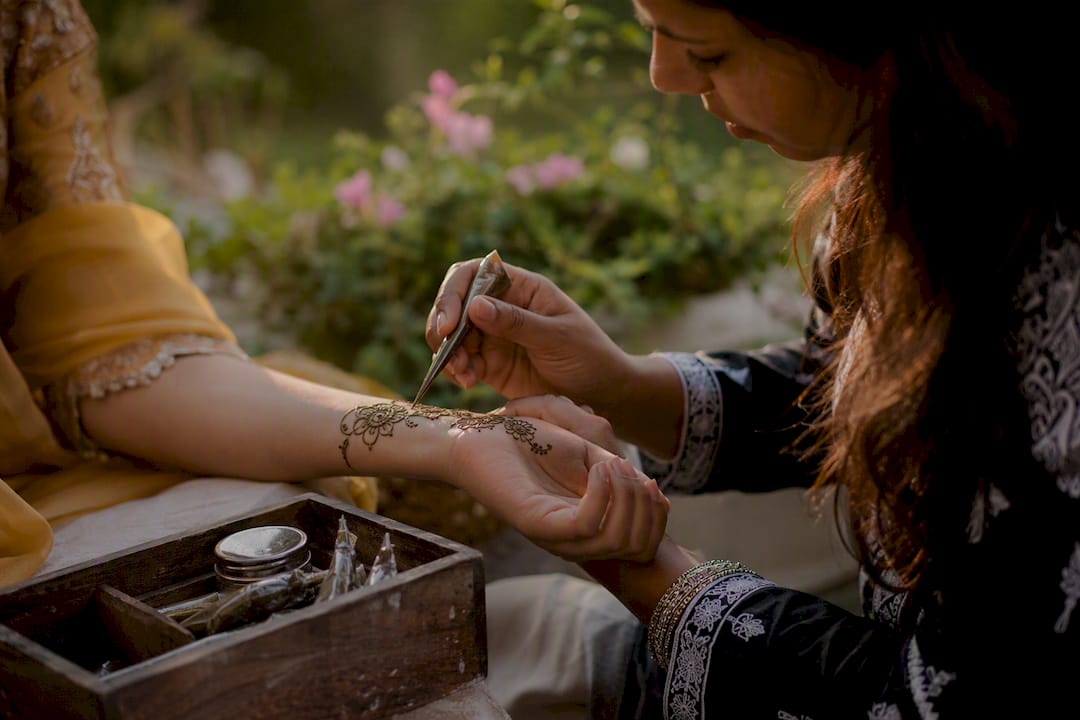
A henna booth solves a problem most high-energy activities create: it gives people something to do that doesn’t require performing. Guests sit, get a design, and talk, no spotlight required.
For setup, plan a 10 by 10 foot space per artist with two chairs, a small table, and good lighting. One artist comfortably serves 15 to 20 guests over a 3 to 4 hour event, with each design taking 5 to 15 minutes depending on complexity. Hygiene matters here: use only natural henna paste, disposable applicator cones, and a clear consent step before any design touches skin, since henna can occasionally cause a skin reaction in sensitive guests.
Pricing works three ways: a flat paid activation fee for corporate or private hosts, a suggested donation model for nonprofit fundraisers, or a bundled cost folded into a broader event package. Hennaforfun structures corporate workshop bookings around this exact flexibility, and organizers can review service packages before locking in a date.
Pro Tip: For sensory-sensitive guests who’d rather skip the tactile experience, keep a stack of temporary rub-on designs or DIY henna stencils on hand so nobody feels excluded from the table.
What our team learned running Pride booths
The years we’ve spent setting up henna tables at Pride events taught us something we didn’t expect going in: the quietest activity on the schedule often becomes the most talked-about one. People who wouldn’t dance on a stage or speak into a microphone will sit for ten minutes, get a design, and open up about why they came. Pride works best treated as year-round groundwork, not a single June activation.
How Henna For Fun supports your Pride programming
If you’re weighing whether to build a henna activation yourself or bring in someone who does this full-time, the honest answer is that sourcing it saves you the hygiene, staffing, and design-training headaches most planners don’t have bandwidth for during event season. Hennaforfun runs interactive henna experiences built specifically for group settings, wineries, offices, homes, and community festivals alike, with artists who handle their own materials, consent process, and traffic flow so your team can focus on everything else on the run-of-show.
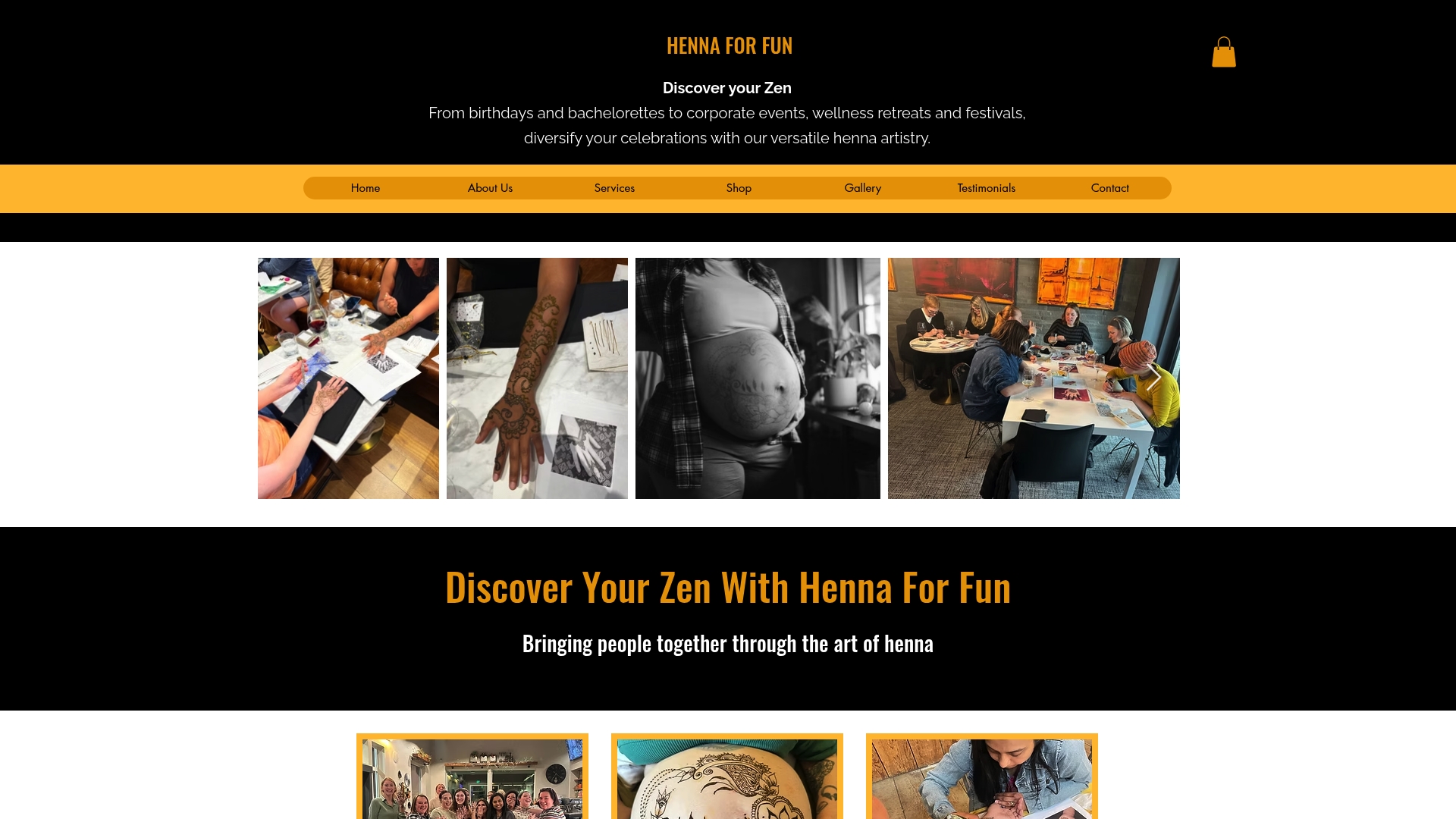
Three services cover most Pride planning needs: on-site henna artist bookings for festivals and community fairs, corporate workshop sessions built around voluntary, hands-on participation for workplace celebrations, and private lessons for organizers who’d rather train a few staff members to run a booth themselves. Every booking includes a clear consent and photography policy so guests opt in rather than get put on the spot. Check available dates and get a quote for your event through the services page before your planning window closes.
Frequently asked questions about Pride event activities
What are the best Pride event activities for a small budget? A craft table, a curated playlist, a volunteer-run resource booth, and a screening with a guided discussion cost little beyond materials and staff time. A henna booth using DIY stencils or a henna kit also keeps costs low while still giving guests something hands-on.
How do you make workplace Pride activities inclusive without being awkward? Keep everything opt-in. A lunch-and-learn, a shared playlist, or a donation drive lets employees engage at whatever level feels comfortable, which the research on workplace Pride programming points to as the difference between substantive celebration and performative pressure.
What activities work for virtual or hybrid Pride events? Drag bingo, trivia, and streamed panels work well, especially with live captioning turned on by default and sessions kept under 90 minutes to respect different time zones.
Do Pride festivals need permits? Public street festivals and parades typically require permits and coordination with local authorities on security and crowd control, and legal context can shift by jurisdiction, so check current local rules well ahead of your event date rather than assuming last year’s permit still applies.
How do I know if an activity is genuinely inclusive? Run it against a short checklist: voluntary participation, accessible physical space, a clear consent and photography policy, and a post-event survey asking participants how inclusive the activity actually felt, not just whether they enjoyed it.
Sources
Recommended
Comments