Event Planners: Start Conference Booth Entertainment With the Handoff
The best conference booth entertainment combines a low-friction interactive experience with a built-in lead-capture step, not a flashy gimmick that empties out the moment attendees walk away. Prioritize live demos, short competitive games with visible leaderboards, a shareable photo moment, and one low-tech draw like a spin wheel. Match the format to your booth footprint and staffing, because the biggest trade-off is almost always space and headcount, not budget.
TL;DR:
Live product demos and touchscreens facilitate lead capture and qualification, making them more effective than flashy displays for engagement and data collection.
Low-tech activations like prize wheels, trivia, and photo walls require minimal space and budget, but should include visible leaderboards or prizes to maximize repeat traffic.
High-tech options such as VR, AR, and AI art generate longer dwell times but need careful space planning, quick session limits, and backup equipment to avoid bottlenecks.
Incorporating leaderboards, timed rounds, and prize tiers significantly boost return visits and online sharing without creating long or confusing lines.
A strong focus on staff-managed handoffs and basic low-tech strategies often yields better results than prioritizing costly or complex technology investments.
Table of Contents
Conference Booth Entertainment Ideas Worth Building Around
Not every activation earns its floor space. These are the formats that consistently pull attendees in and give staff a reason to talk to them.
Live product demo. Scripted, scheduled, and running every 20 to 30 minutes. Requires almost no extra hardware, works in a 10x10, and lead capture happens naturally when a staffer asks for a badge scan to send a follow-up spec sheet. A scheduled demonstration is often the highest-engagement, lowest-cost interactive element at the whole show, and it outperforms far more expensive tech.
Photo wall or branded backdrop. Fits any footprint, costs little beyond design and printing, and gates leads through a QR code that unlocks the digital download.
Spin-to-win wheel. Ideal for a 10x10 or as a satellite station in a larger footprint. Badge scan before the spin keeps the line moving and the data clean.
Tabletop skill game. Reaction walls, ring toss, or a branded version of a classic arcade game. Best for awareness traffic, since play is quick and doesn’t require a deep sales conversation.
Racing or VR simulator. Needs a 10x20 or island space for queueing and safety, and works best as a qualification tool paired with a longer conversation while a visitor waits their turn.
AR filter or AI-generated art station. A camera, screen, and some software turn a static booth into something people stop for and post. These setups convert passive attendees into active participants through gamified, sensory experiences, which is exactly the effect you want against a sea of static pop-up displays.
Touchscreen product configurator. Best for complex products where a self-guided walkthrough qualifies interest before a rep steps in.
NFC tap kiosk. Delivers content instantly without an app download, which keeps friction near zero for anyone just passing by.
Prize claw machine. A crowd magnet for any size booth, though it needs floor space for a small crowd to gather and watch.
Live demos and touchscreens skew toward qualification. Photo walls, spin wheels, and claw machines skew toward pure awareness and booth traffic.
Low-Tech Booth Activations That Still Pull a Crowd
You don’t need a six-figure AV budget to stop foot traffic. A well-run analog activation, blended thoughtfully with your booth’s size and traffic patterns, often beats an underused screen.
A branded idea wall or sticky-note poll question tied to your product category.
A tabletop trivia game with a physical prize bin.
A simple prize wheel gated by a badge scan before the spin.
A “guess the number” jar contest that only takes seconds to enter.
Keep entry friction to one tap or one scan, never a paper form, and put a single staffer at the front of the line so nobody stands around confused about how to play.
Pro Tip: Give your low-tech game a visible scoreboard or prize display even if it’s just a whiteboard. Watchability pulls in the next three people before the first one has even finished playing.
High-Tech and Immersive Booth Options
AR overlays, VR headsets, racing simulators, and AI art generators draw a real crowd, but they come with real constraints. Session length matters most: anything over three or four minutes per person creates a bottleneck that kills your line instead of building it. Budget for headset sanitizing between uses, a backup unit in case hardware fails mid-show, and a staffer dedicated purely to running the line rather than pitching product.
VR and simulators need a 10x20 minimum for safe movement and spectator space.
Touchscreens and NFC kiosks work in a 10x10 if mounted to a wall panel instead of a freestanding stand.
AI art or AR filter stations need decent lighting and a stable internet connection, tested the morning of setup, not the night before.
Interactive setups like these keep attendees at a booth two to three times longer than static displays, which is the real return on the investment. High-tech only earns its cost when your campaign goal is deep engagement or data capture with a smaller number of higher-value visitors, not raw foot traffic volume.
Games and Leaderboards That Bring People Back All Day
Repeat visits are the real payoff of a well-designed game, and the formula is simple:
Cap play at under two minutes so the line never stalls.
Put the leaderboard somewhere visible from the aisle, not tucked behind the booth.
Reset standings every hour so early leaders don’t discourage afternoon walk-ups.
Tier your prizes so top-of-hour leaders and grand-prize finalists both have something to chase.
Games with a visible leaderboard and fast play times drive repeat traffic far better than a one-and-done activity, and requiring a badge or QR scan to register a score turns every play into a captured lead automatically. Reaction walls, tabletop racing sims, and pop-a-shot hoops all translate well because a crowd can watch and score without needing rules explained.
Pro Tip: Switching from a paper leaderboard to a digital one isn’t just cosmetic. Vendors running multi-round contests have seen engagement jump 40% after digitizing scoring, mostly because scores update instantly and nobody argues about who’s actually winning.
Turning Booth Fun Into Real Conversations
Entertainment only works if it routes people to a human, not away from one. Place the activation slightly inside the booth footprint so a staffer can greet and qualify a visitor before they’re fully absorbed in the game or demo.
Schedule micro-events (a demo, a mini-tournament round) on a visible clock so staff know exactly when to step in for the handoff.
End every play session with a clear next step: a QR code, a qualifying question, or a direct staff invite to sit down.
Assign one staffer specifically to the handoff role, separate from whoever runs the activation itself.
Keep an ADA-accessible path and seating option near any activation, and have hand sanitizer on hand for anything touched repeatedly.
Have a low-tech backup plan (printed cards, a manual raffle) ready in case a screen or scanner fails mid-show.
Marketing teams that run this well treat entertainment as the door-opener, not the whole sales conversation. The actual conversion still depends on staff stepping in at the right moment.
Matching Cost and Booth Size to the Right Activation
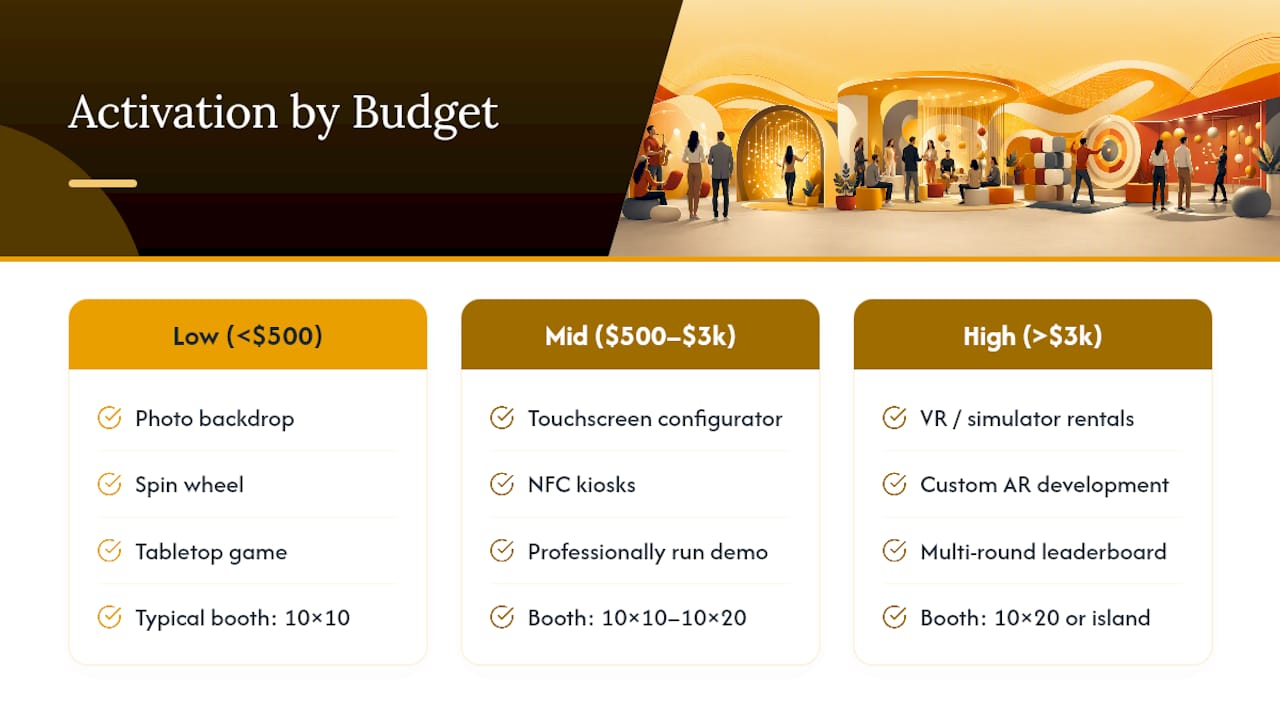
Budget bands roughly break down as: low (under $500) covers a photo backdrop, spin wheel, or tabletop game; mid ($500 to $3,000) covers a touchscreen configurator, NFC kiosks, or a professionally run live demo station; high ($3,000+) covers VR/simulator rentals, custom AR development, or a multi-round leaderboard tournament with digital scoring.
A 10x10 handles almost anything low-tech and most wall-mounted touchscreens. A 10x20 or island exhibit is where simulators, VR queues, and claw machines make sense. Renting modular, battery-powered kiosks and light boxes instead of hardwired displays cuts drayage and electrical fees significantly, and it lets a two-person team set up without a specialty rigging crew.
What A Henna Activation Taught Us About Booth Engagement
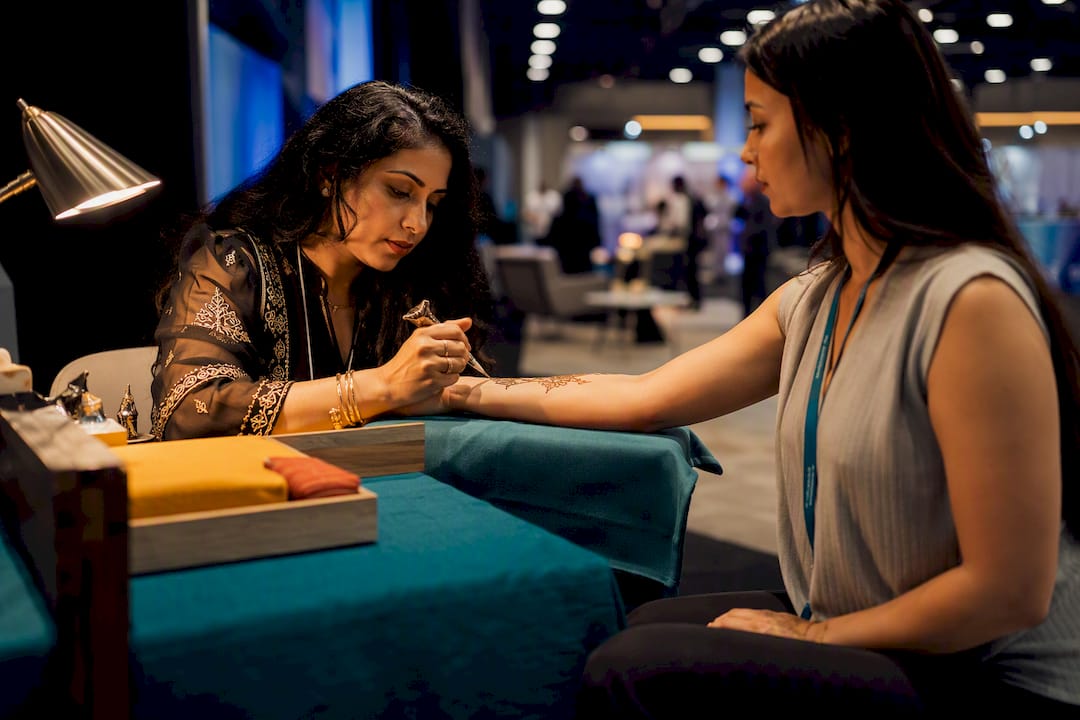
Henna sessions are a case study in low-tech done right. A trained artist creates a personalized design in five to ten minutes, which is long enough for a real conversation and short enough to keep a line moving. The finished design is inherently shareable on social, and scheduling short, timed sessions with a sign-up sheet or QR reservation doubles as a natural lead-capture step.
Running one well means budgeting for clean workstations, disposable applicator tips, and a decor setup that fits your brand’s booth aesthetic rather than looking bolted on.
The Playbook Most Planners Get Backwards
Most booth entertainment advice treats technology as the goal, when it should be the last decision you make. Planners chase VR headsets and AI art stations because they photograph well in a sales deck, then discover the actual bottleneck is staffing, not spectacle. A live demo with a well-trained staffer will out-convert a $5,000 simulator every time if the simulator’s line has nobody managing the handoff.
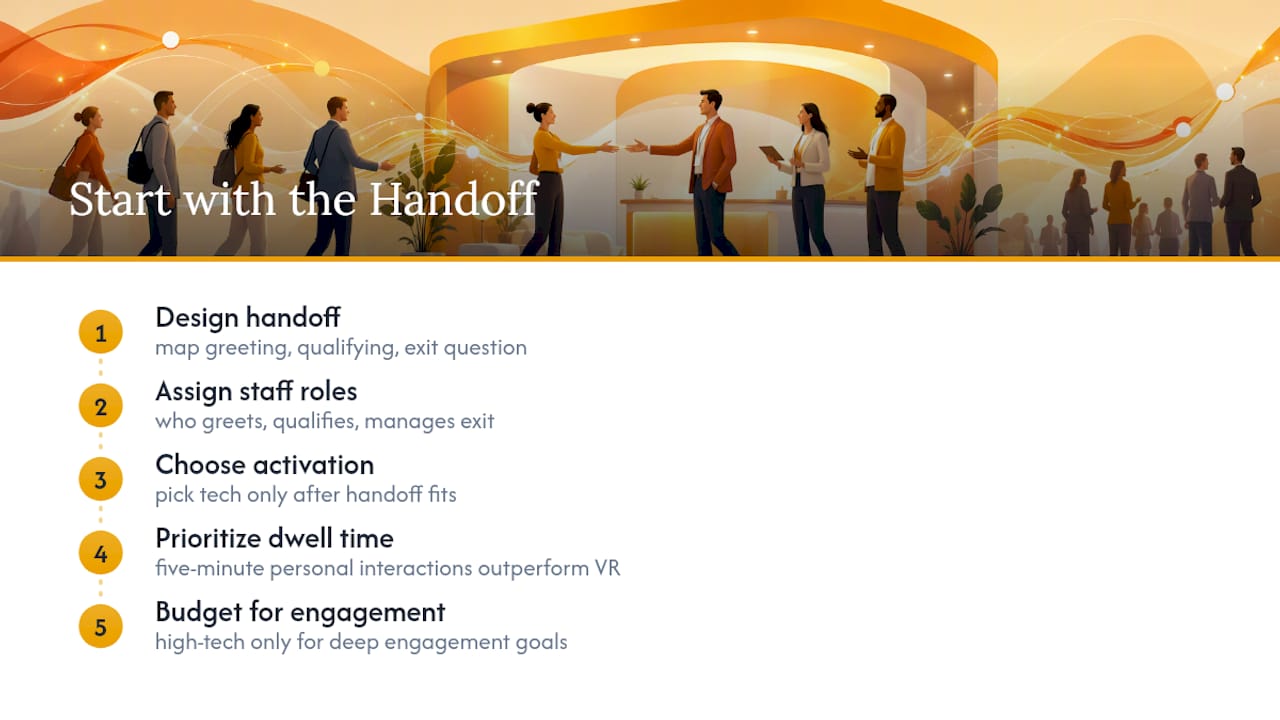
The judgment this article’s research actually supports: start with the handoff design, then pick the activation that fits it. Decide who greets, who qualifies, and what the exit question is before you decide whether you need a screen at all. High-tech earns its budget only when your goal is genuinely deep engagement with fewer visitors, not raw traffic.
What gets underweighted constantly is dwell time from low-tech, people-first formats. A five-minute personal interaction, whether it’s a demo or something like a henna session, does more for memorability than a 90-second VR loop most attendees forget by lunch.
— Angana
Book Hands-On Entertainment for Your Next Event
A ready-made, people-first activation can enhance your booth without the setup headaches of AV equipment, simulators, or app downloads. Corporate henna workshops can fit various booth sizes, from a 10x10 tabletop setup to a full lounge area on an island exhibit, and each session can create dwell time and shareable moments that help convert foot traffic into conversations.
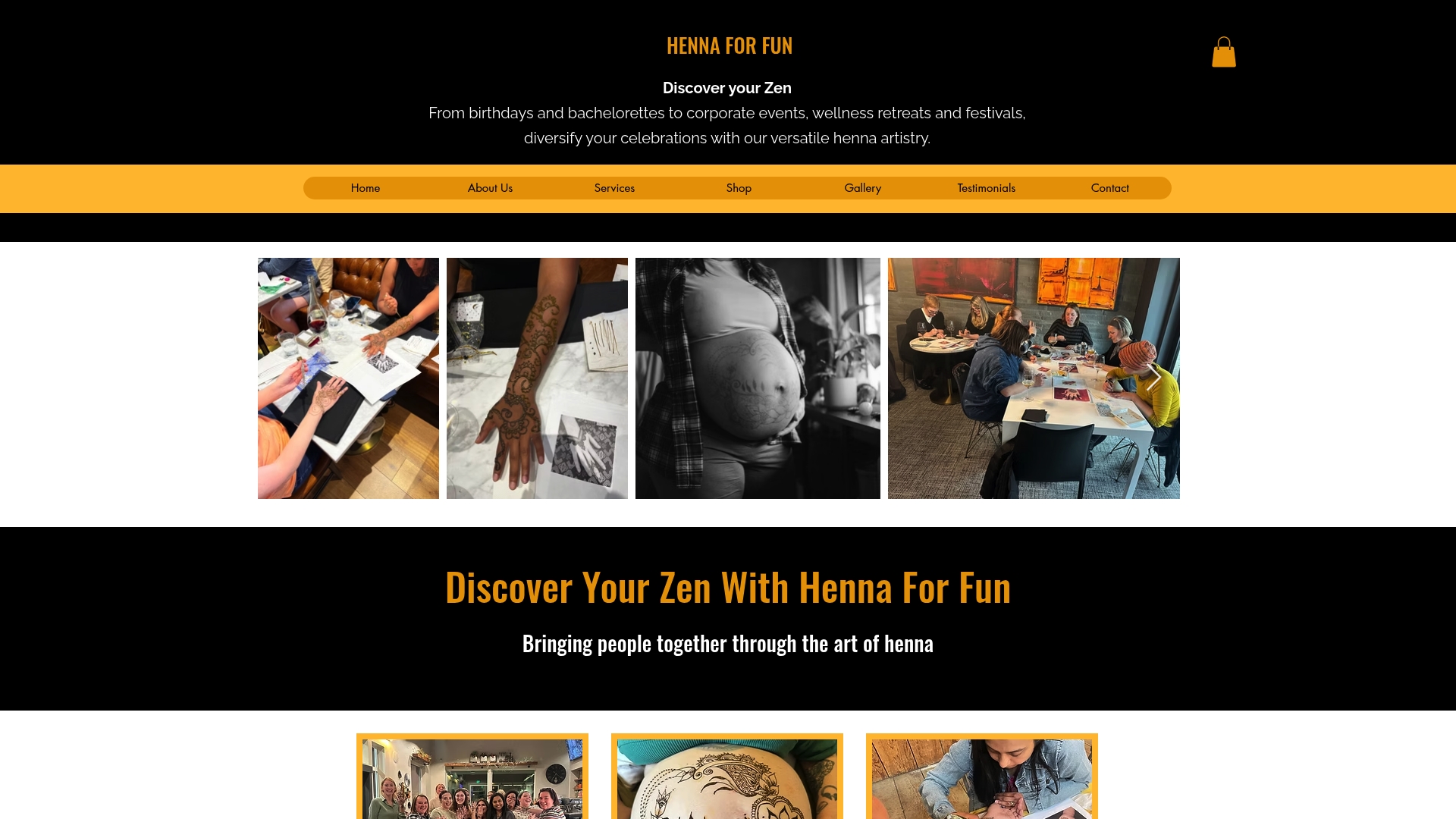
Sessions may run on a simple schedule that staff can manage alongside a lead-capture sign-up, and designs serve as shareable social moments that align with proven customer retention steps for beauty and wellness before attendees leave the booth. Hennaforfun’s corporate and event services cover on-site activations, private group sessions, and artist-led workshops, and the calendar page shows current availability for booking a date. Reach out through the services page to request a quote for your next conference or trade show.
Sources
Recommended
Comments