Mehndi: 4 Things U.S. Readers Should Know About Safety and Respect
- angana0403
- 29 minutes ago
- 7 min read
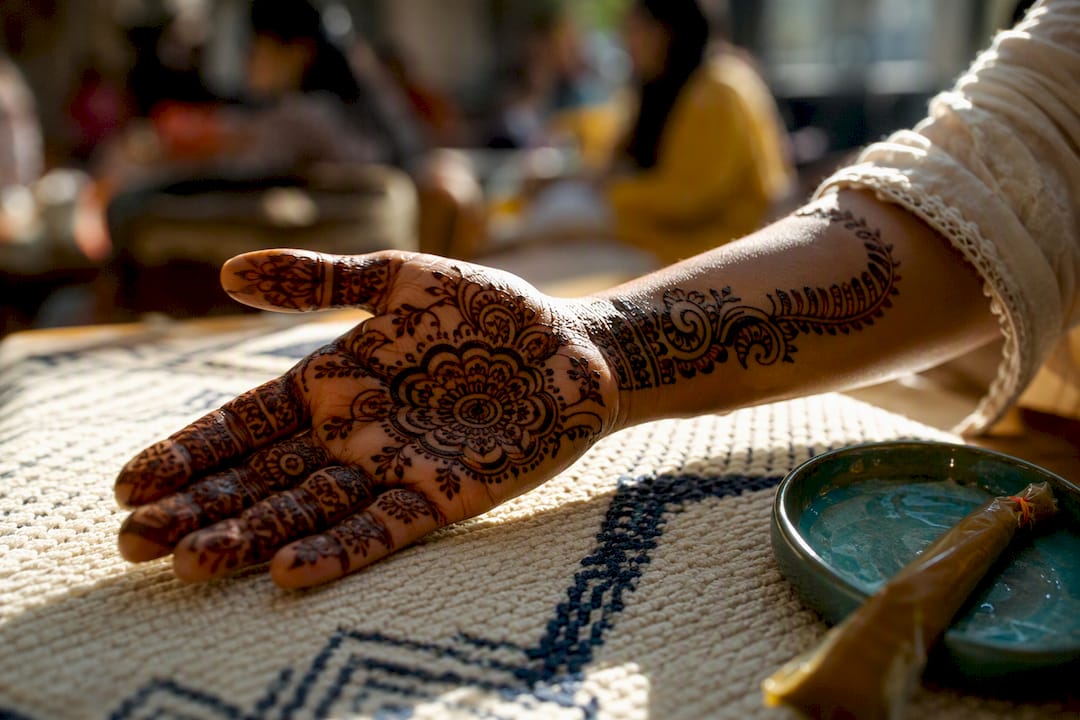
Mehndi is a traditional form of temporary body art made by applying a paste from the crushed leaves of the henna plant, Lawsonia inermis, onto skin to leave a reddish-brown stain. It’s worn for decoration at weddings, festivals, and other celebrations, and it fades naturally over several weeks. The practice traces back thousands of years across South Asia, the Middle East, and North Africa.
TL;DR:
Natural henna paste is always a reddish-brown color when wet and should never appear jet black; black henna often contains harmful chemicals like PPD.
The typical stain lasts between one and three weeks, with darker and longer-lasting results on palms, soles, and thicker skin areas.
Proper safety measures include patch testing on the skin and asking vendors about ingredient disclosures to avoid allergic reactions and chemical burns.
Most designs can be removed faster through exfoliation or warm water, but harsh chemicals should be avoided to prevent skin irritation.
Wearing mehndi respectfully involves understanding its cultural significance, learning its history, and seeking education rather than merely copying patterns for trend purposes.
Table of Contents
Where Mehndi Comes From: Origins and Meaning
The word “mehndi” comes from the Sanskrit mendhikā, the original name for the henna plant itself. English speakers have used some version of the word since the 1810s, but the practice it describes has been far older than the term. Evidence points to henna body art dating back over 5,000 years, with the dye used not just for skin decoration but for dyeing hair, fabric, and even fingernails in some regions.
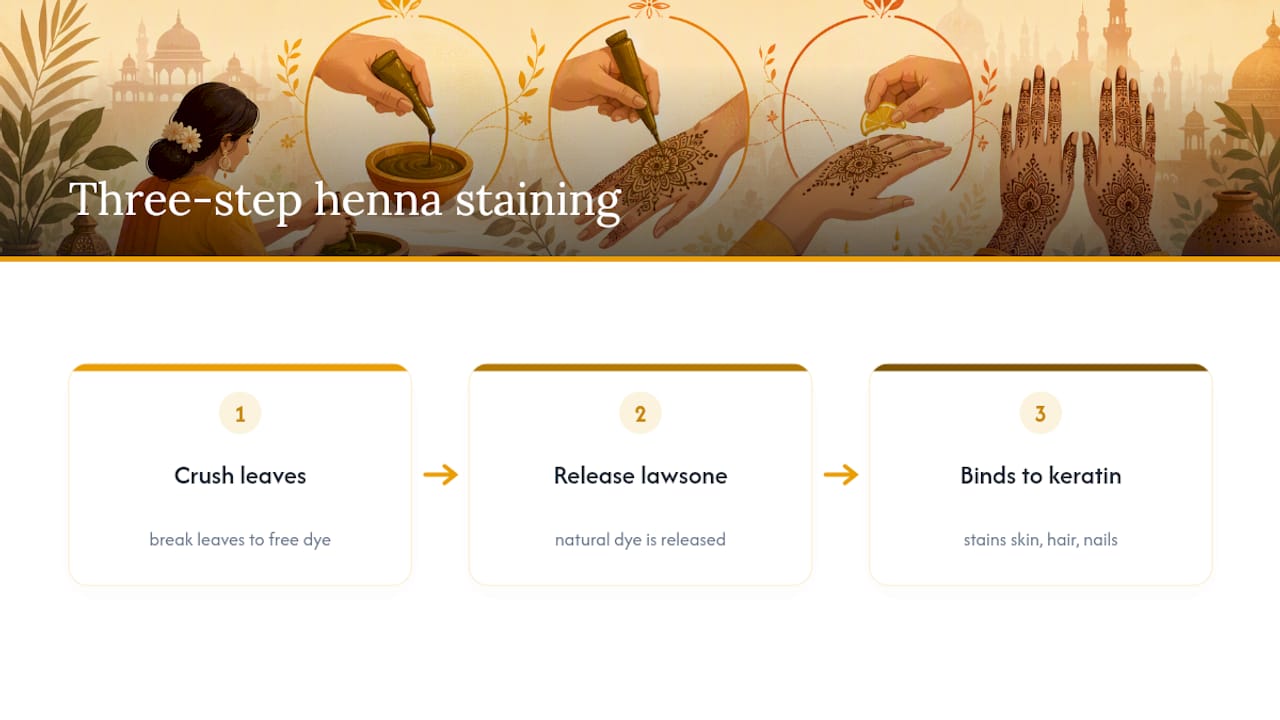
Henna’s staining property comes from a natural compound in the leaves called lawsone, which binds to keratin in skin, hair, and nails. That’s the whole chemistry lesson: crush the leaves, release the dye, and it bonds wherever it touches.
Regional names and styles shifted as the plant traveled along trade routes. In South Asia the word “mehndi” (or “mehendi”) dominates. In Arabic-speaking regions and North Africa, the same plant and paste go by “henna,” often applied in different patterns entirely. Sudan, Morocco, Yemen, and India each developed distinct visual languages using the identical raw material. That’s part of what makes mehndi fascinating: one plant, one dye, dozens of cultural expressions layered on top over centuries.
The Cambridge Dictionary defines it simply as a design made on someone’s hands with henna, a reddish-brown dye. That’s accurate as far as it goes, but it undersells a practice that carries ceremonial weight far beyond hand decoration.
How Henna Paste Is Made and Applied
Dried henna leaves get ground into a fine powder, then mixed with a liquid, usually water, but often lemon juice, to form a smooth paste. Many artists let that paste rest for several hours, sometimes overnight, so the lawsone dye fully releases before application. Sugar and essential oils like tea tree or lavender frequently get added too. Sugar helps the paste stick to skin, while the oils are believed to intensify the eventual stain, according to details commonly cited on Wikipedia’s mehndi overview.
Application typically happens one of three ways:
Cones, hand rolled or plastic, that squeeze out fine lines the way a pastry bag pipes icing
Fine brushes, used for broader shading or filling large sections
Sticks, an older method still used in some rural and traditional settings
Once applied, the paste needs to dry for a few hours, sometimes longer for darker or more intricate bridal work. Scraping off the dried paste (never washing it off right away) reveals an orange stain that deepens to reddish brown over the following 24 to 48 hours as it oxidizes.
Aftercare determines how dark and how long the final color lasts. Sealing the design with a lemon sugar mixture, then wrapping it to trap heat and moisture, tends to intensify the stain. Skin type matters too. Thicker skin on palms and soles holds color longer than the delicate skin on inner arms or the back of the hand. Heat exposure, minimal water contact in the first 24 hours, and avoiding exfoliation all extend the life of a design. If you want to see how results vary by skin tone, Hennaforfun breaks down what to expect on darker skin and how to coax out a richer stain.
Why Mehndi Matters: Weddings, Festivals, and Mehndi Parties
Mehndi isn’t just decorative. In South Asian wedding traditions, the Mehndi Ceremony ranks among the most significant pre-wedding events, a gathering where the bride, and often her female relatives and friends, have intricate henna patterns applied as part of the celebration itself, not just prep for it. The Brides Today overview of the mehendi ceremony describes it as one of the most joyous pre-wedding rituals, blending music, food, and communal artistry into a single event.
The symbolism runs deeper than pretty patterns. Mehndi is traditionally associated with:
Joy and celebration, marking a threshold moment like a wedding, birth, or festival
Blessing and protection, with some communities believing darker stains bring good fortune to a new marriage
Prosperity, tied to the plant’s cooling, healing associations in traditional practice
Community bonding, since mehndi application is often a shared, hours long social activity rather than a solo appointment
Men participate too, particularly grooms in some regional traditions, which pushes back against the assumption that mehndi is exclusively a women’s practice.
A modern mehndi party typically borrows the ceremony’s structure while loosening the formality: music plays, food gets passed around, and guests take turns getting hands or feet decorated by one or more artists working the room. It’s part ritual, part social gathering, and it’s exactly the kind of format some henna event services build around, bringing that communal energy into wineries, homes, and private venues.
Common Mehndi Styles and How to Tell Them Apart
Design families vary by region and occasion, and recognizing them helps you know what to ask for.
Arabic style: bold, flowing floral vines with negative space left bare between motifs, usually applied to hands and feet
Indian or bridal style: dense, intricate coverage with paisleys, peacocks, and lattice work, sometimes hiding the groom’s initials somewhere in the pattern as a playful tradition
Mandala and geometric style: circular, symmetrical patterns radiating from a central point, popular for a modern, minimal aesthetic
Minimalist motifs: small florals, dots, or single-line designs on fingers or wrists, common for guests at parties or first-time wearers
Palms and the backs of hands take the darkest, longest-lasting stain because the skin there is thicker. Feet run a close second. If you’re new to mehndi or attending an event rather than getting married in one, a smaller motif on the wrist or ankle is a low-commitment way to try it. Hennaforfun’s quick feet henna design guide has a handful of patterns that take 10 to 30 minutes, useful if you want something polished without sitting for an hour.
Staying Safe: Avoiding Black Henna and Finding the Real Thing
Natural henna paste is always some shade of brown, green, or reddish clay color when wet. It’s never jet black straight out of the tube. That’s the single fastest way to spot trouble: so called “black henna” often gets its dark, fast acting color from para-phenylenediamine, or PPD, a chemical dye that has caused severe allergic reactions in people who weren’t warned about it. The short-term appeal of an instantly dark, dramatic stain isn’t worth the risk of blistering, scarring, or long-term skin sensitization.
Before any new henna application, especially from an unfamiliar source:
Do a patch test on your inner forearm and wait 48 hours to check for redness, itching, or swelling
Ask what’s in the paste. Pure henna should list little more than henna powder, water or lemon juice, sugar, and maybe essential oils
Buy from artists or suppliers who disclose ingredients, not vendors offering “same day black henna” at a festival or boardwalk stand
Skip anything advertised as lasting more than three weeks. Natural henna doesn’t stain skin that long
Pro Tip: Keep the patch test paste on for the same amount of time you’d wear a full design, since reactions to henna additives sometimes show up hours after paste removal, not immediately.
Hennaforfun has a full walkthrough on how to patch test safely, along with a breakdown of henna rules and safety considerations worth reading before booking anyone.
How Mehndi Fades and How to Remove It
Mehndi isn’t designed to be permanent, and that’s the point. It’s a stain sitting in the top layers of skin, so it fades as those cells naturally slough off through normal exfoliation. Most designs last between one and three weeks, starting dark and gradually lightening from the edges inward rather than disappearing all at once.
You can speed up fading with frequent exfoliation, warm water soaks, or scrubbing with a mixture of oil and salt or sugar. Swimming pool chlorine and regular soap and water contact also accelerate fading, which is part of why aftercare instructions tell you to avoid water for the first day: it works both directions. If you want a design gone faster for a work event or a costume change, a warm bath followed by gentle scrubbing with an exfoliating cloth usually knocks a few days off the timeline.
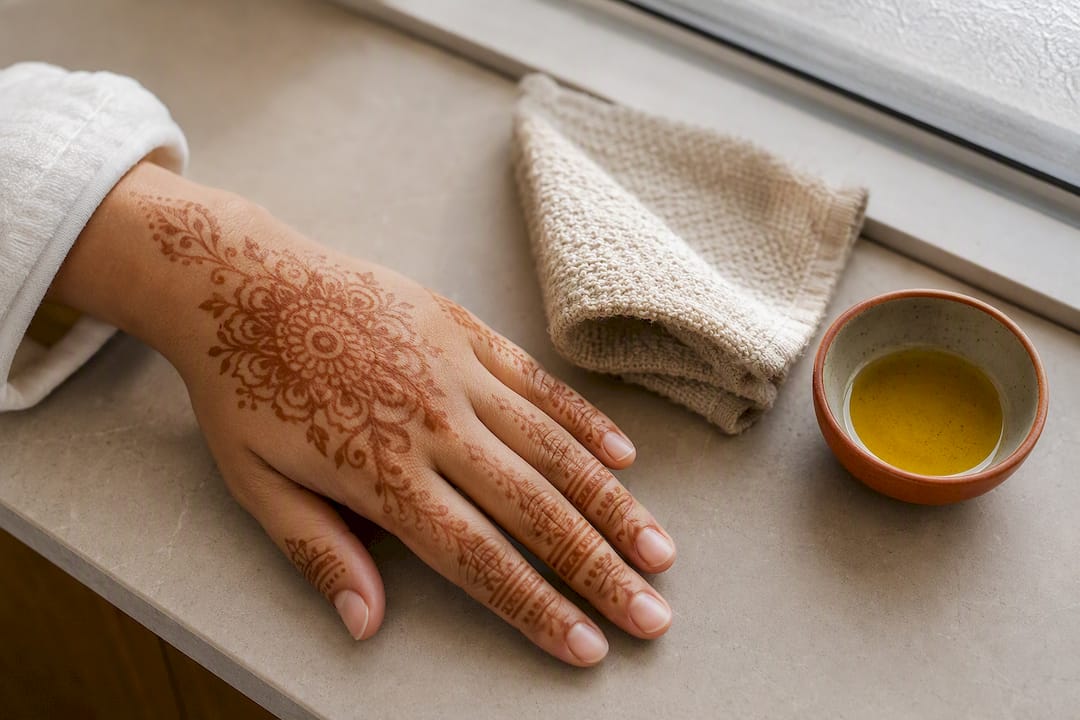
There’s no safe method for removing mehndi instantly. Rubbing alcohol, bleach, or harsh chemical removers can irritate skin far worse than just waiting it out. Patience, plus a bit of hand lotion to speed natural skin turnover, is really the only reliable approach.
A Note on Wearing Mehndi Respectfully
Teaching private henna lessons and running events at wineries and homes can reveal that people are genuinely curious about where mehndi comes from, and that curiosity is worth honoring. The line between appreciation and appropriation usually comes down to context and acknowledgment. Wearing mehndi at a friend’s wedding or a cultural event is different from replicating bridal or ceremonial patterns as a disposable trend, a distinction cultural commentators have raised repeatedly when discussing henna’s place in mainstream fashion.
If you’re drawn to mehndi, learn its history, ask an artist about the meaning behind a design before requesting it, and consider taking a lesson instead of treating it as a passing look.
— Angana
Learning the craft firsthand tends to build more respect for it than any article can. Hennaforfun runs private and group henna lessons across the Seattle area for anyone who wants to move past wearing mehndi and start understanding how it’s actually made, plus Whenna Events for weddings, birthdays, and corporate gatherings where a professional artist handles the designs on-site. If you’re planning a bridal celebration, pairing mehndi with complementary details like these bridal anklet ideas rounds out the look. For hobbyists who want to practice between events, Hennaforfun’s DIY henna kits and handmade henna cones are built for exactly that.
Sources
Recommended
Comments