Avoid Black Henna: Henna vs Tattoo Safety, Cost, and Cultural Respect
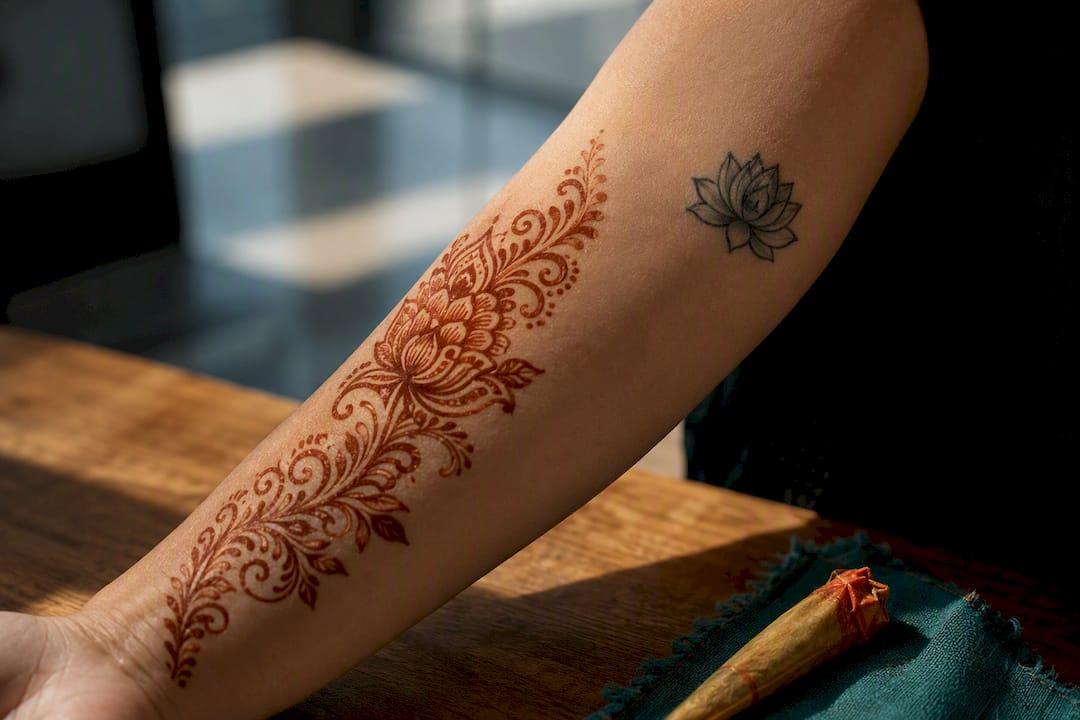
Henna is a temporary plant-based stain that sits on the skin’s surface for one to three weeks; a tattoo is permanent ink placed under the skin for life. The real decision usually comes down to four things: how long you want the design to last, your pain tolerance, whether the design carries cultural weight, and the very real danger of black henna containing PPD. If you want a striking look for an event with zero commitment and zero needles, henna wins. If you want something permanent that means something to you personally, a tattoo is the tool for that job.
TL;DR:
Henna stains only the outer skin layer and lasts for one to three weeks, with darker results on hands and feet due to thicker keratin.
Black henna frequently contains PPD, which caused allergic reactions in all 43 patch-tested cases, unlike natural henna that is safer when pure.
Tattoos are permanent, more detailed, and work with an unlimited color palette, but they involve higher costs, longer healing, and a larger environmental footprint.
Henna is significantly cheaper, costing $20 to $60 for simple designs and dissolves naturally, whereas tattoos start around $50 and can reach into thousands for complex work.
Choosing henna over a tattoo depends on the desire for short-term wear, pain tolerance, allergenic risks from additives, and proper timing for events or milestones.
Table of Contents
Henna vs Tattoo: How Each One Actually Works on Your Skin
The difference starts at the cellular level. Henna’s dye molecule, lawsone, binds to keratin and stains only the outermost, already-dying layer of skin, the stratum corneum, plus a bit of the epidermis beneath it. A tattoo needle punches ink about 1 to 2 millimeters deep into the dermis, the living layer where skin cells don’t slough off. That’s the entire story of why one fades and the other doesn’t.
Henna color builds gradually after the paste comes off, deepening over the first day or two as it oxidizes, then fading as those stained surface cells shed naturally. Expect a lifespan of roughly one to three weeks depending on skin type and location. Tattoo ink, by contrast, stays put until the immune system slowly breaks it down over decades, or until you pay to have it removed.
Placement changes the outcome for henna specifically:
Hands and feet stain darkest because skin there is thicker, with more keratin for lawsone to grab onto.
Thinner skin (inner arms, torso) produces a lighter, more amber tone that fades faster.
Callused or dry areas often need extra paste contact time to reach full depth.
What Are the Health Risks of Henna vs a Permanent Tattoo?
Pure henna is one of the gentler options in body art, but “pure” is the operative word. The real danger isn’t the henna plant. It’s what gets added to it.
Black henna, the jet black paste sold at beach boardwalks and festival stalls promising an instant dark stain, routinely contains para-phenylenediamine (PPD), a coal tar dye used in hair color. A clinical review found that in reported allergic reactions to temporary henna tattoos, every one of 43 patch-tested patients came back positive for PPD. That same review identified heavy metals like chromium, cobalt, nickel, and lead turning up in some black henna samples sold on the open market.
Statistic Callout: In one clinical review of allergic reactions linked to temporary henna tattoos, 100% of patch-tested cases (43 of 43) reacted positive to PPD, the additive found in black henna, not the henna plant itself.
WebMD notes that most adverse skin reactions trace back to these additives rather than natural henna, and that the FDA has approved henna as a hair dye but not for direct skin application. Tattoos carry a different risk profile: infection from unsterile needles, allergic reactions to pigments (sometimes appearing years after the ink goes in), and delayed inflammatory responses that licensed studios are trained to minimize through sterile equipment and single-use needles.
Precautions worth taking either way:
Patch test any henna paste on your inner forearm 48 hours before full application.
Walk away from anyone offering “black henna” for an instant dark stain.
Ask a tattoo artist to show you their sterilization setup and license before you sit down.
See a doctor promptly if you notice blistering, intense itching, or spreading redness after either.
Pro Tip: Do your own patch test, even with an artist you trust. Skin sensitivity changes over time, and a henna blend that never bothered you five years ago can trigger a reaction today. An allergy patch test guide is available online explaining how to run one at home.
Does Henna Look Like a Tattoo? Comparing the Visual Results
Henna and tattoos aim at different aesthetics, not just different lifespans. Henna produces warm reddish brown to deep mahogany tones, nothing more, because lawsone only stains within that color family. It’s the natural medium for intricate, flowing mehndi patterns: lace-like florals, paisleys, mandalas that wrap a hand or forearm in continuous line work.
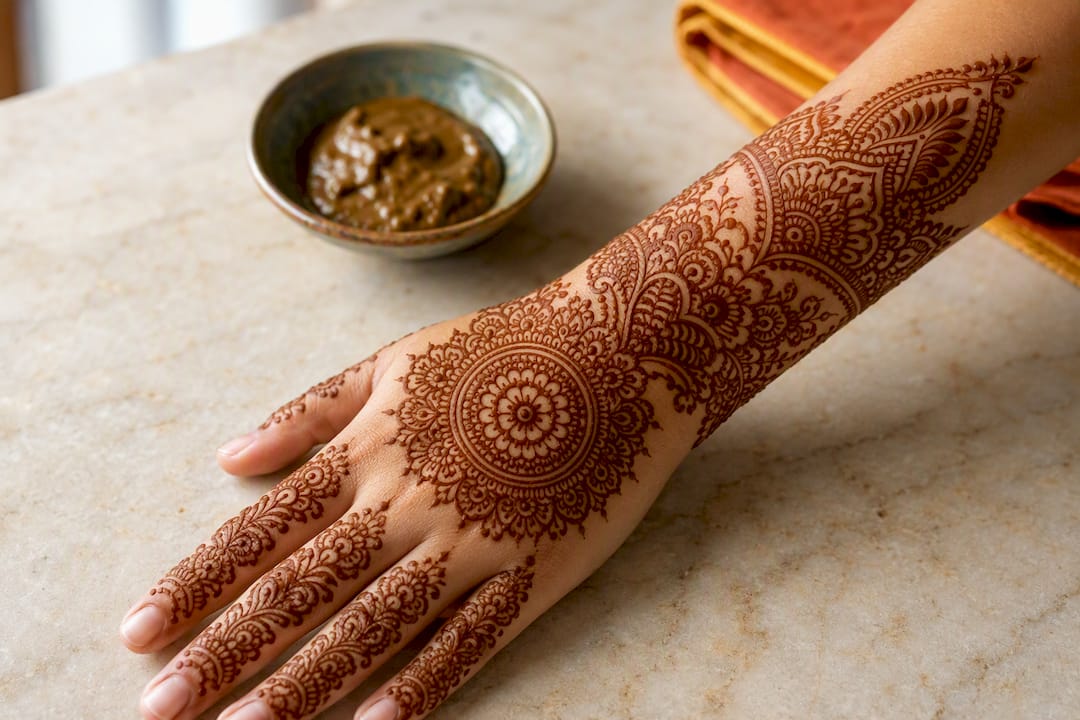
Tattoos work with an unlimited palette and far finer control over shading, saturation, and permanence-dependent detail. Fine-line portraiture, photorealism, solid black work, full-color pieces: none of that is achievable with a plant stain, and that’s by design, not a shortcoming of henna.
A few practical notes on how skin interacts with each:
Darker skin tones show henna in a richer, more burgundy cast; tattoo ink tends to read with slightly less contrast against deep melanin, which is why experienced artists adjust needle depth and pigment choice accordingly.
A guide to henna on dark skin covers how to maximize stain depth for deeper skin tones.
For simpler, more modern looks, A minimalist henna design gallery shows how far a few clean lines can go without the ornate detail traditional mehndi is known for.
Is It Culturally Insensitive to Get Henna Done?
Mehndi has centuries of ceremonial history in South Asian and Middle Eastern cultures, where it marks weddings, festivals like Eid and Diwali, and rites of passage. The bride’s mehndi night, in particular, is a communal ritual, not a fashion accessory. Understanding that context matters even when you’re just getting henna for fun at a summer party.
Wearing henna for a personal event doesn’t require the same weight as a wedding ceremony, but a little awareness goes a long way. Ask your artist about the meaning behind a motif before you request it, especially anything drawn from bridal or religious iconography. Skip symbols tied specifically to sacred rites you don’t have a connection to, and credit the tradition rather than treating henna as a generic accessory invented for festivals or influencer photos. Most professional artists are happy to explain a pattern’s origin if you ask, and that conversation is usually the most interesting part of the appointment.
How Do You Choose Between Henna and a Tattoo?
Run through this before you book anything:
Permanence: Do you want this design gone in two weeks, or do you want it on your body forever?
Pain tolerance: Henna application is pain-free. Tattooing involves repeated needle punctures and real discomfort.
Medical factors: People with G6PD deficiency should avoid henna entirely, since it can trigger dangerous hemolysis in that condition. Pregnant clients should stick to pure, natural henna and skip tattooing altogether during pregnancy.
Timing: Is this for a wedding, a photoshoot, or a permanent personal milestone?
Red flags to walk away from: anyone offering “black henna” for a darker stain, an artist who skips a patch test on request, or a tattoo setup with visibly reused needles or no visible license.
Pro Tip: Before booking either, ask directly what’s in the henna paste (essential oil, sugar, lemon, and dye, nothing else) or whether the tattoo studio uses single-use needle cartridges. A confident, specific answer is a good sign; vague answers are not.
Getting the Best Results: Aftercare and Timing for Both
Henna needs contact time to work. Leaving the paste on for several hours lets lawsone fully penetrate and deepen the stain; scraping it off too early gives you a pale, disappointing result. Color continues developing for a day or two after the paste comes off, so judge the final shade only after that window closes, not immediately.
Aftercare basics that extend a henna stain:
Avoid water contact for the first several hours after removing the paste.
Apply a light oil (coconut or olive) daily to slow fading.
Skip chlorine pools and heavy exfoliation while the design is fresh.
Tattoo aftercare runs longer and matters more medically: keep the area clean, apply a thin layer of recommended ointment, and avoid direct sun for weeks while it heals. Full healing takes roughly two to four weeks on the surface, though deeper skin layers continue settling for months. Removal, if you ever want it, means multiple laser sessions spaced weeks apart, with no guarantee of complete disappearance.
Event planning tip: book henna at least 48 hours ahead of any photos, so peak color has time to set. An aftercare guide and paste timing breakdown cover both in more detail.
What Hennaforfun’s Event Experience Teaches About Timing
Booking henna for a wedding, baby shower, or corporate event runs on a different clock than booking a tattoo appointment. At Whenna Events, application is scheduled with enough lead time for paste to set and stain to peak before the main event, not the day of. Pregnancy henna clients get similar advice: book close to, but not on top of, the maternity shoot date.
The guidance stays consistent across every booking: leave paste on long enough to get a real stain, patch test 48 hours ahead if it’s your first time with a new artist, and keep the design away from water for the first stretch after paste removal. Readers wanting more detail can start with a private lessons page or browse upcoming events to see how scheduling actually plays out in practice.
Which Leaves a Bigger Footprint: Henna or Tattoo Removal?
Henna’s environmental footprint is small by comparison. The plant itself, Lawsonia inermis, is grown and harvested with minimal processing, and a finished stain disappears through normal skin shedding with no removal procedure, no chemicals, and no medical waste involved. The one caveat: black henna’s PPD and heavy metal additives do carry a manufacturing and disposal footprint that pure henna doesn’t, which is one more reason to avoid it.
Tattoos leave a longer trail. Ink production involves pigments and carrier solutions, needles and gloves are single-use medical waste, and the removal process, when someone wants a tattoo gone, is resource-intensive on its own. Laser tattoo removal breaks ink particles down gradually across multiple sessions, typically six to twelve visits spaced six to eight weeks apart, and each session consumes energy and produces its own consumables. Some ink pigments also don’t fully clear the body; particles can migrate to lymph nodes over time.
Neither art form is a significant environmental concern on an individual level. But if disposability matters to you as a value, not just a timeline, henna’s biodegradable footprint and zero-removal-required design line up more naturally with that priority. A tattoo, by definition, asks you to commit to carrying that ink, and eventually disposing of it if you change your mind, for the long haul.
How Much Does Henna Cost Compared to a Tattoo?
Henna is the far cheaper way to test a design. Simple hand or wrist designs from a professional artist commonly run in the range of $20 to $60, while detailed bridal-style henna covering hands and forearms can run several hundred dollars depending on the artist’s experience and the time involved. Event bookings, where an artist works a party or wedding for a set block of hours, are usually priced by the hour rather than per design.
Tattoo pricing works on a completely different scale, driven by permanence and skill rather than time-limited stain quality. Small, simple tattoos can start around $50 to $150, but detailed color work, larger pieces, or anything requiring multiple sessions frequently runs into the hundreds or low thousands. Removal, if you go that route later, adds its own cost on top, often exceeding what the original tattoo cost in the first place.
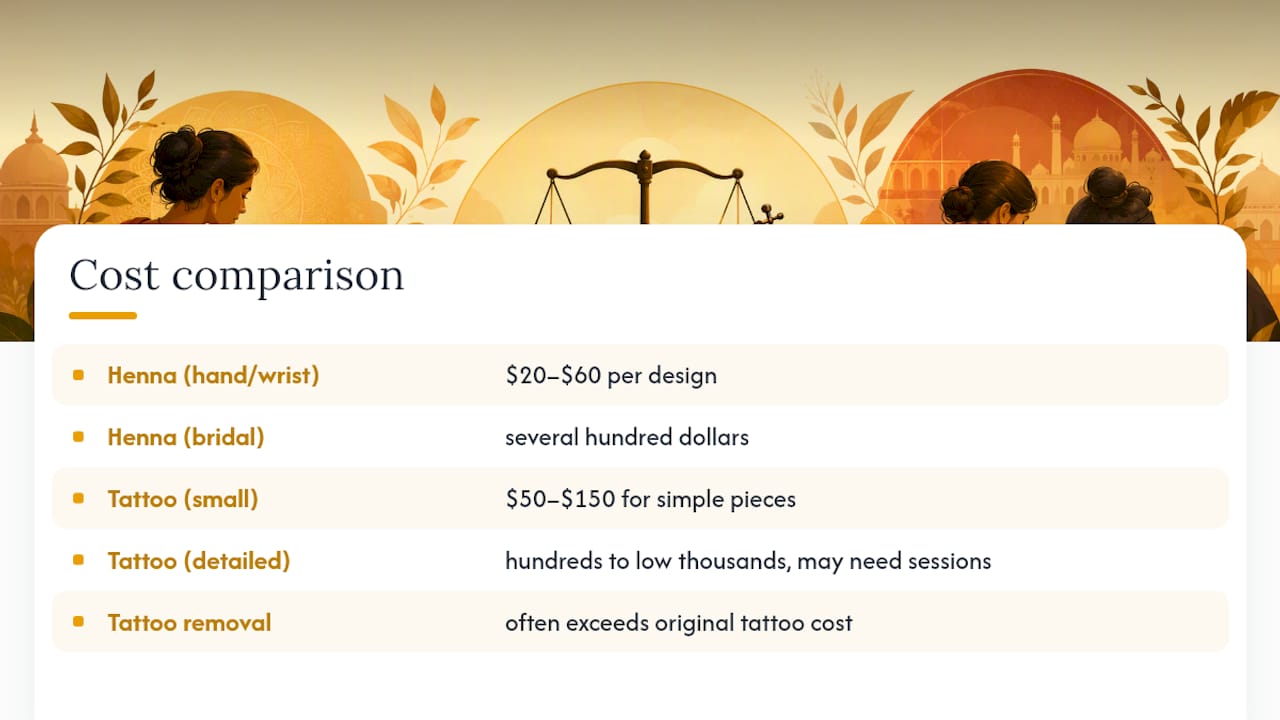
For anyone testing a design idea, celebrating a temporary milestone, or simply wanting body art for one event, henna delivers a similar visual impact at a fraction of the price and with none of the removal cost hanging over you later. That price gap alone explains why henna remains the default choice for weddings, showers, and short-term celebrations rather than a design commitment.
When Temporary Wins and When Permanent Makes More Sense
Henna makes sense when you want a striking look for a wedding, shower, or short-term celebration without pain or long-term commitment. Tattoos make sense when the design carries permanent personal meaning you’re ready to live with. Either way, patch test first, skip black henna entirely, and book artists or studios that take hygiene and sourcing seriously.
— Angana
Book Henna With Hennaforfun for Your Next Event
Skipping the risk of black henna and unlicensed tattoo studios starts with booking someone who treats sourcing and hygiene as seriously as the design itself. Interactive henna events take place at wineries, private homes, and corporate offices; specialized pregnancy henna sessions are available for maternity photos and baby showers, along with private and group lessons for those interested in learning the craft.

If you’d rather practice at home first, Handmade henna cones and DIY stencils made with pure, natural ingredients are available for purchase online, without PPD or additives. Always patch test before your first full application, regardless of where the henna comes from. To book an artist for an event or check open dates, visit the services page or browse the event calendar for availability.
Sources
For further reading on the safety and mechanics covered above: the clinical review on PPD risk in black henna tattoos, WebMD’s consumer guide on what henna is and how it’s regulated, and Temporalis’s comparison of henna, jagua, and permanent tattoo mechanics.
FAQ
Why Is Black Henna Restricted in the US?
Black henna isn’t broadly illegal, but the FDA has never approved PPD-based black henna for skin use, and it has issued warnings after PPD triggered severe allergic reactions including blistering and scarring. Natural, unadulterated henna faces no such restriction since it’s the coal tar dye additive that causes the danger, not the plant itself.
What Are the Downsides of Henna?
The main downsides are its short lifespan of one to three weeks, its limited color range of browns and reds, and the risk of a severe reaction if the paste contains PPD or other additives rather than pure botanical henna. Sensitivity to sun, water, and friction can also shorten a stain faster than expected.
Is Getting a Henna Tattoo Against Christianity?
Henna itself isn’t tied to any particular religious prohibition, and there’s no established Christian doctrine against wearing it. Some individuals choose to avoid designs with specific religious or ritual symbolism from other faiths out of personal conviction, which is a matter of individual conscience rather than a formal rule.
Is It Culturally Insensitive to Get Henna Done?
Getting henna for a personal event generally isn’t considered offensive, but it helps to understand mehndi’s roots in South Asian and Middle Eastern ceremonial traditions rather than treating it as a generic trend. Asking your artist about a design’s meaning and avoiding sacred bridal or ritual-specific symbols shows respect for where the art form comes from.
Should I Patch Test Before Getting Henna?
Yes, always patch test on your inner forearm at least 48 hours before a full henna application, especially with a new artist or blend. This catches PPD or additive sensitivities before they affect a larger area, and Hennaforfun’s patch test guide walks through the process step by step.
Recommended
Comments