Anniversary Henna Ideas for Couples: Designs, Details and Planning

The best anniversary henna is personal and planned a little ahead. Choose one motif that means something to the two of you, such as a flower from your wedding bouquet, hidden initials or a milestone number. Then place it on skin where it will stay crisp, and book an artist who uses natural paste. Henna (called mehndi in South Asian traditions) is a plant-based paste that stains the skin for roughly one to two weeks. That makes it a gentle, low-commitment way to mark a year together, and it works as a date, a photo session or a small party. At Henna For Fun, we run henna experiences at wineries, homes and other venues, so below you will find design ideas and the practical details that decide whether the result looks the way you pictured it.
TL;DR
Pick one meaningful motif, such as roses, a heart, a mandala or a ring, and add a personal detail like initials, a date or a milestone number.
Put lettering and numerals on flatter skin, such as the palm or inner forearm, because tiny details can blur as the stain develops.
Matching or complementary designs on both hands are the easiest way to make the two of you look like one piece of art.
Only natural henna paste belongs on skin. Black henna contains PPD and can cause serious reactions.
Whenna Events start at $25 per participant, so a henna date for two can be planned with a known price.
Table of Contents
Romantic design ideas that read as “anniversary”
Anniversary henna does not need a special visual language. It borrows from bridal and celebration designs, then adds something only you two will recognize. These are the motifs couples choose most often, according to a 2026 roundup of anniversary mehndi designs: floral vines and roses, hearts, mandalas, ring motifs, matching or complementary designs, hidden initials, and a couple portrait or silhouette.
Here is how each one tends to look and who it suits.
Florals and vines
Roses and trailing vines are the classic choice because they flex to any amount of time and skill. A vine can run up a finger and wrist in twenty minutes, or fill the back of a whole hand. If you carried a particular flower at your wedding, or someone gave you one on your first date, use that flower as the anchor and let leaves and small dots fill the space around it. For a bolder, party-ready look, our guide to Arabic henna designs shows large florals, vines and deliberate empty space, along with easy tutorials if you want to try a pattern yourself.
Hearts and rings
A heart is the obvious symbol, and it works best when it is not the only element. Try a small heart at the center of the back of the hand, framed by petals or paisleys. A ring motif, drawn as a band around the ring finger with a tiny pattern inside, nods to the wedding without copying it. It is also forgiving: even a slightly uneven band looks hand-drawn rather than wrong.
Mandalas
A mandala is a circular, symmetrical pattern that radiates from a center point. One fashion-brand article on trending wedding mehendi presents mandalas as a motif for unity and harmony, and suggests a bold back-of-hand mandala as the focal point. That meaning suits an anniversary well. A mandala also gives you a natural place to tuck in a date or a number at its center.
Couple portraits and silhouettes
A portrait or silhouette of the two of you, framed by florals or paisleys, is the most dramatic option. It takes the longest and needs a confident artist, so it is best for a milestone year when you want a showpiece. Plan on one hand carrying the portrait while the other carries a quieter design, so the whole look does not feel crowded.
Matching versus complementary
Matching designs are identical. Complementary designs share a motif but are not copies: one partner might have the vine climbing up, the other down, so that the two meet when you hold hands. Complementary tends to look better in photos and is kinder if your preferences differ. Our post on matching couple henna designs goes deeper into ways to symbolize your bond.
Working in initials, dates and milestone numbers
Personal details are what turn pretty henna into anniversary henna. They are also where mistakes happen, so a little planning pays off.
Initials. The 2026 roundup suggests placing both initials inside a heart, a paisley or a floral frame at the center of the back of the hand, with a bracelet-style band at the wrist if you like. For a more private version, hide a partner’s name in a floral trail, a paisley border or the filling of a mandala, so that only you know where to look.
Milestone numbers. For a 25th, the same guide proposes adding a “25” inside a mandala or paisley, or splitting the “2” and the “5” across both hands so the number reads when you place your hands together. The idea works for any milestone: a “1” and a “0” for a tenth year, or a “2” and a “0” for a twentieth. Silver is the traditional color for a 25th, but henna stains reddish-brown, so a silver theme is better carried by the shape of the design, such as a crescent or a moonlike mandala, than by color.
Dates. Write the date in numerals or Roman numerals and set it inside a band, like a bracelet. Roman numerals are long, so give them room. A date on the inner wrist or along the side of a finger is easier to read than one on a curved knuckle.

Storytelling panels. The same fashion-brand article describes a storytelling approach where separate panels stand for chapters of the relationship, such as a first date or an engagement trip. For an anniversary, this is a lovely way to fill a forearm: one small symbol per year or per memory, linked by a vine.
Avoid the three common mistakes
Not writing it down. The 2026 guide recommends writing names and dates out for the artist in advance and checking script spelling before application. Henna is hard to correct once the paste is on, so a typed note on your phone is worth the minute.
Going too small. The same guide notes that tiny letters and numerals may blur as paste spreads and the stain develops. Ask for a larger size than you think you need.
Putting lettering on a curve. It advises placing lettering on flatter skin, such as the palm or inner forearm. Knuckles and the sides of fingers are better for flowers and dots.
Ideas by anniversary year
Nobody has an official list of henna designs by year, so treat these as starting points. Only the 25th-anniversary ideas above come from a published guide. The others are simple ways to adapt the same principles.
Milestone | Idea | Why it works |
First anniversary | Complementary vines that meet when your hands touch, with the wedding date in a small band | Simple, photographs well, and recalls the wedding without repeating it |
Five to ten years | A mandala with initials hidden in the filling, one on each partner | Subtle enough for daily life, with a private message |
Fifteen to twenty years | Storytelling panels along the forearm, one per chapter | Gives you a reason to retell the story to each other during the session |
Twenty-fifth | Split “2” and “5” across both hands, framed by florals or paisleys | Reads as a number only when you are together |
Vow renewal | Full hands with a couple portrait on one and florals on the other | A showpiece for a bigger celebration |
If the thought of a full design feels like too much, ask for the first-anniversary version and add one element a year: a new leaf, a new flower. Because henna fades, you can build the tradition without any long-term decision.
Simple or intricate: how to choose
The real question is how much time and attention you want to give. A minimalist design might be a single motif, a slim bracelet or a few dots, and it takes minutes. An intricate design with portraits and dense filling can take an hour or more per person, and everyone has to hold still while the paste sets.
A few ways to decide:
Date night or dinner plans. Choose simple. You will want to eat and use your hands afterward. Our collection of minimalist henna designs shows fifteen easy and elegant options.
Photo session or party. Choose bolder. Large florals with open space read clearly on camera.
Dressing up. A delicate henna wrist band pairs naturally with a thin bracelet, so delicate crystal bracelets can echo a slim henna band if you want a gift to go with the design.
Mixed comfort levels. If one of you is nervous about henna, start with a single flower on the back of the hand. Most people ask for more once they see it.
Where to place it
The back of the hand and the inner forearm are the most popular spots because they are visible and flat enough for detail. The palm gives the darkest stain for many people, but it fades sooner from washing and handshakes. Fingers suit ring motifs and tiny flowers. If you have deeper skin, the stain looks different, as we explain in our guide to henna on dark skin, so ask your artist to plan the contrast.
Turn it into a shared experience
The design is half of the idea. The other half is the hour you spend together. A few formats that work well:
A henna date. Two chairs, two artists or one artist working in turns, music, something to drink. It is a quiet alternative to a restaurant dinner.
A small party. Invite family and friends, and let guests choose simple designs while the couple gets the featured one. A celebration guide for anniversary mehndi also suggests adding a photo corner, wedding-memory displays and music to make the event feel personal, as described by a mehndi celebration guide.
A winery or home gathering. Whenna Events are our henna events at venues such as wineries and homes, designed so guests can enjoy henna together.
Learning it together. If you would rather draw on each other, private henna lessons turn the anniversary into a skill you share. Our 3-day lessons are $111 and the 5-day lessons are $179, and Henna Mixing and cone making is $99.
What it costs with Henna For Fun
These are the published prices for our henna events, and all are in US dollars:
Option | Price |
Basic | from $25 per participant |
Plus | from $35 per participant |
Premium Option 1 | from $35 per design per participant |
Premium Option 2 | $200 |
Additional hour | $85 per hour |
For a couple, two participants on the Basic option starts at $50, and the Plus option starts at $70. Public events and corporate workshops do not have a published price, so the pages for those explain how to inquire. If you have a larger group in mind for a vow renewal or family party, the Premium and additional-hour options are there to be added up before you book.
Safe henna for your anniversary
This is the one part you should not improvise. Natural henna paste is greenish-gray and stains reddish-brown or coppery, according to WebMD’s henna overview. Black henna is different: it contains PPD (a chemical used in hair dye), dries faster and can cause serious reactions. WebMD’s medical review says reactions are more commonly associated with black henna than natural henna and can include itchy, blistering rashes. In the United States, PPD may be used in hair dye but not on skin.
What that means when you plan:
Anything advertised as “black henna” or “dark in 30 minutes” is not natural henna. Skip it.
Store-bought henna needs an ingredient list, but WebMD notes that professionals applying henna at salons or fair booths do not have to display one. So ask your artist what is in the paste before the session.
If you have sensitive skin, do a patch test first. Our guides to the 48-hour patch test for sensitive skin and the henna allergy test walk through the steps.
If you want to know what belongs in a safe mix, see natural henna ingredients. For the broader rules on booking and application, read henna rules in the U.S..
If you have had a reaction to a henna product before, or have a skin condition, talk to your doctor or dermatologist before you book.
Preparing for the session
A few habits make the stain look better and last longer:
Arrive with clean, dry skin. Skip heavy lotion on the area for that day.
Bring a reference. A photo of the wedding flowers, a monogram or a screenshot of a design you like saves time.
Write the details. Initials, names and dates, spelled out, as above.
Plan the hours afterward. The paste needs time to dry on the skin. Choose a session when you do not have to cook, wash dishes or handle anything messy right away.
Photograph it twice. Take pictures when the paste is fresh and again after the stain has developed. The color usually looks different the next day.
Couples often ask us for something “romantic” and then freeze when we ask what that looks like. Our answer is always to start with a memory, not a pattern. A flower from the wedding, a place you traveled to, the number of years: any of them can become a design, and the artwork carries more feeling than a copy of a photo from the internet. We care about the experience around the henna as much as the henna itself. Our approach combines traditional henna artistry with modern, interactive events, whether that is a Whenna Event at a winery or a home, a pregnancy celebration, or private lessons. For an anniversary, we like the idea of the two of you sitting down together, with a calm, creative hour that is only yours. Start small if you are unsure. One motif, one meaningful detail, placed where it will look clean. Then let the tradition grow year by year. Angana
What we believe about anniversary henna
Plan your henna anniversary with us
If you want the henna done for you, our Whenna Events are the natural place to start, with Basic from $25 per participant and Plus from $35 per participant. Tell us your anniversary year, your motif and any initials or dates, and we will shape the design around them. You can see the options and book on our Whenna Events page.
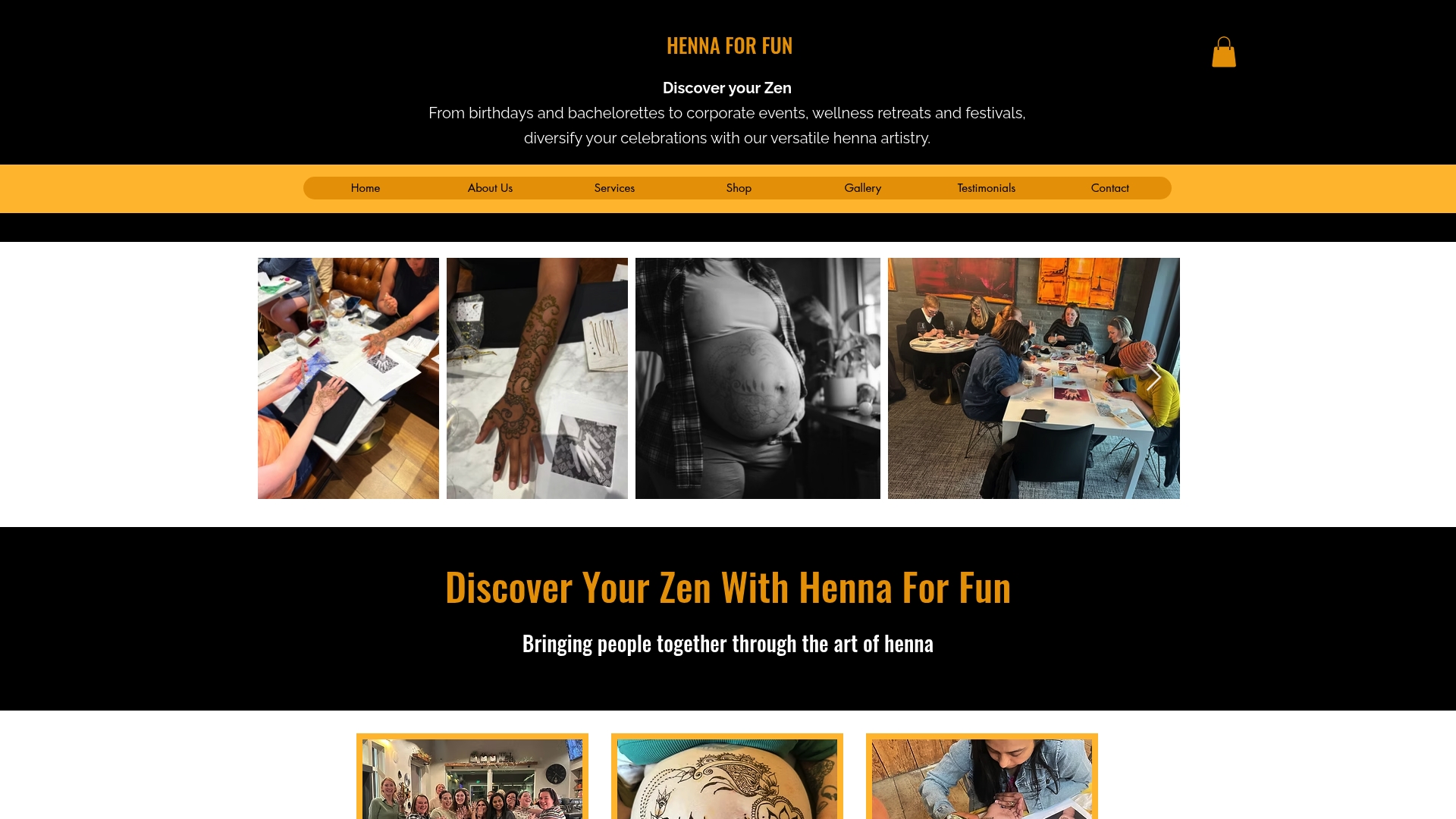
If you would rather learn to draw it yourselves, our henna lessons cover mixing, cone making and design. For larger gatherings, see our services overview.
FAQ
How long does anniversary henna last?
Henna typically fades over about one to two weeks, depending on where it is on the body and how often you wash the area. Palms and fingers often fade sooner than the forearm. Keeping the area moisturized after the paste is removed can help, and your artist can tell you how to care for it.
What is the easiest anniversary henna design?
A single flower or a slim vine on the back of the hand, with initials or a date in a small band at the wrist. It is quick to apply, looks elegant and leaves room for photos and everyday use. Our minimalist design collection has fifteen more ideas of the same kind.
Can we do matching designs if our hands are different sizes?
Yes. Ask for complementary designs rather than identical ones. The artist scales the pattern to each hand, and a shared motif, such as the same flower or vine, ties them together. Splitting a number across both hands, such as a “2” and a “5” for a 25th, also works regardless of hand size.
Is henna safe for everyone?
Natural henna is a different product from black henna, which contains PPD and can cause serious skin reactions. If you have sensitive skin, do a patch test first, and if you have a history of reactions or a skin condition, ask your doctor before you book. Expectant partners can read our guide to pregnancy henna safety.
Sources
Recommended
Comments