Henna Symbols Meaning: Motifs, U.S. Safety, Respect, and Where to Book

Henna motifs generally cluster around a handful of ideas: blessing, celebration, fertility, protection, beauty and unity, though the exact meaning shifts with the motif, the region and the occasion. Below, we walk through the most common symbols, the celebrations that shape how they are used, how meaning changes across regions, and what U.S. readers need to know about safety and respectful practice before booking or applying henna.
TL;DR:
Treat motifs as context dependent: paisley often signals fertility at South Asian weddings, while the same shape may serve as decoration elsewhere.
Wedding designs tend to be dense and elaborate, patterns for births are softer, and festival applications are simpler; regional styles also change symbolism.
The FDA approves henna only as hair dye, not skin use; avoid black henna, check ingredients, and wait 48 hours after patch testing.
Ask an artist from the relevant tradition about a motif’s meaning, and avoid religious or life cycle designs unless the occasion fits.
Table of Contents
Common henna symbols and what they typically represent
Henna designs draw from a shared visual vocabulary, but no single motif carries one fixed meaning everywhere it appears. Think of these as common associations rather than fixed rules, since museum research ties henna broadly to fertility, blessing and celebration across many cultures rather than to one strict code.
Paisley (boteh): This teardrop shape with a curled tip often stands for fertility and good fortune, and it appears constantly in South Asian bridal work.
Flowers: Lotus and other blossoms commonly signal joy, new beginnings and feminine beauty, making them a staple at weddings and festivals.
Peacock: Associated with grace, beauty and sometimes romance, the peacock motif shows up in detailed bridal sleeves and leg designs.
Mandala: These circular, radiating patterns suggest wholeness, balance and protection, and they often anchor the center of the palm.
Vines and leaves: Climbing vine patterns typically represent growth, vitality and connection, filling space between larger focal motifs.
Dots and lines: Geometric dots and fine lines are common in North African styles, often linked to protection and blessing rather than figurative storytelling.
Sun and moon: These celestial shapes often point to cycles, renewal and hope, sometimes placed on the back of the hand.
Birds: Beyond peacocks, small birds can suggest messages, freedom or a wish carried forward.
Net or lattice patterns: Interlocking lines sometimes represent connection between people, which fits their frequent use on bridal hands clasped with a groom’s.
Evil eye motif: A stylized eye shape is used in several cultures as a protective symbol meant to ward off envy or harm.
Context matters as much as the shape itself. The same paisley that signals fertility at a wedding might simply read as decoration on a festival design, so the occasion and the artist’s intent shape the meaning as much as the motif does.
What henna means at weddings, births and festivals
Henna rarely exists apart from the event around it, and the ritual of applying it carries as much weight as the finished pattern, something UNESCO’s recognition of henna rituals highlights by framing the songs, gatherings and shared preparation as central to the practice, not just decorative extras.
Bridal mehndi: Brides often receive the most elaborate, darkest designs, with motifs like paisley, peacocks and lattice work signaling fertility, marital bliss and protection on the wedding day.
Pregnancy and baby showers: Natal henna tends to favor softer, rounder patterns such as mandalas and vines, often read as blessings for a safe delivery and a healthy child rather than bridal-style density.
Festivals: Festival henna is typically simpler and faster to apply, since the goal is joyful participation rather than the hours-long sessions reserved for weddings.
Design complexity often maps directly to the occasion: the bigger the celebration, the more intricate and symbolically loaded the pattern tends to become.
How henna meanings shift across regions and history
Henna’s associations are not universal, and geography shapes both style and symbolism. Moroccan and broader North African designs lean geometric, with dots, lines and angular shapes tied to protection and blessing. Indian and Pakistani styles favor dense floral and paisley work linked to fertility and bridal joy, while Middle Eastern patterns often blend both approaches.

The practice itself has deep roots. UNESCO documents that henna rituals have been part of life across North Africa, the Middle East and South Asia for thousands of years, transmitted through family and community practice rather than written instruction. The Natural History Museum traces henna’s presence across multiple religions and historical periods, which is exactly why no single motif holds one fixed meaning everywhere it travels. Assuming otherwise flattens a tradition built on regional variation.
Religion, folklore and the limits of popular interpretation
Henna appears across several religious and cultural lifecycle rituals, from weddings to births, and museum research notes mentions in historical religious texts alongside traditions like Moroccan Jewish bridal smudging. These references show henna’s presence in religious life, not a single shared doctrine about what it means.
Some popular accounts, particularly Western ones, have amplified henna’s “protective” or mystical qualities beyond what community sources describe, turning a varied practice into a single simplified story. When a design carries specific religious or folkloric weight, it is worth looking to sources from within that community rather than general claims found online.

Henna safety rules every U.S. reader should know
Before booking henna in the United States, it helps to know what regulators actually say. The FDA states that henna is approved only as a hair dye, not for direct application to skin, and warns that so-called “black henna” often contains PPD, a chemical linked to severe allergic reactions, burns and scarring.
The FDA has issued import alerts for henna products marketed for skin use, since that use falls outside their approval, a fact worth knowing before choosing a provider or product (FDA).
Avoid any paste labeled “black henna” or anything promising jet-black, instant color.
Check for a short ingredient list: henna powder, water, and a natural oil or lemon juice are typical.
Patch test on your inner arm and wait at least 48 hours before full application.
For a full walkthrough, our 48-hour patch test guide covers timing and warning signs, and our henna rules overview covers booking and application expectations in more detail.
How to use henna motifs respectfully
Borrowing a motif without understanding its context can strip it of meaning, something practitioners and scholars have cautioned against repeatedly. Treating a bridal or religious design as a casual accessory risks turning a living tradition into a costume.
Ask about the meaning and occasion behind a motif before adopting it for yourself.
Learn from or hire artists trained within the tradition you’re drawing from, rather than copying images found online.
Consider taking a henna lesson instead of free-handing a design pulled from someone else’s culture.
Credit the artist or tradition when you share photos, and skip motifs tied to specific religious or life-cycle rituals unless the occasion calls for them.
Pro Tip: When you share henna photos online, name the artist or the tradition the design comes from instead of letting it read as generic body art.
How we think about motifs and meaning at our events
We pair traditional motifs with their context at every event, so guests understand what a paisley or mandala signals rather than picking a design at random. Pregnancy henna sessions and lessons work the same way: clients are guided through meaning and technique together, providing a respectful way to learn rather than copying patterns without context, and many expectant parents also appreciate combining this with a pregnancy-safe manicure to ensure all body art is safe during pregnancy.
— Angana
Book a henna experience or learn the craft yourself
If today’s guide has you curious about experiencing henna firsthand, we run Whenna Events at wineries, homes and private gatherings where an artist explains each design as it goes on. Expectant parents can book a session through our pregnancy henna services, and anyone who wants to learn the craft can join our multi-day lessons on mixing paste and cone making.
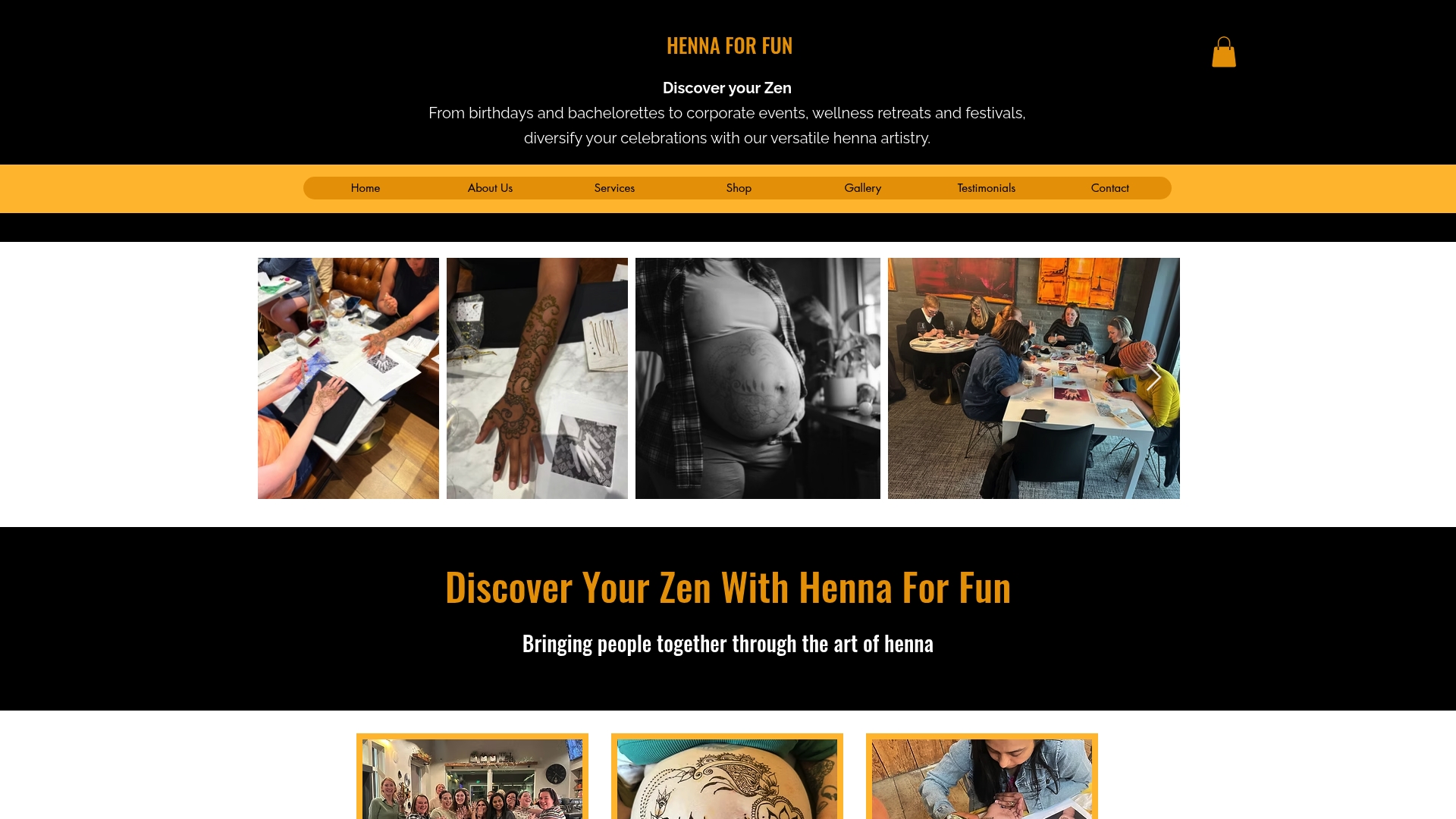
Whenna Events: Group henna sessions for parties, wineries and private gatherings.
Pregnancy henna: Personalized baby shower and maternity designs.
Lessons: Three-day and five-day courses covering design and paste-mixing for hobbyists.
Corporate workshops: Team sessions pairing henna art with a shared, hands-on activity.
If you’d rather practice at home first, a patch test guide is worth reading before your first appointment, whichever option you choose.
FAQ
Is it culturally insensitive to get henna?
Getting henna is not inherently insensitive, especially when it is applied by a trained artist who explains the design’s background. Problems arise when someone copies a bridal or religious motif without understanding its context, so asking about a design’s meaning first is a simple way to show respect.
What does the Bible say about henna?
Henna itself is not directly addressed in the Bible, though museum research notes the plant’s long presence across multiple religious and historical traditions in the regions where it originated. Specific religious claims about henna are best sourced from within the relevant faith community rather than general historical summaries.
What are the rules for henna tattoos?
In the United States, the FDA has approved henna only as a hair dye, meaning skin application is not an FDA-approved use, and “black henna” containing PPD carries a real risk of severe allergic reactions. Choosing natural henna paste with a short ingredient list and patch testing beforehand are the two most important practical safeguards.
Is henna a part of black culture?
Henna’s documented roots trace to North Africa, the Middle East and South Asia, where UNESCO recognizes it as a longstanding ritual practice tied to weddings, births and community celebration. Its presence within any specific cultural community today is best understood through that community’s own practices rather than broad generalization.
Sources
Recommended
Comments