Fill Tasting Rooms Fast With Profit First Winery Event Ideas and Henna
The winery event ideas that work best are the ones tied to a clear theme, a specific guest, and a real revenue target. This article gives you a prioritized list of formats, a framework for picking the right one, and a promotion and logistics checklist to make each event profitable, plus one artisan add-on example that stretches guest dwell time and adds shareable content.
TL;DR:
The most successful winery events are tied to a clear theme, target a specific guest, and aim for a measurable revenue goal.
Small-scale, themed tastings, private dinners, and interactive experiences like blending parties or artisan stations tend to generate higher engagement and shareable content.
Promotion should start immediately after scheduling, with a focus on experience framing, tiered pricing, and early member presales to maximize attendance and revenue.
Event costs must be carefully calculated by dividing fixed expenses by expected guests, while capacity, permits, and accessibility are critical to planning.
Adding artisan experiences like henna stations extends guest dwell time, encourages social sharing, and boosts event appeal for a variety of niche occasions.
Table of Contents
12 Winery Event Ideas Worth Building a Calendar Around
Not every format fits every winery. Some formats work best for weekend tourist traffic, others for your wine club, and a few are built specifically to pull in corporate budgets that dwarf a typical tasting fee. Here’s a working list, organized so you can match format to guest and to goal.
Seated themed tastings. Best for tourists and date-night couples. Cap it at a small to moderate number of guests, price per seat with a flat pour count, and build the whole event around one idea (a single varietal, a vintage comparison, a producer story). A themed pour list creates what tasting-room operators call a “story arc” that guides guests from glass to glass instead of leaving them guessing what to try next, which is exactly the kind of cohesion that keeps decor, menu, and staffing simple.
Blind tastings. Great for regulars who want a challenge. Keep it small with a modest number of people, gamify it with a scorecard, and offer a discount voucher to the closest guess.
Winemaker dinners. These justify a premium price tag because guests get direct access to the person who made the wine. Four courses, five pours, about thirty to forty seats, and a per-plate price that already includes the wine.
Blending parties. Guests build their own blend from base wines, bottle it, and take it home. This works well for private groups and corporate bookings because it’s interactive without requiring wine expertise.
Harvest celebrations and grape stomps. Seasonal, high-energy, and easy to market as a once-a-year experience. Early promotion and member presales are what actually drive ticket sales during harvest, so list the date months ahead.
Vineyard tours and picnics. Low overhead, high shareability. A guided walk through the rows followed by a picnic basket and a bottle is an easy upsell for casual visitors.
Food-pairing dinners. Partner with a local chef or cheesemaker for cross-promotion. These collaborations are a proven way to lift ticket sales and local visibility because the partner brings their own following to your gate.
Winemaking masterclasses. Aimed at hobbyists and serious enthusiasts. Charge a premium, limit attendance to a small group to maintain intimacy, and include a take-home kit or sample bottle.
Wine club exclusives. Reserve certain events, barrel tastings, or early releases for club members only. This is one of the more reliable levers for boosting club retention because members feel like they’re getting something the public can’t buy.
Virtual tasting kits. Ship wine and a tasting guide to remote club members, then host the event over video. Lower margin, but it keeps distant customers engaged between visits.
Sip-and-paint or pottery nights. Pair a creative activity with a themed pour flight. These formats generate the kind of social content that expands your organic reach well past the guest list.
Live music nights. Low-cost to run if you already have outdoor space; charge a cover or make it free with a minimum bottle purchase.
Corporate team-building events. Blending competitions, private tastings, or barrel-room meetings can command a higher per-head rate than a public tasting, and they fill weekday slots that otherwise sit empty.
Scavenger hunts or trivia nights. Cheap to run, good for families and casual groups, and effective for slower shoulder-season weekends.
Fireside evenings. A simple firepit setup with blankets, a short pour flight, and no formal program. Minimal staffing, strong repeat-visit potential.
How to Pick the Right Event for Your Winery
Start with the goal, not the guest list. A DTC sales push calls for a different format than a club-growth push or a venue-rental strategy.
Goal first. Direct-to-consumer sales favor tastings with bottle-purchase incentives; club growth favors exclusive or presale-only events; venue rentals (weddings, corporate) favor larger, higher-margin bookings.
Audience second. Local regulars want frequency and familiarity; tourists want a story and a photo opportunity; corporate buyers want reliability and a clear invoice.
Seasonality matters. Harvest events peak in fall, picnics and outdoor concerts peak in summer, and fireside or masterclass formats fill winter gaps when foot traffic drops.
Do the capacity math before you set a price. A simple formula: fixed costs (staffing, setup, insurance, AV) divided by expected paying guests gives you your break-even ticket price. Add your target per-capita margin, including expected bottle sales, on top of that.
Pro Tip: Run your first version of a new event format as a small pilot, maybe 15 to 20 guests, before committing a whole weekend to it. You’ll learn your real staffing needs and your real per-guest spend without risking a bad first impression at scale.
Before locking the date, run through this checklist: timeline (book six to twelve weeks out for anything ticketed), staffing needs, vendor coordination, any permits required, accessibility for guests with mobility needs, and a weather contingency if any part of the event sits outdoors.
Promotion and Ticketing That Actually Fill Seats
List the event the moment the date is locked, not two weeks before. Give it a specific, searchable name (not “Fall Tasting” but “Harvest Barrel Tasting & Grape Stomp”) so search engines and event directories can match it to what people are actually looking for.
Presale first. Give wine club members first access, then open to the public a week or two later. This tactic reliably increases conversions when capacity is genuinely limited.
Promote the experience, not the ticket. Selling “four hours in a tasting room” undersells it. Selling “dinner with the winemaker, five reserve pours, and a take-home bottle” justifies a higher price. This framing alone can raise perceived value enough to support premium ticketing.
Mix your channels. Email your club list first, post to social on a set cadence (announcement, reminder, last-call), and reach out to local tourism boards and complementary vendors for cross-promotion.
Build in the upsell. Tiered pricing (standard vs. reserve seating), bottle bundles at checkout, and on-site merchandise all add margin without raising the base ticket price.
Tactic | When to use it | What it does |
Member presale | 1 to 2 weeks before public launch | Fills capacity early, rewards loyalty |
Tiered ticketing | Any seated or dinner event | Increases average spend per guest |
Bottle bundle add-on | Checkout, any ticketed event | Raises per-guest revenue without new labor |
Refund/reschedule policy | Set at listing | Reduces support friction, protects trust |
Logistics and Profitability Checklist
Profitability starts with the break-even math: divide your fixed event costs (setup, staffing, AV, insurance) by your expected paying guest count to find your minimum viable ticket price, then add margin for expected bottle sales on top.
Confirm capacity against your actual space. Venue examples like Novelty Hill-Januik, which lists rooms ranging from 14 to 200 guests with built-in AV and catering, show how much format choice depends on what your space can physically hold.
Lock staffing and vendor timelines at least two weeks out: pouring staff, security if alcohol and crowd size require it, AV, and any outside caterer.
Check your liquor license terms, any special-event permit requirements, and local noise ordinances before you set a start and end time.
Plan for accessibility, parking, and a weather contingency for any outdoor component.
After the event, follow up with a survey, a thank-you email with a club invitation, and a look at your actual per-guest spend against your break-even target.
An Interactive Add-On That Extends Guest Dwell Time
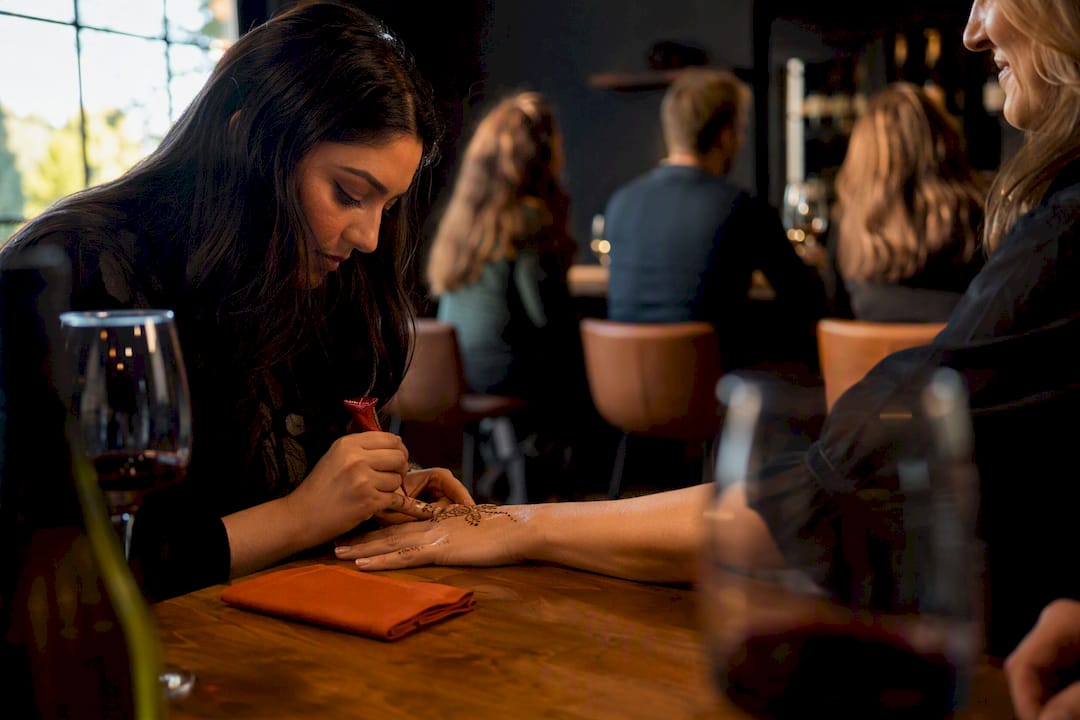
Interactive artisan stations do something a tasting flight alone can’t: they give guests a reason to linger, and something to photograph. Henna For Fun’s “Whenna Events” bring a working henna artist directly into a winery setting, where guests get a personalized design while they wait between pours or after a seated dinner winds down.
Space needs: a small table and two chairs per artist, ideally near seating but out of the main foot-traffic path.
Sanitation and materials: natural henna paste, disposable applicators, and standard sanitation between guests.
Artist ratios: one artist comfortably serves 15 to 25 guests over a two-to-three-hour event, depending on design complexity.
Pricing models: per-guest flat rate, per-artist hourly rate, or a flat station-hire fee for the full event window.
Pro Tip: When vetting any artisan vendor for a winery event, ask about lead time, materials used, insurance coverage, setup requirements, and a sample portfolio before you book. Interactive stations like these tend to generate the kind of social content that keeps your event visible long after the last pour.
Why Theme-Driven, Measurable Events Win
Themed events win because they give every part of the operation, decor, menu, staffing, promotion, a single story to follow, instead of leaving your team guessing what “vibe” they’re building toward. That focus is what tasting-room operators consistently point to as the difference between an event that runs itself and one that feels disjointed.
Start small. Pilot a new format at low capacity, track per-guest revenue and club signups against your break-even number, and only scale what actually earns its slot on next quarter’s calendar.
— Angana
Book an Interactive Artisan Vendor for Your Next Event
A winemaker dinner or harvest party gets guests through the door. A henna station is what gets them to stay another hour, and post the photo that brings their friends next time. Interactive henna experiences can be built for exactly this kind of setting, alongside private lessons, pregnancy henna sessions for expecting guests celebrating a milestone, and corporate workshop formats for team events.
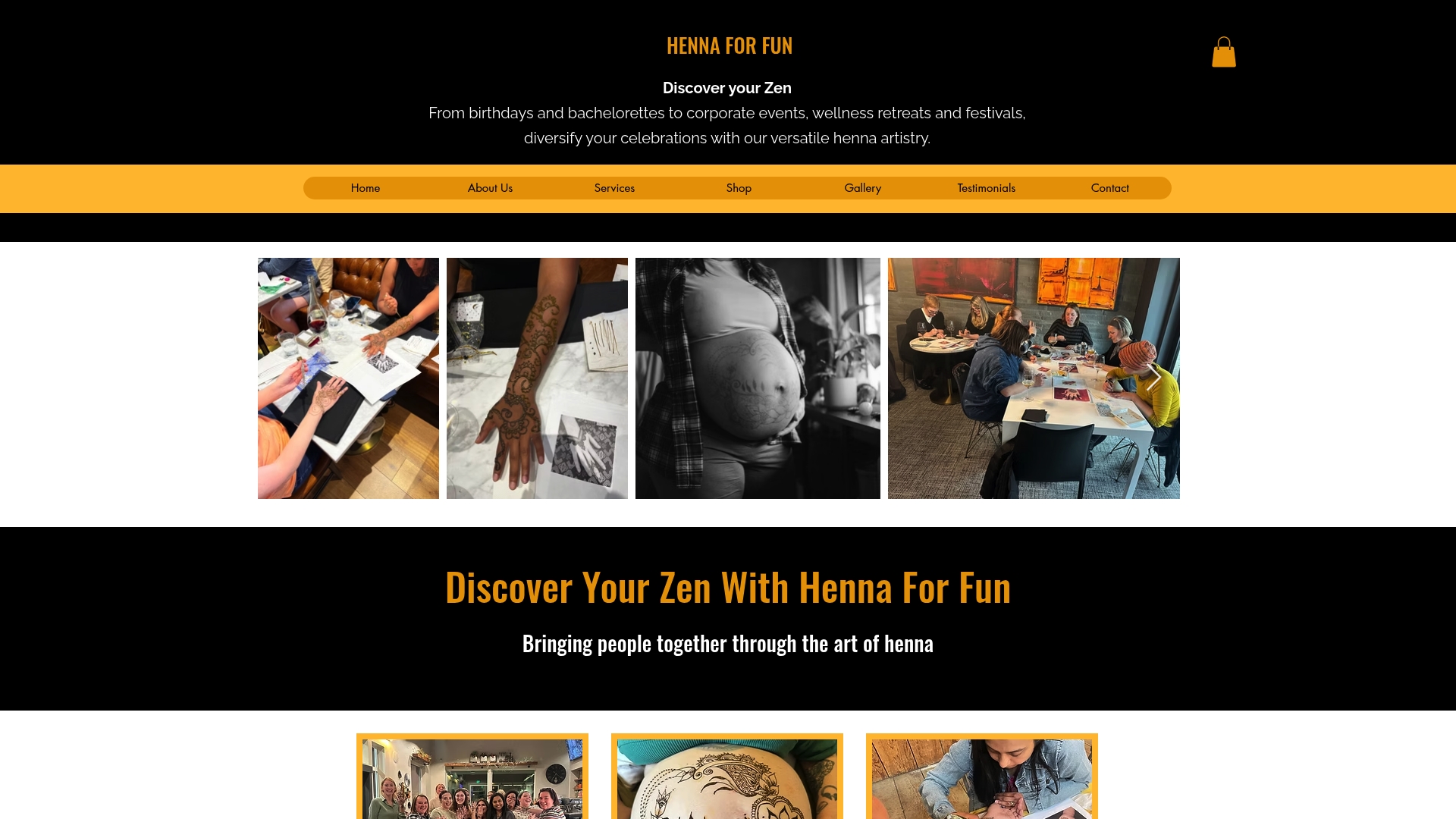
Booking typically works best with two to four weeks of lead time so materials, artist scheduling, and setup coordination with your venue staff can be locked in ahead of your event date. Pricing follows a per-guest or per-artist model depending on your expected turnout and event length. If you’re planning a harvest party, a members-only club night, or a corporate outing and want to add a station that keeps guests on-site longer, check available dates and packages on the Henna For Fun services page to see what fits your next event.
Sources
Recommended
Comments