Pregnancy Henna Designs: Belly Ideas Plus Safety Tips
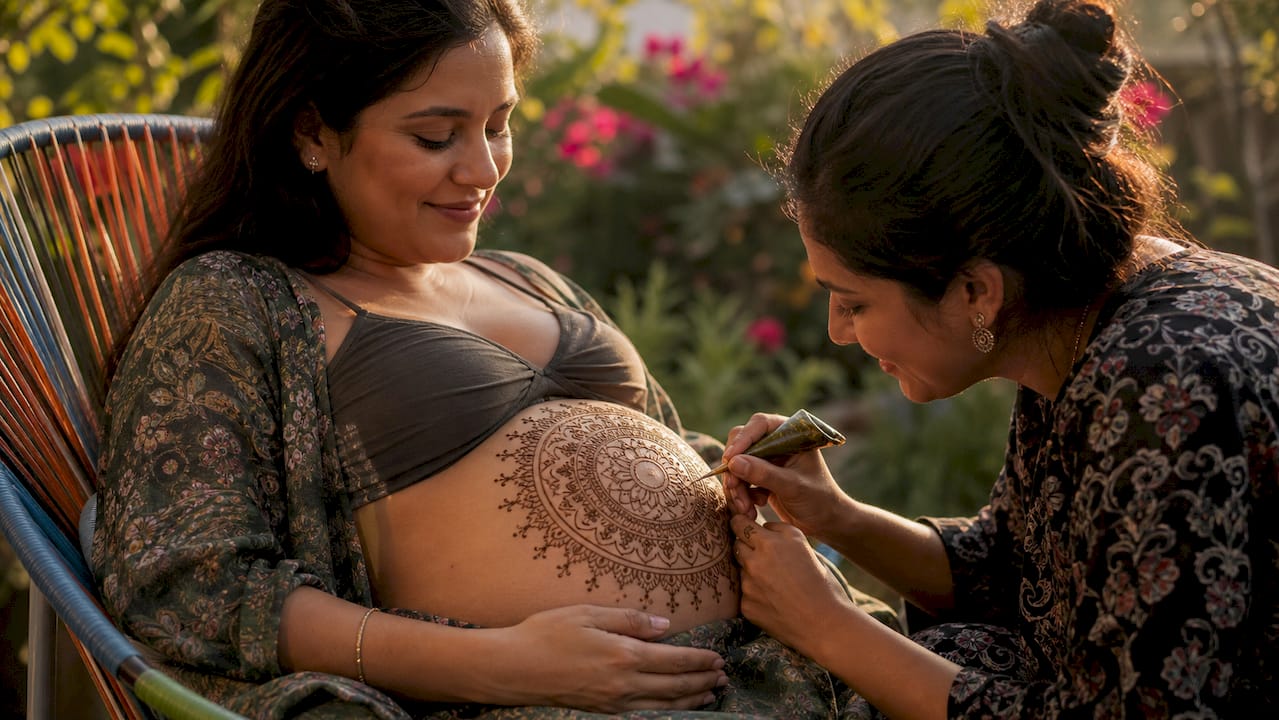
Yes, belly henna is generally safe during pregnancy when the artist uses 100% natural henna paste and follows proper patch-test guidance, according to FDA warnings about black henna. The designs that work best on a pregnant belly are simple florals, mandalas, peacocks, and personal touches like a baby’s initials or tiny footprints circling the navel. Anything more intricate tends to distort as the belly grows and stretches over the following weeks.
Natural henna paste is plant-based and stains skin a warm reddish-brown. Black henna contains chemical dye and can cause blistering, scarring, or permanent skin damage.
Before booking a session, run through this short list:
Ask the artist directly what ingredients are in the paste.
Request a patch test at least 24 to 48 hours before the full design.
Plan your appointment timing around when you want photos, since the stain needs a day or two to fully darken.
Key Takeaways
Natural henna paste, verified through a patch test and a clear ingredient list, is what makes pregnancy belly henna safe, while florals, mandalas, and personalized motifs make it memorable.
Point | Details |
Avoid black henna | Skip any paste marketed as black or instant; it likely contains PPD and can cause severe reactions. |
Patch test first | Test a small paste dot 24 to 48 hours before the full belly design to catch allergic reactions early. |
Time it for photos | Schedule the session two to three days before photoshoots since the stain darkens over 24 to 48 hours. |
Expect 7 to 14 days | Belly henna fades faster than hand or foot henna because belly skin is thinner. |
Book with Hennaforfun | Hennaforfun’s pregnancy henna services use natural paste, experienced artists, and clear patch-test policies for Washington bookings. |
Table of Contents
Design Inspiration: Belly Henna Styles and Visual Ideas to Copy
Most maternity henna requests fall into a handful of style families, and knowing them makes it easier to describe what you want instead of scrolling endlessly through inspiration photos.
Floral and vine designs wrap around the curve of the belly in flowing lines, often anchored by a larger bloom near the navel. They read as soft and feminine without demanding a full canvas. Mandalas and circular centerpieces put a bold, symmetrical design directly over the belly button, radiating outward in rings of detail. They photograph well because the belly’s natural roundness becomes part of the composition.
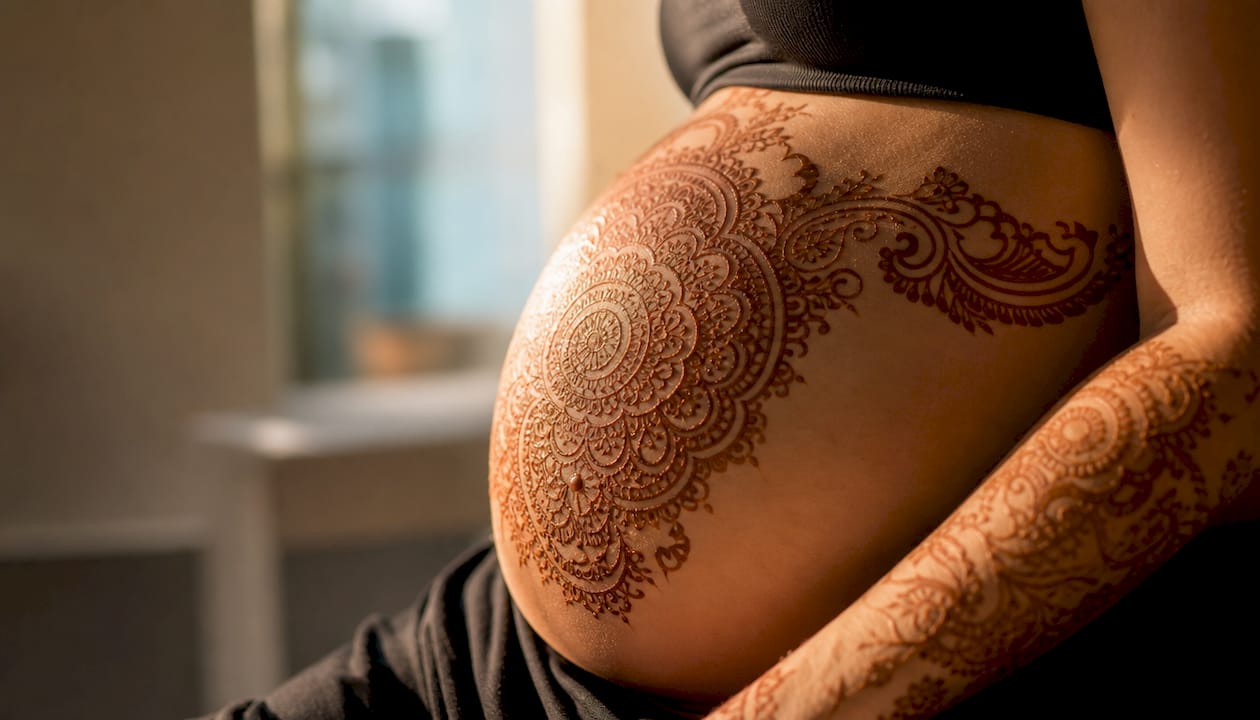
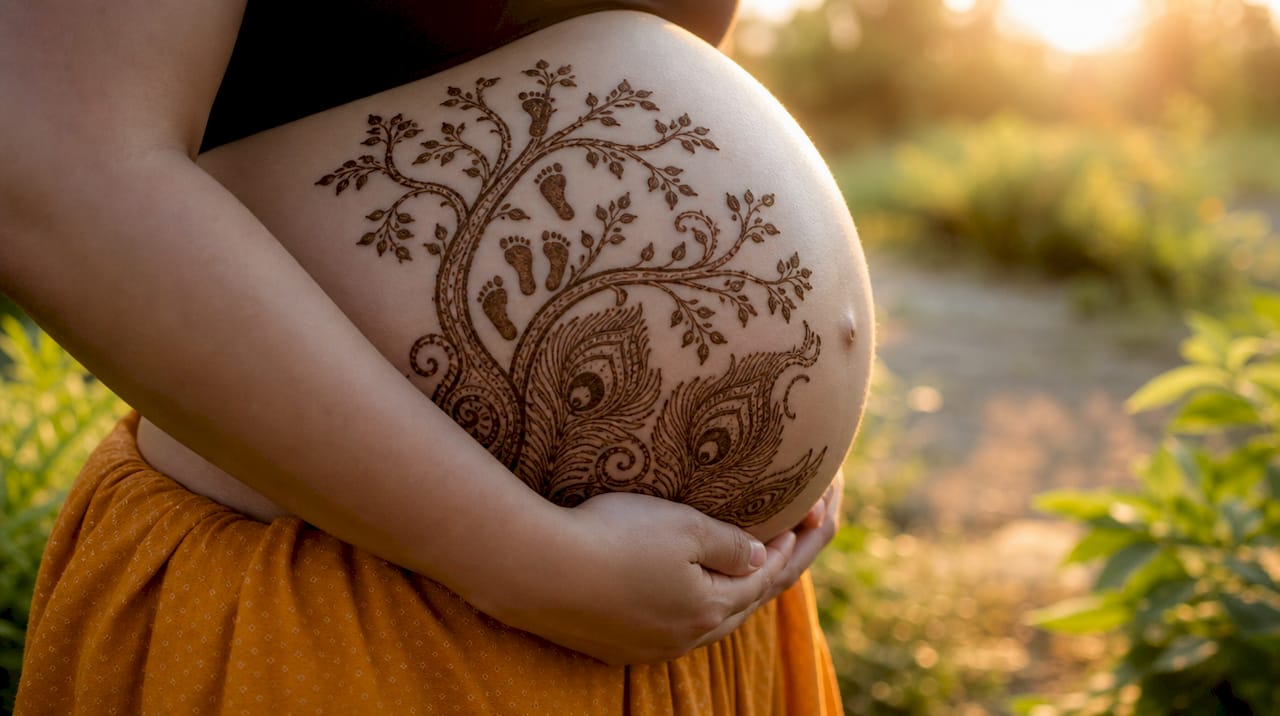
Peacock and animal motifs bring drama and movement, with feathers or wings sweeping across the upper belly. Families drawn to symbolism often prefer these over pure geometry. Family-focused designs include a family tree with branches for each child, a cluster of tiny footprints, or the baby’s name scripted in an elegant font. These personal touches turn the belly into a keepsake rather than just decoration.
Placement matters as much as pattern. A partial design on the upper belly works well if you’re self-conscious about full exposure or short on time, while a full-belly piece makes the boldest statement for maternity photoshoots. Practitioner sources note that belly henna can be applied at nearly any point in pregnancy, so the design scale should match how much belly real estate you’re comfortable covering.
Pro Tip: Schedule your henna application one to two days before your photoshoot. The stain needs 24 to 48 hours to reach its deepest color, and natural window light in the late afternoon shows off the contrast best.
Common Motifs and What They Symbolize in Pregnancy Designs
Choosing a motif with real meaning turns a belly design into something closer to a keepsake than decoration. Pregnancy henna commonly draws on symbols tied to fertility, protection, and new beginnings, and the cultural roots of henna run through celebrations marking major life transitions, including childbirth.
Lotus: purity and new beginnings, popular as a centerpiece motif.
Peacock: beauty, grace, and, in some traditions, protection.
Mandala: wholeness and balance, often used as the belly’s focal point.
Footprints or initials: a direct, personal nod to the baby on the way.
A common pairing is a mandala centered on the navel with small footprints trailing toward one hip. If a motif carries strong cultural or religious weight, ask your henna artist about its origin and use it thoughtfully rather than as a generic design element.
Is Belly Henna Safe During Pregnancy?
The short answer: natural henna is safe for most pregnant people, but the wrong kind of henna is not. The FDA has warned repeatedly that so-called “black henna” often contains paraphenylenediamine (PPD), a chemical dye that can trigger severe allergic reactions, blistering, and permanent scarring. Real henna paste is plant-based and never produces a true black stain. If an artist offers a jet-black design, that’s your signal to walk away.
Confirm your artist uses 100% natural henna paste made from the Lawsonia inermis plant, water, sugar, and essential oils, nothing else.
A patch test takes only a few minutes and can prevent a miserable reaction:
Ask the artist to apply a small dot of paste on your inner forearm.
Leave it on for the same amount of time planned for the full design.
Wait 24 to 48 hours and check for redness, swelling, or itching before proceeding.
Some people, including those with severe anemia or G6PD deficiency, should check with a clinician before applying henna at all. After the session, watch for unusual swelling or blistering at the site. If either shows up, stop and contact your doctor.
Pro Tip: Don’t just ask if the paste is “natural.” Ask the artist to list the actual ingredients out loud. A legitimate natural paste maker can rattle off exactly what’s in the mix without hesitation.
When Should You Get Belly Henna, and How Long Does It Last?
Most expectant parents book their session in the late second trimester through the third trimester, when the belly has enough shape for the design to really show but pregnancy is still comfortable enough to sit for it.
Late second trimester: the belly is round but you’re not yet uncomfortable sitting still.
Early third trimester: the classic window for maternity photoshoots and baby showers.
Close to the due date: still workable, though shorter sessions are more comfortable.
For photos, plan around the stain’s timeline. It darkens over roughly 24 to 48 hours after the paste comes off, according to belly henna practitioners, so schedule your shoot for day two or three after application.
Belly henna typically fades within 7 to 14 days, per reports from birth-focused practitioners.
Belly skin is thinner than hands or feet, so the stain often fades faster there than a hand design would.
Paste quality, aftercare, and how often you shower after application all affect how long the color holds.
How to Book a Pregnancy Henna Artist Near You
Finding the right artist comes down to a short checklist. Look for someone with a visible portfolio of belly work specifically, not just hand and foot designs, since belly skin behaves differently and curves change the way patterns read.
Ask to see a portfolio of maternity-specific henna, not general body art.
Confirm they’ve worked with pregnant clients before and understand comfort needs.
Request their ingredient list and patch-test policy up front.
Ask about health or venue policies if you’re hosting at home or a group event.
A typical session runs 45 to 90 minutes, depending on design complexity. Many artists allow a partner or child to get a small design too, and most are happy to work around photo permissions if you’re documenting the moment. Pricing varies by region and artist scope, with some local sessions running around $40 to $60, though a fuller design or in-home setup can run higher. Hennaforfun’s pregnancy henna services offer a straightforward booking path if you’d rather skip the search.
Can You Do Belly Henna at Home Safely?
A simple DIY design is doable if you stick to pre-mixed, natural henna cones or a stencil kit, and skip anything marketed as “instant” or “black” henna.
Buy a pre-filled natural henna cone or a DIY stencil kit built for skin use.
Do a small patch test on your forearm and wait 48 hours before applying to your belly.
Apply a small, simple design (a single flower or a few dots) rather than a full mandala.
Let the paste dry completely, then scrape it off gently rather than washing it.
Never apply henna to broken or irritated skin.
Skip anything advertising a “black” or “instant” stain.
Save full-belly, intricate work for a professional artist who can manage detail and symmetry across a curved surface.
How Hennaforfun Approaches Pregnancy Henna
Hennaforfun’s maternity henna sessions are built around two things: safety and personalization. Every design starts with a paste made from natural ingredients, no PPD, no shortcuts, and every artist can walk you through exactly what’s in the mix before a single line goes on your skin.
Artists bring hands-on experience with maternity-specific placement and comfort needs.
A portfolio gallery shows real belly work, not just hand and foot samples.
Patch-test guidance is standard practice, not an afterthought.
Sessions happen at home, at events, or as part of a baby shower, whatever setup fits.
If you’d rather learn the craft yourself, Hennaforfun also runs private henna lessons for anyone who wants to build the skill for future celebrations. Browse the pregnancy services page to see real examples and check availability.
Why Maternity Henna Means More Than Just a Pretty Design
Maternity henna sticks with people because it marks a moment that’s already emotional and makes it visible. A design isn’t just decoration on a belly; it’s a small ritual that says this pregnancy, this baby, this specific stretch of time mattered enough to slow down for. That’s why safety and personalization can’t be separate conversations. A rushed session with the wrong paste undermines the whole point. Hennaforfun builds every maternity appointment around getting both right, because a good belly design should be something a parent looks back on without a single asterisk attached to the memory.
Ready to Book Your Pregnancy Henna Session
If you’ve been picturing a mandala circling your belly button or your baby’s name scripted across your bump, the next step is simple: book it. Hennaforfun handles the safety groundwork, natural paste, patch-test guidance, and experienced maternity artists, so you can focus on the design instead of researching ingredients at midnight.
Start with the pregnancy henna services page to see design examples and check availability in Washington. Planning a baby shower or a group event instead of a solo session? The full services page covers group bookings and event henna. Want to try a design yourself first? Pick up a natural henna cone or a DIY stencil kit and practice on your own schedule. Whichever route fits your timeline, the goal stays the same: a safe, personal design you’ll want in every photo.
Frequently Asked Questions
Is henna safe to use during pregnancy? Natural henna paste made from the Lawsonia inermis plant is generally considered safe for most pregnant people. Avoid black henna entirely, since it often contains PPD, and check with a clinician first if you have a condition like severe anemia or G6PD deficiency.
How long does belly henna last? Belly henna typically fades within 7 to 14 days. Belly skin is thinner than hands or feet, so the stain often fades faster there than it would elsewhere on the body.
What trimester is best for belly henna? Late second trimester through third trimester is the most popular window, since the belly has enough shape for the design while pregnancy is still comfortable enough to sit through a session.
How much does pregnancy henna cost? Pricing varies by region and artist, with some local sessions running around $40 to $60, though full-belly or in-home sessions can cost more depending on scope and travel.
Can I do belly henna myself at home? Yes, for a simple design. Use a pre-mixed, natural henna cone or a stencil kit, patch test first, and save intricate full-belly work for a professional artist.
Sources
Recommended
Comments