6 Mehndi Night Themes and a 4–6 Hour Host Friendly Plan
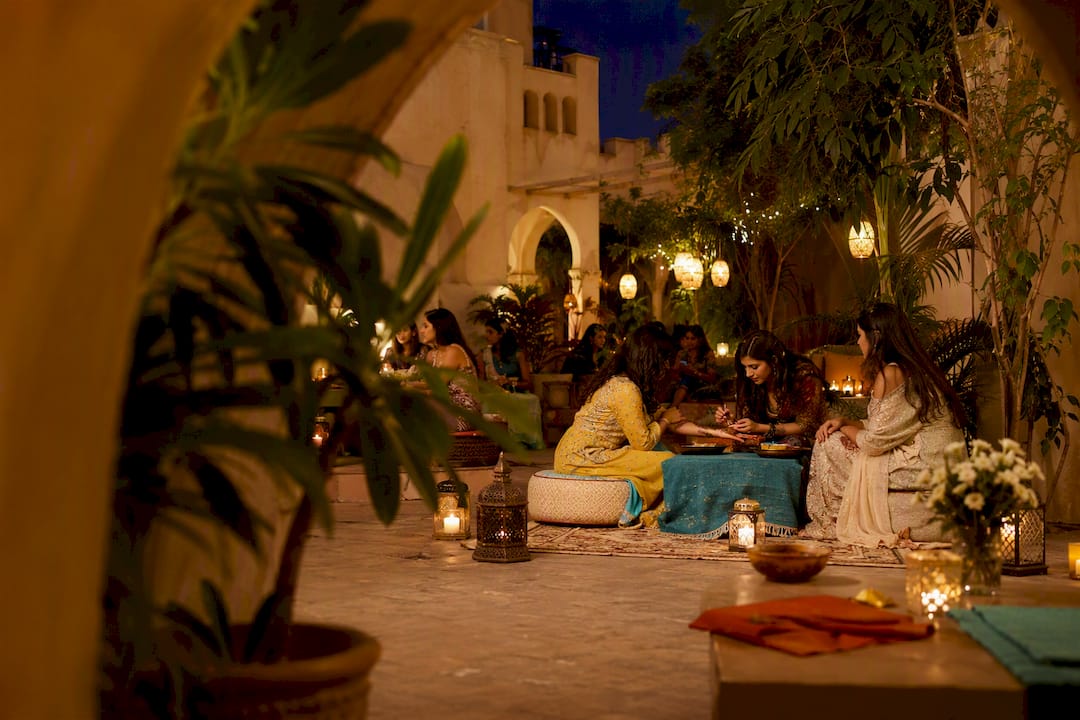
A mehndi night is the pre-wedding celebration built around henna application, music, and easy socializing, and hosts run it three ways: intimate and traditional, curated around a specific theme like boho or Rajasthani, or DIY at home with a hired artist and kits filling in the gaps. This guide walks through theme picks, decor and lighting, activities, food, outfits, artist logistics, favors, and a checklist you can copy directly.
TL;DR:
Choosing a single, cohesive color palette and texture early in planning ensures a polished mehndi night that looks intentional rather than disorganized.
Sufficient lighting at the henna station, with test runs beforehand, prevents flickering or dim light from damaging the artist’s work.
Book a realistic number of henna artists and stagger the schedule to accommodate both bridal and guest applications within a four to six-hour event window.
Opt for simple, low-mess foods like skewers and small desserts, and provide lidded drinks to avoid spills on freshly applied henna.
Keep the guest list limited to close family and friends, and send invitations well in advance to manage expectations and outfit coordination.
Table of Contents
Best Mehndi Night Themes to Set the Tone
Picking one visual direction before you touch decor, outfits, or music saves you from a party that looks assembled rather than designed. Designers who plan these events for a living say the difference between an amateur setup and a polished one usually comes down to repeating a single palette and texture across every element, instead of mixing five good ideas that don’t talk to each other, according to Hitkari Productions’ planning guide. Here are six themes worth building around.
Boho garden. Earthy tones, macramé backdrops, and rattan furniture work best on an outdoor lawn where natural light does most of the work for photos.
Traditional Rajasthani. Marigold garlands, block-print textiles, and low floor seating suit a heritage-forward or festival-style celebration.
Floral paradise. A pastel flower wall paired with hanging floral installations gives you a built-in photo backdrop without much extra styling.
Tropical or beach. Palm leaves and coral accents with breathable fabrics keep the look light for warm-weather ceremonies.
Terracotta and ivory. A muted, sophisticated palette that reads as upscale without leaning on bright color.
Midnight blue Bollywood. Bold jewel tones and dramatic lighting for hosts who want evening party energy over quiet elegance.
These six templates cover most of what shows up in current mehndi ceremony theme guides, and picking one early makes every downstream decision, from flowers to playlist, faster to make.
Decor, Seating, and Lighting That Actually Work
Decor choices for mehndi nights need to survive several hours of guests sitting, eating, and getting henna done, which rules out anything too fragile or too fussy to maintain.
Backdrops: Layer two or three fabric panels in your palette instead of one flat sheet, or hang an inexpensive faux-flower wall behind the bride’s seating for instant photo value.
Seating: Floor cushions and low chowkis suit traditional themes and younger guests; mix in a few chairs for older relatives so nobody’s stuck standing.
Sightlines: Angle the bride’s seat so both the photographer and the room can see her hands without anyone blocking the shot.
Photo spots: Keep the photobooth visually tied to your theme but physically separated from the henna station, so a line for selfies doesn’t jam up the artist’s workspace.
Lighting matters more than most hosts expect. You want a steady, warm ambient glow for the room and a dedicated bright light at the artist’s chair, since fine henna lines are easy to mess up under dim or flickering light.
Pro Tip: Test any lamp or dimmer switch near the henna station before the event. Flickering LED bulbs or camera-triggered video lights can throw off an artist’s hand more than actual darkness would.
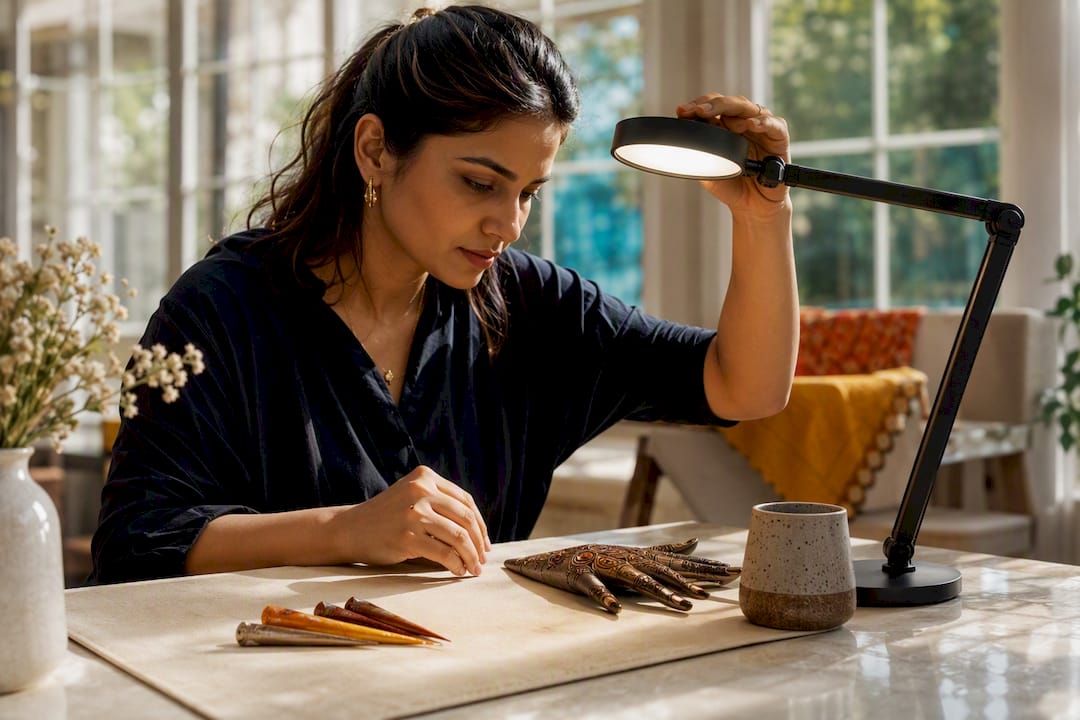
For more layout ideas, Hennaforfun’s guide to henna party decoration ideas walks through setups that photograph well and hold up over a multi-hour event.
Activities and Entertainment Beyond the Henna Chair
Henna application takes time, and guests who aren’t currently getting a design need something to do that doesn’t compete for the artist’s attention.
Choose your henna station format. A single artist works for the bride while a second station offers guests express five to fifteen minute designs, or set up a supervised DIY kit table for anyone happy to try their own hand.
Run light games in short bursts. Find the groom’s name hidden in the bride’s design, live bangle making, a photo scavenger hunt, or mehndi trivia all work between henna sessions without needing a stage.
Schedule live acts carefully. Place short musical or dance performances after the bride’s application window closes, so the main artist isn’t working through applause and camera flashes.
Map guest flow on paper first. Put food, games, and the henna area far enough apart that a buffet line doesn’t become a bottleneck next to someone’s wet henna.
The goal is momentum without chaos. A room where the bride finishes her design just as the first performance starts feels planned, even when half of it was improvised.
Food and Drinks That Won’t Wreck Fresh Henna
Menus for this kind of event favor easy, one-hand, low-mess food since a good number of guests will be sitting with wet or drying henna at any given time.
Snack stations: Chaat-style counters, kebab skewers, and mini rolls let people eat without needing a full plate and cutlery.
Sweet finish: Kulfi shots or small dessert cups are easier to manage than anything that needs a fork.
Drinks: Jaljeera, rose sharbat, a simple mocktail bar, and iced tea all cover the nonalcoholic range guests expect at this kind of event.
Service tips: Lidded cups near the henna area and tray service instead of a self-serve buffet cut down on spills near hands that can’t be wiped clean.
What to Wear Without Smudging Fresh Design
Outfit choices for a mehndi night are less about formality and more about keeping hands and feet accessible for hours.
The bride should look for open sleeves or a lightweight dupatta she can drape without covering her forearms, plus floral or fabric jewelry that doesn’t require full hand mobility.
Guests can lean into comfortable ethnic or Indo-Western outfits that match the theme, with flat or low sandals if floor seating is part of the plan.
Skip heavy bangles until henna dries fully, and go for simple hairstyles that don’t need hands busy above the shoulders.
Hiring a Henna Artist, Setting a Timeline, and Aftercare
Booking the right artist and giving yourself a realistic clock are the two things that make or break the night logistically.
Vet the portfolio. Ask to see recent bridal and guest work, and confirm in writing that the artist uses natural henna paste, not a synthetic mix.
Time it out. A full bridal hands-and-feet application typically runs three to five hours depending on design density, while guest express designs run five to fifteen minutes each, so book extra artists if your guest list runs large.
Stagger the schedule. Start with the bride’s application first, then open guest stations once her design is progressing.
Skip “black henna.” It can contain PPD, a chemical linked to serious allergic reactions, so confirm ingredients directly and offer a patch test to anyone with sensitive skin.
Plan aftercare in advance, since deeper, longer-lasting color depends on how the design is treated in the hours after application, according to Brides’ henna design roundup. Hennaforfun’s aftercare guide and its notes on how long to leave henna on skin cover both.
Pro Tip: Give the artist a table or corner away from the buffet and the photobooth line. A cramped, high-traffic workspace slows every design down and raises the odds of a shaky line.
Hosts who want a professional artist booked or want to learn the craft themselves can look at Hennaforfun’s private henna lessons for either option.
Favors and Keepsakes Guests Will Actually Keep
Small, theme-matched extras leave a better impression than anything expensive.
Take-home items: Mini henna cones, seed packets, or personalized potlis (small drawstring pouches) all tie back to the event without costing much.
Instant keepsakes: A polaroid guestbook, a message basket, or a simple floral-crown station give guests something to do and something to take home at once.
Cheap customization: Matching tags, a themed sticker, or single-color wrapping paper make a $2 favor look considerably more finished.
A One-Page Checklist and Sample Timeline
Copy this and adjust dates to your event.
One week out: Confirm the artist in writing, finalize the menu count, and order or print any signage.
Two days out: Test all lighting at the henna station, prep favor bags, and confirm seating arrangements with your venue or rental company.
Day of, setup: Artist workspace ready first, followed by decor, then food stations last so nothing wilts early.
Event flow: Bridal application opens the event, guest express stations open about an hour in, entertainment slots fill gaps between henna sessions, and favors go out as guests leave.
Contingency: Keep backup henna cones, makeup wipes, and two or three extra chairs on hand, and have your vendor contact list saved somewhere other than your phone.
Most mehndi functions for 50 to 150 guests run four to six hours total, so build your timeline around that window rather than guessing.
Guest Invitation Etiquette and Guest List Planning
Mehndi nights sit in a gray zone that catches a lot of hosts off guard: they’re festive and inclusive in spirit, but they’re traditionally more intimate than the wedding itself. The safest default is treating your mehndi guest list as a subset of your full wedding list, built around close family, the bridal party, and friends who’ll also be at the ceremony, rather than opening it to every wedding invitee.
Send invitations separately from the main wedding invite, even if it’s a simple digital card, and send them two to three weeks ahead so guests can plan around henna drying time before other commitments. Note the dress code and theme directly on the invite. If you’re running boho garden or Rajasthani traditional, telling guests up front saves you from a room full of mismatched outfits against your carefully planned backdrop.
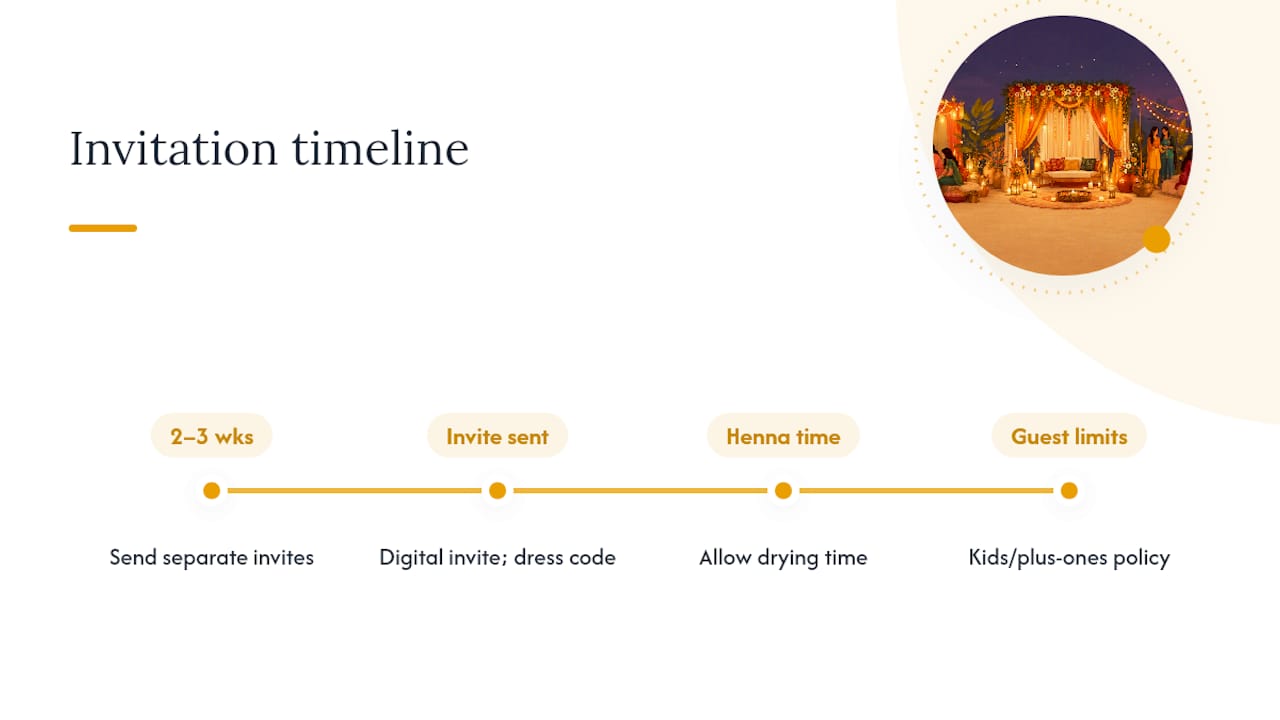
Be upfront about children and plus-ones if space or seating is limited. It’s common, and perfectly fine, to keep a mehndi night adults-only or immediate-family-only even when the wedding itself is larger. If you’re combining families with different expectations around who “should” be invited, loop in both sets of parents early rather than after invitations go out. And if the event is small by design, say so gently. “A small gathering close to us” reads a lot better than a guest finding out secondhand that they weren’t on the list.
Why the Best Mehndi Nights Get Logistics Right First
Most advice on this topic front-loads the pretty part: the flower wall, the palette, the outfit. That’s backward. The events that actually feel good to attend are the ones where lighting didn’t fail the artist, seating didn’t leave anyone stranded on the floor for three hours, and the henna line moved without anyone waiting forty-five minutes past their slot. Aesthetic choices are the easy part. Anyone can pick a pretty theme from a list of six.
What conventional planning content underrates is how much a single overworked artist under bad light changes the entire mood of a room. A gorgeous boho setup with one exhausted artist working through a long guest line by 9 PM is a worse night than a plainer room with two artists on a realistic schedule. If you take one thing from this guide, prioritize the timeline and the artist setup before you finalize the flower wall. The decor is what gets photographed. The logistics are what people actually remember feeling.
— Angana
Bring Your Mehndi Night Vision to Life with Hennaforfun
If everything above sounds right but you’d rather not source an artist, test lighting setups, and hope the timeline holds, professional henna event services can handle that part for you. Whether you want a full artist booked for bridal and guest application, a private lesson so you can run your own henna station with confidence, or a supervised DIY kit table for a smaller home gathering, there’s a version of this event that fits your budget and guest count.
Hosts building a boho garden or floral theme often pair the henna station with a live floral bar. Partners like Love You More Flower Boutique’s bridal flower bar can round that out. For the henna side, browse Hennaforfun’s event services to see artist packages by guest count, check open dates on the events calendar, or pick up handmade henna cones if you’re running part of the night yourself. Expecting parents planning a combined celebration can also look at pregnancy henna services for a personalized maternity design alongside the main event.
Sources
Recommended
Comments