14 Scalable Home Party Entertainment Ideas for Hosts, Including Henna
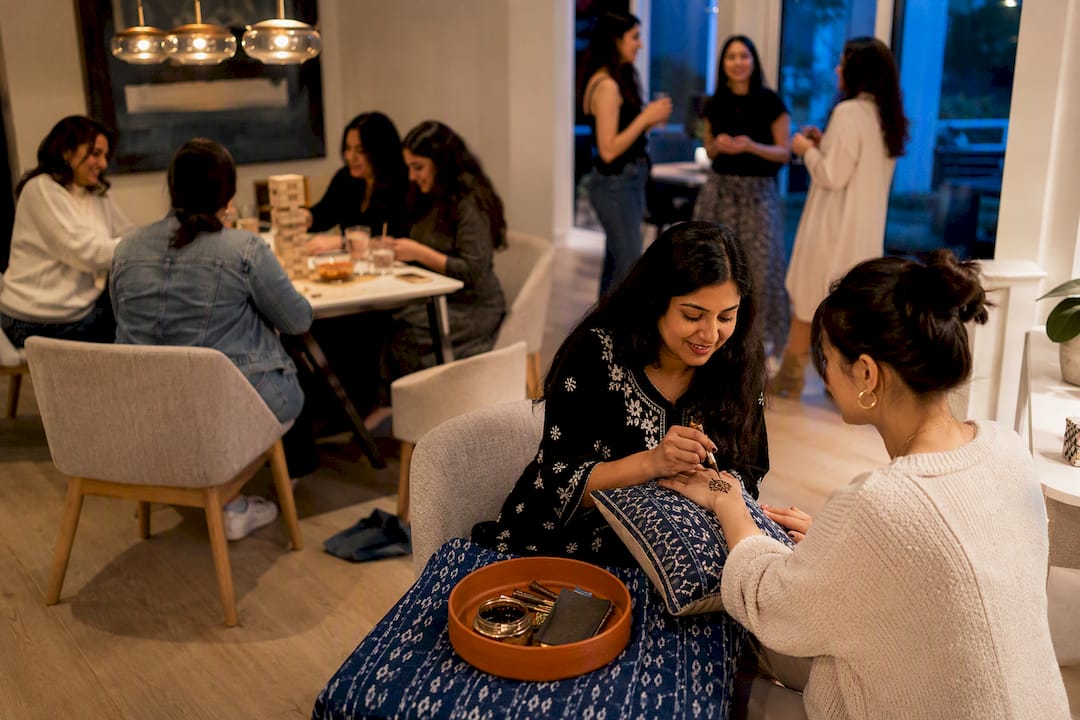
Pick one or two interactive formats, such as a game, a live activity, or a hands-on craft, and pair it with a food or drink station. That combination covers passive and active guests at once. From there, the fastest wins come from music (a curated playlist or silent disco), games (trivia, party board tournaments), tastings, DIY crafts like a henna station, and a photo or memory corner. The full breakdown below shows how to scale each idea to your headcount and timeline.
TL;DR:
Small groups (6 to 12 guests) can enjoy murder mystery nights, trivia, tasting stations, or henna activities without long lines or waiting.
For larger events (30-plus guests), silent discos, DJ sets, and stage performances scale better and keep energy high across the crowd.
Interactive activities should be paired with opt-in options, designated quiet zones, and clear transitions to accommodate shy or less engaged guests.
Using technology like quiz apps, silent disco headsets, and photo sharing platforms reduces setup time, minimizes equipment costs, and enhances participation.
Building a party around one core activity and a memorable “wow” element creates a more lasting impression than multiple passive entertainment options.
Table of Contents
Home Party Entertainment Ideas Worth Stealing
You don’t need a rental truck full of equipment to keep a room engaged. You need two or three activities that give guests permission to participate at whatever level they’re comfortable with. Here’s a working list, organized so you can grab what fits your space and skip the rest.
Curated playlist with a dance-off finale. Works for almost any group size. Build a playlist that ramps from background music to dance-floor energy, then throw in a short “dance-off” segment midway. Needs open floor space and a decent speaker. Setup tip: cue the high-energy segment right after food service, when people are already up and moving.
Silent disco. Best for medium to large groups where noise control matters, especially apartments or shared walls. Guests wear wireless headphones tuned to one of two channels, so the party stays loud inside the headset and quiet in the room. Setup tip: rent headsets in bulk rather than buying, since usage is rare enough that renting wins on cost.
Trivia night with team rounds. Ideal for 10 to 25 people who don’t all know each other. Split into small teams so no one has to perform alone. Needs a whiteboard or shared screen and a printed question set. Setup tip: mix pop culture, local trivia, and inside jokes about the host for a laugh line every round.
Murder mystery evening. Best suited to small, committed groups of 6 to 12 who are willing to stay in character for an hour or two. Needs printed character sheets and a quiet dedicated room. Setup tip: send character assignments a few days ahead so shy guests have time to prepare.
DIY cocktail or mocktail station. Works at any size with the right staffing ratio. Set out three or four base spirits or mixers, garnishes, and simple recipe cards. Needs counter space and ice. Setup tip: label everything clearly so guests can self-serve without asking the host every five minutes.
Tasting flight (wine, cheese, hot sauce, chocolate). Great for groups that like to talk while they nibble. Needs small cups or plates and printed tasting notes. Setup tip: number each sample so guests can compare notes without confusion.
DIY henna station. A hands-on craft that doubles as a keepsake. Best for groups of 8 to 20 who have 20 to 30 minutes to spare per person. Needs a seated area with good light. Setup tip: keep a fan nearby, since henna paste needs a few minutes to set before guests can move around freely.
Candle or soap making corner. Popular for baby showers and bachelorette parties. Needs a ventilated space and pre-measured supplies. Setup tip: pre-melt wax in batches so guests aren’t waiting around.
Photo booth with props. Works for any group and doubles as a party favor. Needs a backdrop, a tripod or phone stand, and a prop basket. Setup tip: print a few instant photos on the spot; digital-only booths get skipped more often.
Roaming performer or artist. Best for mixed-acquaintance crowds where people drift between conversations. A hired henna artist, caricaturist, or magician gives people something to gather around without committing to a full activity block. Setup tip: position the performer near the entrance so it becomes a natural icebreaker.
Party board game tournament. Great for 8 to 16 people split into brackets. Needs two or three game sets and a bracket sheet taped to the wall. Setup tip: keep rounds under 15 minutes each or the tournament drags.
Karaoke with an app-based song library. Works best for smaller, louder-tolerant groups. Needs a screen, a microphone, and a playlist app. Setup tip: let the shyest guest go first with a duet partner so no one feels put on the spot.
What Are the Odds? or Fishbowl-style party games. Quick, low-prep icebreakers that reliably break the ice in groups that don’t know each other well. Needs nothing but a deck of prompt cards or a phone. Setup tip: use these as filler between bigger activities, not as the main event.
Food entertainment station (build-your-own taco bar, dumpling folding, pizza assembly). Turns dinner into an activity. Needs table space and pre-portioned ingredients. Setup tip: label ingredients by dietary restriction so people don’t have to ask.
Matching Entertainment to Your Guest Count
Activities that shine at a 10-person dinner can fall flat at a 40-person open house, and vice versa. Event size dictates format: small groups thrive on interactive games that need everyone’s attention, while larger events need formats that scale without a single point of failure.
Small gatherings (6 to 12 guests): Murder mystery nights, trivia rounds, tasting activities, and henna stations all work well here because everyone can participate without waiting in line.
Medium gatherings (13 to 30 guests): Party board game tournaments, DIY cocktail stations, karaoke, and roaming performers hit the right balance of structure and flexibility. This is also the recommended range for zoning: a lounge corner, a game table, and a drink station let different personalities self-select.
Large gatherings (30-plus guests): Silent discos, DJ sets, and stage-style performances scale well for large gatherings. A roaming henna artist or photo booth can also work at this size, since guests cycle through in short bursts rather than needing a dedicated block of time.
Mixed-acquaintance groups: Roaming performers and photo booths work particularly well here because they don’t require guests to know each other going in.
Shy or quieter guests: Build in opt-in mechanics, spectator-friendly zones near the action, and low-pressure entry points so no one feels forced onto a dance floor or into a spotlight.
Creating physical zones for food, lounge seating, games, and dancing lets guests gravitate toward what they actually enjoy instead of getting stuck in one activity for the whole night.
Building a Theme Around Your Entertainment
A theme, one strong core activity, and a single unexpected “wow” element are what make house parties memorable instead of forgettable. Group your ideas into buckets and pick one signature moment per bucket rather than trying to do everything.
Music and performance: Silent disco or a curated playlist with a live DJ moment. Wow upgrade: a surprise mid-party performer set.
Games and competition: Trivia or a board game bracket. Wow upgrade: a custom trivia round built entirely around the guest of honor.
Food and drink: A tasting flight or build-your-own bar. Wow upgrade: a blind tasting with a small prize for correct guesses.
Crafts and keepsakes: A henna station or candle-making table. Wow upgrade: personalized stencils or scent blends guests take home.
Photo and memory: A photo booth with props. Wow upgrade: a printed guestbook page for each photo strip.
Dual-purpose activities that double as party favors, like henna designs, candles, or printed photos, tend to stick in people’s memory longer than anything purely passive.
Planning the Flow: Arrival to Wind-Down
Timing keeps momentum going without forcing anything. Setting the party’s energy curve in advance, rather than improvising, is what separates a party that flows from one that stalls out after the first hour.
Arrival (first 30 to 45 minutes): Background music, a drink in every hand within five minutes, and a low-pressure activity like a photo booth or a craft table people can dip into.
Warm-up (45 minutes to 90 minutes): Introduce the main structured activity, trivia, a game bracket, or the henna station, once most guests have arrived.
Peak (90 minutes to two and a half hours): This is when energy should be highest. Push the playlist, run the tournament finals, or open the dance floor.
Wind-down (last 30 minutes): Shift to quieter music, dim the lighting, and let a tasting station or lounge area take over as the main draw.
Have a backup plan for weather or tech failure, an indoor overflow space, a battery-powered speaker, or an offline card game, before you need it.
Pro Tip: Announce transitions verbally rather than just changing the music. A simple “alright, trivia starts in five minutes over by the kitchen” gets more people to actually participate than a playlist shift ever will.
What to Buy, Rent, or DIY
Buy once, use forever: A portable speaker, a microphone, basic game supplies, and photo props are worth owning outright.
Rent for one-off scale: Silent disco headsets, a projector, or extra tables make sense to rent when you need volume you won’t use again soon.
DIY on a budget: Trivia, board games, karaoke apps, and a self-serve drink station cost almost nothing beyond supplies you likely already own.
Small professional spend: A few hours with a hired performer or artist, henna, magic, caricature, often costs less than a full rental package and delivers a stronger memory anchor.
Trade money for time when your guest list is large or your schedule is tight; trade time for money when you’re working with a smaller group and a weekend to prepare.
Running a Henna Station at Your Party
Henna gives guests a hands-on craft and a keepsake in one activity, and it scales two ways. A hosted artist is turnkey: a professional can typically complete 6 to 12 simple designs per hour depending on size and detail, which works well for parties of 15 to 40 where guests rotate through in short sessions. A DIY station using kits and stencils handles higher throughput but needs prep time and a designated drying area.
Reserve a seated corner with good lighting and a small table for supplies.
Ask guests about skin sensitivities ahead of time. Natural henna is generally well tolerated, but always confirm ingredients and avoid “black henna” products, which can cause reactions.
Stock cotton swabs, a fan for faster drying, and a simple design menu so guests aren’t stuck choosing on the spot.
Frame the design as a keepsake: henna typically lasts one to three weeks, so it becomes a lingering reminder of the party.
Pro Tip: If you’re not sure your space can handle the drying time a DIY station needs, book a hosted artist instead; it removes the guesswork and keeps the line moving.
Keeping the Noise and Safety in Check
Noise complaints and safety mishaps are the two things most likely to derail an otherwise great party, and both are preventable with a little planning.
Set a hard cutoff time for loud music, especially in apartments or attached housing, and tell guests upfront so nobody’s surprised when the playlist shifts to something quieter. A silent disco solves this cleanly if your event runs late or your neighbors are close, since all the volume stays inside the headphones.
Keep walkways clear of cords, extension leads, and rented equipment. A single tripped guest turns a fun night into a bad one fast, and it’s one of the easiest things to prevent with basic taping down or routing cords along a wall.
If you’re serving alcohol, designate a sober point of contact, yourself or a co-host, who can keep an eye on anyone who’s had too much and arrange a ride home if needed. Stock non-alcoholic options at the same station as the cocktails so nobody feels singled out for skipping the bar.
For activities involving flame (candle making) or sharp tools (craft stations), keep a small first-aid kit accessible and brief anyone running that station on basic precautions. It takes two minutes and covers you for the one time it matters.
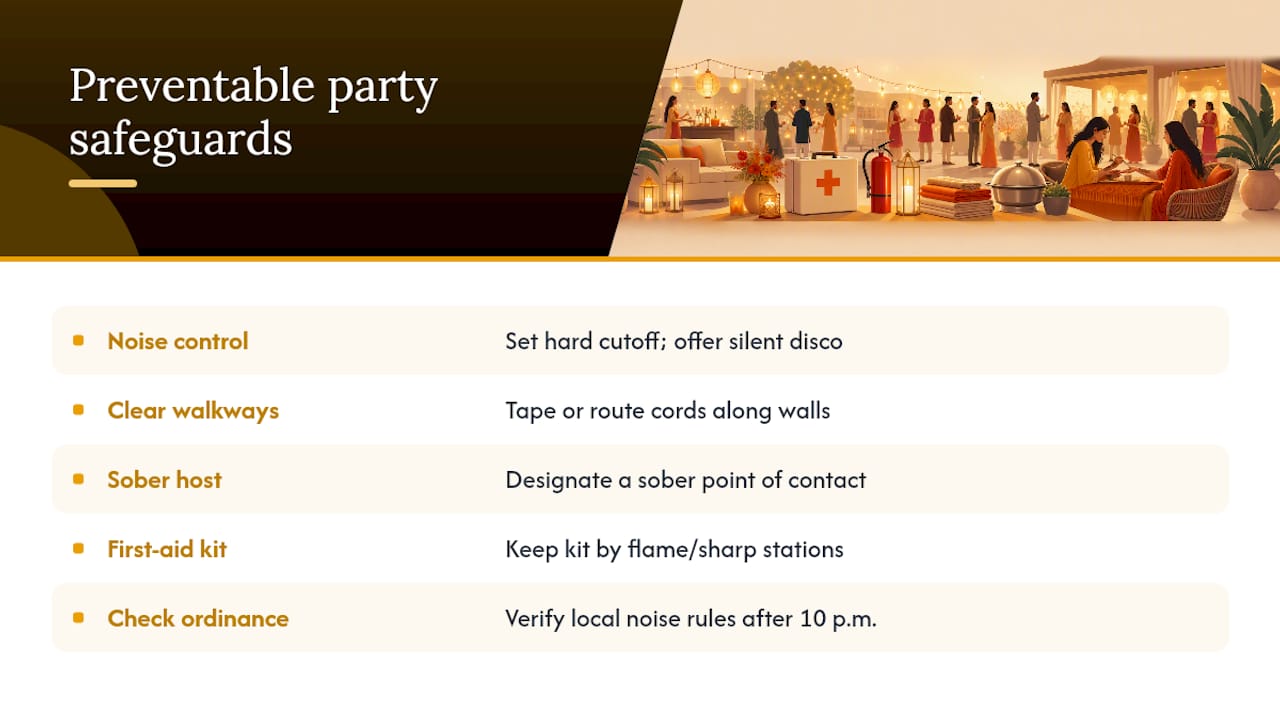
Finally, check your local noise ordinance if you’re planning anything past 10 p.m. Rules vary by city and county, so a quick search for your specific municipality beats guessing.
Using Apps and Tech to Run the Party
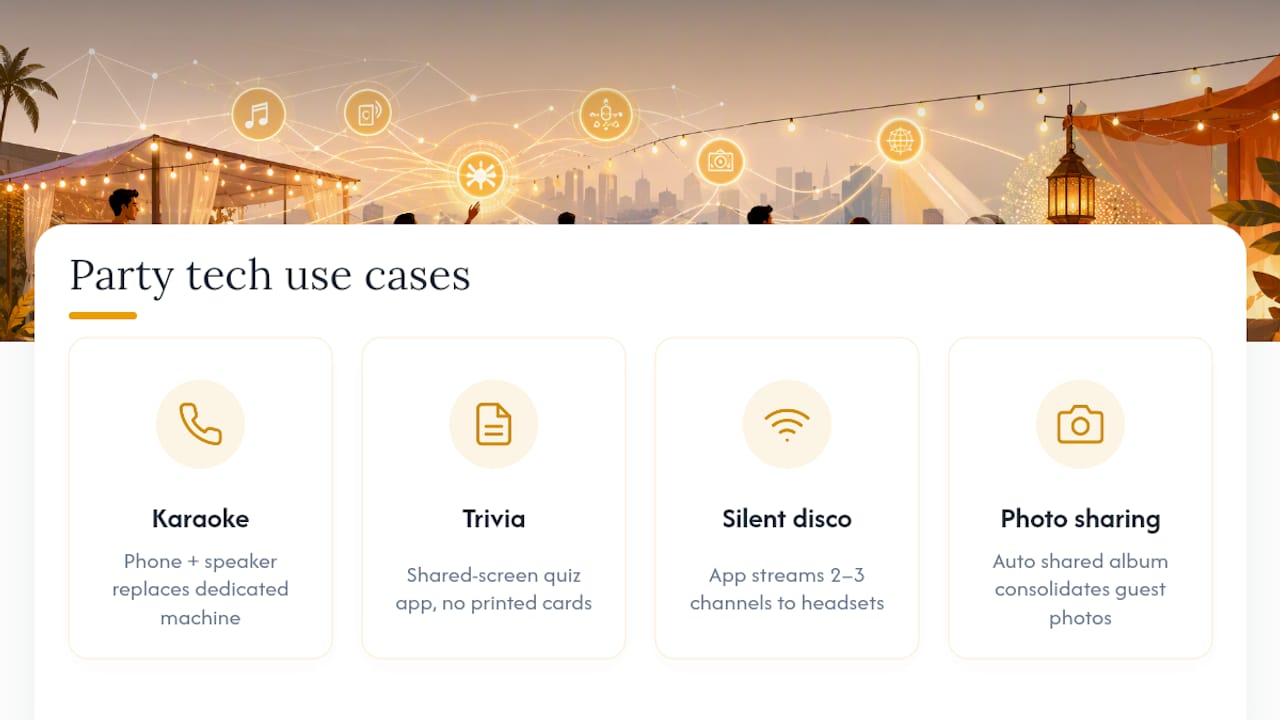
Technology has quietly replaced a lot of equipment that used to require rentals. A karaoke app on a phone or tablet, paired with a decent speaker, does the job that used to need a dedicated machine. Trivia can run entirely through a shared-screen quiz app, which also means you can pull questions together the morning of the party instead of printing anything.
Silent disco setups increasingly run through an app that streams two or three channels to wireless headsets, letting a DJ switch tracks from a phone. Group photo sharing apps let every guest’s photos land in one shared album automatically, which solves the age-old problem of party photos scattered across a dozen phones nobody ever consolidates.
Virtual or hybrid elements work well for guests who can’t attend in person: a video call station set up in a quieter corner lets a distant family member join the toast or watch the cake cutting without needing a full remote-party setup. For competitive games, digital scoreboards projected on a wall or TV keep tournament brackets visible without anyone needing to ask “wait, who’s winning?”
The tech is a tool, not the entertainment itself. The best use of an app is removing friction, faster setup, easier photo sharing, no printed scorecards, rather than replacing the interaction that makes a party work in the first place.
Why Participation Beats Passive Entertainment
The parties people actually remember are the ones where they did something, not just watched something. A hired band is nice background; a henna station, a trivia bracket, or a silent disco gives people a reason to talk to someone new. Pick one high-engagement activity as your anchor and one low-barrier fallback, a photo booth or a snack table, for anyone who’d rather watch than participate. Comfort and inclusivity matter more than novelty.
— Angana
Bring a Hosted Henna Station to Your Next Gathering
If your shortlist includes a hands-on craft with a built-in keepsake, Henna For Fun turns that idea into a booked, done-for-you station instead of a DIY project you have to prep yourself. The services page covers hosted henna events for bachelorette parties, baby showers, corporate happy hours, and smaller home gatherings, with an artist who handles setup, supplies, and pacing so you’re not the one managing a drying station mid-party. Expectant parents can book through the pregnancy henna services page for maternity-themed designs, and hobbyists who’d rather learn the craft themselves can look into private henna lessons in the Kirkland, Bellevue, and Snohomish area. Prefer to run your own station? A DIY henna kit covers the basics without needing a hired artist. Check the calendar for open dates and what to expect when you book.
Sources
External planning references used here include fielddrive’s event-size guide, EnosTech’s home party flow guide, and the Party Checklist guide to memorable parties. For henna setup and decor, see henna party decoration ideas and bachelorette entertainment ideas on Henna For Fun. For related self-care and craft inspiration, check Luméra Cosmetica’s lip mask guide and CZT’s guide to wearable art.
Recommended
Comments