Henna Party Planning: A Host's Guide to a Great Night

A good henna party comes down to six decisions: who is coming, when it happens, how many artists you need, how you set up the room, what people eat while the paste dries, and which henna goes on skin. Get those right and the rest is atmosphere. This guide walks through each one, with timing, setup and safety details you can use whether you are hosting a bridal henna night, a baby shower, a birthday or a girls’ night at home.
TL;DR
Lock the date, hosts, guest count and budget first, then book the artist. Most bridal henna nights happen one to three days before the wedding.
Plan for artists by the number of guests who want henna, and leave time for paste to dry before anyone eats or dances.
Set up a well-lit henna corner with armrest seating, away from the food and dance floor, and give waiting guests something to do.
Use only natural henna. The FDA warns that “black henna” often contains PPD, which can cause serious skin reactions.
Add context and credit: a short card on the tradition, music, and food that fit the culture you are celebrating.
Table of Contents
What a henna party is, and who it is for
A henna party, also called a henna night or mehndi night, is a gathering where guests are decorated with henna designs while they eat, talk, listen to music and often dance. The henna ceremony is part of many weddings in cultures influenced by Arabic culture. It usually centers on decorating the bride’s arms and feet, and in some traditions guests or the groom receive designs too. It is typically held on the last night before the wedding, though timing varies by culture.
Bridal henna parties are celebrated across the Middle East, South Asia and Africa. One cross-cultural overview describes them as ladies-only pre-wedding celebrations with feasts, traditional music, dancing and henna, and compares them with Western bachelorette parties.
In the United States the format has spread well beyond weddings. A feature on henna’s history notes it is a trendy activity among teenage girls in modern America. Today we see henna at baby showers, birthdays, friend get-togethers, date nights and office team events. The planning below works for all of them. Where a step applies only to a wedding, we say so.
Start with the four basics
Before you pick a playlist or a color scheme, settle these four things:
Date. For a wedding, most henna nights fall one to three days before the big day, and the stain keeps deepening for 24 to 48 hours afterward. That is why a night or two ahead works better than the morning of.
Hosts. Decide who is hosting and who pays. Traditionally a mehndi party is hosted by the bride’s parents, but modern hosts are often friends, siblings or the guest of honor.
Guest count. Modern guest lists tend to be shaped by budget and space. They may include the bridal party, the groom, the groom’s family and friends.
Budget. Add up the artist, food, drinks, decor and any music. The artist’s time is the line that scales with your guest count, so settle the headcount first.
For a non-wedding party, the same logic holds. Pick a date when the guest of honor and the people closest to them can come, and give yourself at least a few weeks to book an artist.
How long the evening should run
A traditional mehndi party is held at night and lasts about three to four hours. Our own host-friendly plan stretches a little longer for larger groups, and you can see it in our guide to mehndi night themes and a 4 to 6 hour plan.
A simple running order for about four hours:
Time | What happens |
First 30 minutes | Guests arrive, drinks and snacks, the artist sets up |
Hour 1 to 2 | Guest of honor is decorated first, guests start getting designs |
Hour 2 to 3 | Food, music, small blessings or toasts while paste dries |
Hour 3 to 4 | Last designs, photos, dancing, gentle send-off |
One detail that catches first-time hosts: henna paste needs time to dry. A mehndi planning guide recommends sequencing the schedule so henna dries naturally before guests eat or dance. Put the dancing and the buffet later in the evening, and do designs on hands first, since hands are the part people use most.
Booking the artist and sizing the schedule
The same planning guide suggests booking enough artists for the number of guests who will actually get henna, and agreeing in advance how long the bride’s henna will take. Detailed bridal designs can take several hours.
A practical way to think about it:
Small designs (a simple hand motif, a wrist band) move quickly, so one artist can serve a larger group.
Detailed designs (full bridal hands and feet, intricate patterns) take hours, so the guest of honor should go first and have her own time slot.
Big guests, one artist means shorter designs or a sign-up order. Ask your artist what they can realistically do in your time window.
When we run a party, we ask about guest count, venue, the time window and whether guests want simple or detailed designs, then recommend a package. Our Whenna Events page lists the options. A Basic package starts at $25 per participant and Plus starts at $35 per participant. Premium Option 1 starts at $35 per design per participant, and Premium Option 2 is $200. An additional hour is $85. Public events and corporate workshops are quoted separately, and our corporate workshops page explains how those work.
Setting up the space
Good henna setup is mostly about light, seating and a clear path for the artist.
The henna corner
Put the henna station at a well-lit table, away from the dance floor and the food. Henna needs good light and a steady hand, and an events planner’s layout guide makes the same point. A cozy, accessible spot where guests can relax while paste dries works best, and a DIY station guide suggests seating with armrests so hands stay supported during application.
Seating for the guest of honor
Give the guest of honor a clearly marked seat against a wall or backdrop, and arrange guest seating in a ring or U facing her. A lounge seating guide suggests leaving the center open for the henna tray and dancing, and a small table beside her for the tray. People being decorated need a tray, towel and hand pillow. Keep the paste on a table, not on a seat.
Decor
Fabric drapes, greenery or flowers, lanterns and candles all work, as does a plain wall as a backdrop. Choose one color palette and carry it through. If you want ideas, our guides to henna party decoration ideas and the full henna party checklist go further, from first call to cleanup.
One small thing hosts forget: a photo spot that carries the theme. Guests will want pictures once their hands are decorated, so set up a backdrop and good light near the henna corner.
Something to do while waiting
Henna takes time, and guests waiting their turn get restless. Chai, snacks and mandala coloring sheets keep people engaged, as described in a Diwali henna party guide. If you want printed pages or small activity books at the table, birthday party coloring books are an easy way to keep younger guests busy. For adult groups, our list of henna party games gives 14 ideas that work between designs.
Food, drinks and music
Food at a henna night should be easy to eat with decorated hands, or timed for when paste has dried. The standing-and-dancing format suits finger foods, sweets and tea, and your invitation should be clear, with replies tracked so you can order the right amount.
Traditional menus vary by community. According to a henna party planning guide, Moroccan parties may serve mint tea, pastilla, couscous, ma’amoul cookies, dried fruit and nuts. Yemenite parties may offer jachnun, malawach, zhug, hilbeh and sweet pastries, and Sephardic spreads often include burekas, baklava, stuffed grape leaves and sambusak.

You do not need to replicate any of that exactly. If you are celebrating a specific tradition, ask a family member what they would serve. If you are hosting a general party, a tea station, dates, nuts, small pastries and fruit are a good base.

Music carries the evening. The same guide notes that traditional parties include songs passed down through generations in Hebrew, Arabic, Ladino or Haketia, sometimes with live musicians or DJs specializing in Mizrahi, Moroccan or Middle Eastern music, and sometimes a custom song written for the bride. For a casual party, a thoughtful playlist works. Start mellow while designs are applied, then build energy once paste has dried.
Themes and activities that feel special
A theme gives the night a shape. A henna hosting guide suggests picking a theme such as Bollywood or Moroccan-influenced and coordinating decor colors throughout. A few ideas that go beyond decoration:
An intergenerational circle: grandparents seated beside teens, paired to share stories while designs are applied. This idea comes from a henna party planning article.
A co-creation station: guests mix custom pastes under an artist’s guidance. We teach this skill in our lessons, and our lessons page lists henna mixing and cone making at $99.
A date night version: for couples, see how to plan a henna date night at home or out.
A pregnancy celebration: baby showers and maternity photoshoots are a natural fit, covered below.
Pregnancy and baby showers
Henna on a baby bump is one of our favorite things to do, and it works as both a shower activity and a photo moment. Our pregnancy services page lists Baby Shower Option 1 from $200 and Option 2 from $89, plus maternity photoshoots. Before the party, read our guide to pregnancy henna safety, and ask your doctor or midwife if you have any questions about your own situation.
Keeping guests safe: natural henna only
This is the part of planning you cannot skip. Real henna is a paste made from the leaves of the henna plant. Our guide to natural henna ingredients explains what a safe paste contains.
“Black henna” is something different. The FDA explains that the extra ingredient used to blacken henna is often a coal-tar hair dye containing p-phenylenediamine (PPD), which can cause dangerous skin reactions, and that PPD is not permitted by law in cosmetics applied to the skin. The same FDA page also states that henna is approved only as a hair dye, not for direct application to skin in body decoration, so it is worth understanding the rules. Our guide to henna rules in the U.S. covers safety, booking and application.
Dermatologists describe what a bad reaction looks like. The American Academy of Dermatology lists intense itch, pain, tiny bumps, scaly raised skin, blisters, possible scarring and loss of skin color after temporary tattoos containing PPD-based black dye. If a guest develops any of these after a party, they should see a doctor or dermatologist promptly.
How to protect your guests:
Ask your artist what is in the paste and book someone who uses a natural paste only.
Never let guests use unlabeled cones or kits at the party unless a trained artist is supervising.
Offer a patch test in advance to guests with sensitive skin or allergies. Our guide to the henna allergy test explains how to do one safely.
Watch the color. Natural henna goes on orange-brown to dark brown and stains darker over a day or two. If a product promises jet black in minutes, skip it.
Aftercare your guests will thank you for
Guests will ask how to make the design last. Share this on a small card or in a message after the party.
Leave the paste on for five to six hours before removal if you can, and keep the area away from soap and water for up to 24 hours after removal.
Moisturize with a natural oil, butter or lotion. The design should last about one to three weeks.
The stain deepens over 24 to 48 hours, so the final color is darker than it looks on the night.
For a bride, mehndi is often applied two to four days before the wedding for the darkest possible stain, and the stain lasts one to three weeks. If your party is the night before, plan for a slightly lighter color on the day, or ask the artist about timing. Our full guide to henna aftercare covers how to get a dark, long-lasting stain.
A practical hosting tip: schedule henna after any pool or beach time, and tell guests to avoid long soaks the next day.
Hosting with cultural respect
Henna events carry meaning. The JIMENA educator resource describes them as connected to blessing, protection and community in Moroccan, Yemenite and other Middle Eastern Jewish communities, with music, singing, dancing and shared sweets alongside the henna.
If you are hosting outside the tradition, a few simple habits go a long way:
Say what the night is. A short note on the invitation or a card at the henna station explaining where the practice comes from shows guests that you care.
Credit the culture. Name the tradition you are drawing on rather than mixing styles at random.
Invite elders or family to lead blessings if you are celebrating a specific tradition.
Pay your artist fairly and choose someone who is trained in the craft.
Explain the symbols. Motifs such as peacocks, paisleys and vines have meanings, and a card explaining them turns a decoration into a conversation.
We started Henna For Fun because we wanted henna to feel like an experience, not just an appointment. The best parties we have seen have a few things in common: a clear plan, a relaxed host and an artist who guides the room. The mistake we see most is overpacking the schedule. Henna is slow, and that is the gift of it. Guests sit, talk and breathe while a design appears on their skin. If you leave room for that, the night takes care of itself. We also think henna belongs to everyone who treats it with care. That means natural paste, honest explanations of where the art comes from, and an artist who loves the craft. Whether it is a winery, a living room, a baby shower or an office team event, our job is to make the henna part effortless so you can enjoy your guests. Angana
Our perspective
Planning a party with us
If you would rather not manage the artist, supplies and timing yourself, we run henna parties at wineries, homes and offices, and we serve clients across the Seattle area, including Bothell, Lynnwood, Snohomish and Edmonds. Look at our Whenna Events packages to choose a style, or browse our full list of services.
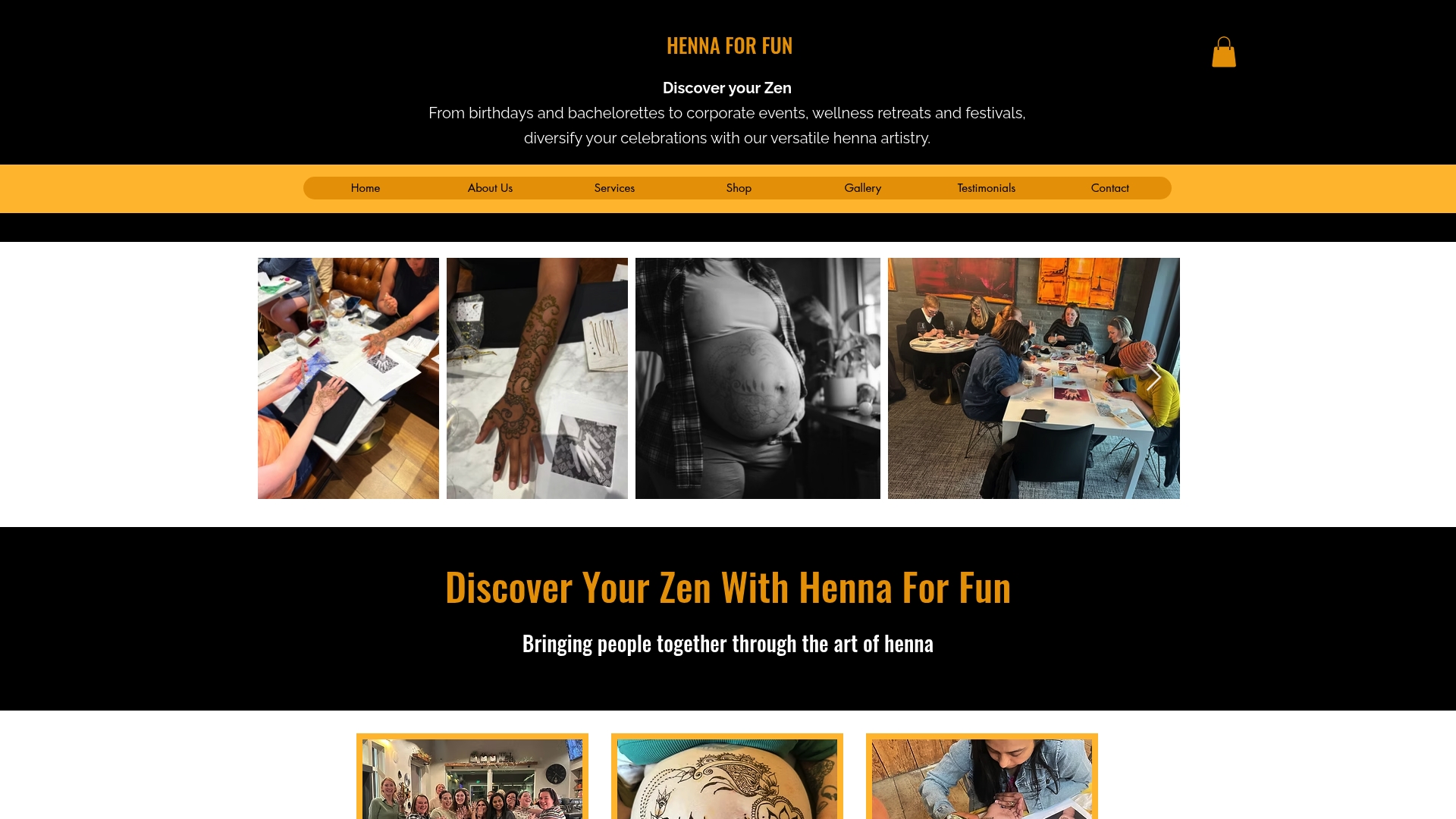
Packages start at $25 per participant for Basic and $35 per participant for Plus, with an additional hour at $85. You can also see what is coming up on our calendar of events, or visit our home page to get in touch.
A final planning checklist
Use this as a last pass about a week before the party:
Date, venue and guest count confirmed.
Artist booked, with time for the guest of honor and a plan for how many guests get designs.
Natural paste confirmed with the artist.
Well-lit henna corner with armrest seating, a tray, towels and hand pillows.
Food that works with dry or decorated hands, plus tea and water.
Playlist ready, with a mellow start and a livelier finish.
Activities for waiting guests: coloring sheets, games, a photo spot.
Aftercare cards printed.
A short note about the tradition, ready for the invitation or the station.
FAQ
How far ahead should I plan a henna party?
Give yourself at least a few weeks to settle the date, guest count and budget, then book your artist. For a wedding, plan the henna night one to three days before the ceremony so the stain has time to deepen. Busy seasons fill up, so book early.
How many artists do I need?
That depends on how many guests want henna and how detailed the designs are. Simple designs are quick, while a bridal design can take hours. Tell your artist your headcount and time window and ask what they recommend.
Is henna safe for guests?
Natural henna paste is the version to use. Avoid anything sold as black henna, because the FDA says it is often blackened with PPD, which can cause serious skin reactions. Guests with sensitive skin or allergies should do a patch test beforehand, and anyone with a reaction should see a doctor.
What should guests do while their henna dries?
Keep them seated comfortably with tea, snacks and something to do, such as mandala coloring sheets or a game. Avoid water and soap for up to 24 hours after removing the paste, and moisturize afterward with a natural oil or lotion.
Sources
Recommended
Comments