Start a Henna Business: Your U.S. Roadmap to First Booking

Yes — you can start a henna business in the United States right now. The fastest path is three moves: pick a service model (mobile visits, event booth, or private appointments), confirm what local permits your city or county requires, and source safe, natural henna supplies before you touch a single client.
There is no federal henna license. The U.S. Small Business Administration license and permit search tool is where you start for local rules. The FDA has flagged “black henna” products containing PPD (p-phenylenediamine) as unsafe for skin contact, so that sourcing check is non-negotiable from day one. Hennaforfun, based in the Pacific Northwest, offers private lessons, DIY kits, and event services that give new artists a practical shortcut to their first paid booking.
Your first three actions:
Pick a service model that fits your schedule, budget, and risk tolerance
Run a sourcing and safety check: read every ingredient label, and reject anything marketed as “black henna”
Use the SBA license and permit tool to identify local zoning, vendor, and body-art permit requirements before you book a public gig
Table of Contents
Which service model fits your goals and lifestyle?
Your launch model is the single biggest regulatory decision you will make. It determines what permits you need, how much insurance to carry, and how fast you can start earning. Here is how the main options break down.
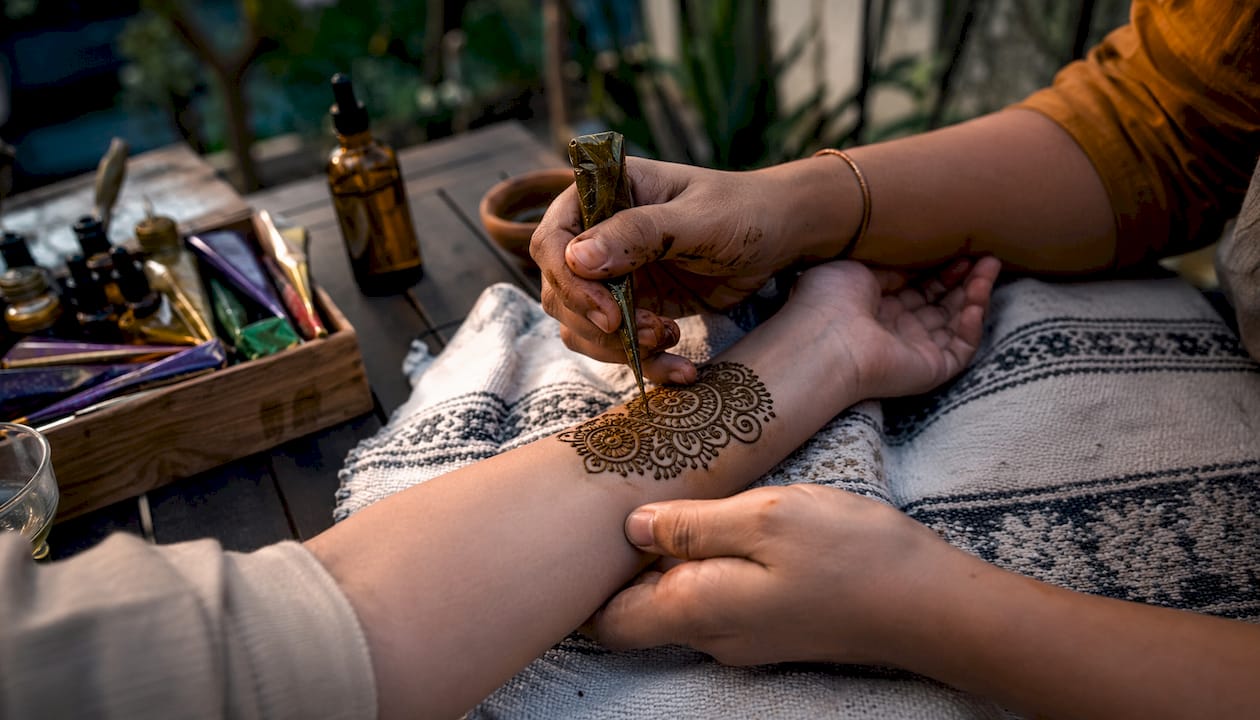
Mobile / home-visit artist: You travel to clients. Overhead is low, and you often need only a general business license to start. The trade-off is that every venue has its own rules, so you will spend time on pre-event logistics.
Event booth / festival: You set up at farmers markets, festivals, bridal fairs, or cultural events and serve walk-up clients. Throughput is high, income per event can be strong, but you need temporary vendor permits and proof of insurance at most venues.
Private appointment studio: Working from a dedicated space triggers zoning approval, possibly a Certificate of Occupancy, and sometimes a health or body-art inspection depending on your city. Higher overhead, but you control the environment completely.
Parties and workshops: You book a group event at a home, winery, or corporate venue and charge a flat event fee. This model scales well because one booking covers multiple clients, and it pairs naturally with add-on product sales.
Product sales (kits and cones): Selling pre-made cones or DIY kits online or at events adds passive revenue without adding appointment slots. You will need state sales tax registration if you sell physical products.
Model | Typical permits needed | Insurance level | Best for |
Mobile / home visits | General business license | General liability | Flexible schedules, low startup cost |
Event booth / festival | Vendor permit + business license | General + event liability | High volume, fast income |
Private studio | Business license + zoning + occupancy | General + professional liability | Repeat clientele, premium pricing |
Parties and workshops | Vendor or home-occupation permit | General liability | Group income, scalable bookings |
Product sales | Business license + sales tax registration | Product liability | Passive revenue, online reach |
A mobile or event-focused model minimizes fixed overhead but shifts the burden to venue rules and event logistics. If you want to test the market before committing to a studio, start mobile and add a workshop offering once you have a client base.
How do you learn henna and build a portfolio worth booking?
Training is where most beginners underinvest. Watching a few YouTube videos and buying a cone kit is not enough to charge confidently at a bridal fair. Here is a realistic path.
Training options:
In-person workshops: fastest way to get hands-on feedback; look for multi-day intensives that cover paste mixing, cone control, and design families
Private lessons: one-on-one instruction accelerates skill development faster than group classes; Hennaforfun offers private henna lessons in the Kirkland, Bellevue, and Snohomish area
Online courses: flexible and often more affordable; a good online henna class covers paste recipes, design libraries, and business basics
Mentorship: shadowing a working artist at real events teaches throughput, client management, and setup logistics that no course replicates
A practical practice plan before charging clients:
Week 1–2: daily 20-minute drills on paper, focusing on line consistency and pressure control
Week 3–4: move to skin (your own hands and willing friends), practicing small motifs: paisleys, florals, geometric fills
Month 2: build up to full-hand designs; photograph every session with good lighting
Month 3: attempt a full bridal-style forearm piece; time yourself to understand throughput
Portfolio-building tips:
Photograph designs at application, at peak stain (24–48 hours after removal), and at day 3–4 to show stain progression
Always get explicit permission before posting client photos
Post consistently on Instagram using Reels and time-lapse videos of the application process
Set up a Google Business Profile early, even before you take paid bookings, so reviews can accumulate
Pro Tip: Shoot your stain-progression photos in natural light against a neutral background. The contrast makes your work look dramatically better than a flash photo on a dark couch.
What supplies do you need and what will it cost?
A minimum viable kit does not require much, but quality matters more than quantity. Cheap henna paste produces weak stains, and a weak stain on a paying client’s wedding day is a reputation problem.
Essential supplies checklist:
Natural henna powder (body-art quality, tested for purity) or pre-made natural cones
Mixing ingredients: distilled water or lemon juice, white granulated sugar, and a skin-safe essential oil (lavender, tea tree, or cajeput are common choices)
Applicator cones or bottles with fine tips
Sealing spray or a sugar-lemon mixture for keeping the paste moist during application
Aftercare oil (coconut or olive oil) to share with clients post-removal
Sanitation supplies: hand sanitizer, disposable gloves, surface wipes
Display materials: design menu, price list, sample photos
Portable travel case or rolling bag
Optional upgrades:
Branded cones or custom-labeled kits for retail or gifting
Photo backdrop for consistent portfolio shots
Square, Stripe, or PayPal card reader for cashless payments at events
Printed aftercare instruction cards
Budget tier | Estimated cost | What it covers |
Starter (bare minimum) | $75–$150 | Henna powder or cones, basic mixing supplies, tips, sanitation |
Mid-range | $150–$400+ | Quality powder, pre-made cones, display materials, card reader, travel bag |
Pro setup | — | Premium supplies, branded materials, backdrop, insurance deposit, vendor permit fees |
Insurance and permit fees drive the jump from mid-range to pro. Budget those separately from supplies. Hennaforfun’s shop carries pre-made cones and DIY kits, which is a practical starting point if you want vetted supplies without sourcing from scratch.
How do you keep clients safe and avoid dangerous products?
Natural henna is generally safe, but rare sensitivities do occur, and “black henna” is a different product entirely. Getting this wrong creates liability, not just discomfort.
Basic hygiene checklist for every session:
Wipe down your work surface with a disinfectant wipe before each client
Use single-use applicator tips or thoroughly sanitize reusable tips between clients
Wash hands before and after each application; keep hand sanitizer visible
Store paste in a sealed container and refrigerate between events; discard paste that smells off or has changed color
Allergy and patch-test protocol:
Offer a patch test to any client who reports sensitive skin, eczema, or prior reactions to cosmetics
Apply a small amount of paste to the inner wrist or elbow crease; wait 24 hours before proceeding
Document client consent in writing, including any disclosed allergies
Provide printed or digital aftercare instructions: leave paste on 2–6 hours, avoid water contact for 12 hours, apply oil before washing
Sourcing red flags to watch for:
Any product labeled “black henna,” “jet black henna,” or “instant henna” should be rejected outright; these often contain PPD and other additives that cause severe allergic reactions
Ingredient lists that include “p-phenylenediamine,” coal tar dyes, or silver nitrate
Products with no ingredient list at all
Unusually dark paste that stains black within minutes rather than the natural orange-to-brown progression
Pro Tip: Ask every supplier for a Certificate of Analysis (COA) or third-party test results for their henna powder. Reputable suppliers provide this without hesitation. If a supplier cannot produce one, move on.
What are the U.S. legal requirements for a henna business?
There is no federal henna license in the U.S. What you need depends entirely on your city, county, and state. That variability is exactly why the SBA permit search is the right first stop, not a generic checklist from another state.
Common local requirements to check:
General business license (required in most U.S. cities)
Fictitious business name (FBN) filing if you operate under a name other than your legal name; some U.S. cities require this as a separate step
Temporary vendor permit for festivals, markets, or pop-up events
Home-occupation or zoning approval if you work from home
Body-art or cosmetology permit in states that regulate henna under those categories (check your state’s Department of Health or Board of Cosmetology)
Insurance:
Insurance is not always legally required, but experienced practitioners strongly recommend it and most event venues will ask for proof. General liability covers property damage and bodily injury claims. Professional liability (errors and omissions) covers claims related to your service itself, such as an allergic reaction. Ask any venue for their minimum coverage requirement before booking.
Taxes and banking setup:
Apply for an Employer Identification Number (EIN) through the IRS website, even as a sole proprietor; it keeps your business and personal finances separate
Register for state sales tax if you sell physical products like kits or cones
Open a dedicated business checking account before you accept your first payment
Track income and expenses from day one using a simple spreadsheet or accounting software like Wave (free) or QuickBooks
This article is general information, not legal or tax advice. Confirm current permit requirements and tax obligations with your local government offices or a qualified professional.
How should you price your henna services?
Pricing is where most beginners leave money on the table. Charging $5 for a small design attracts clients who will haggle over $10 next time. Price should reflect time, supplies, and travel from the start, not just what feels safe to charge.
Pricing models to consider:
Per-design: straightforward for walk-up clients at events; set clear size tiers (small, medium, large)
Hourly: works well for private parties where design complexity varies; typically $75–$150/hour depending on market and experience
Event package: flat fee for a set number of hours plus a travel fee; simplifies quoting and protects your time
Workshop: per-person fee for a group lesson; scales your hourly rate significantly
Product markup: sell cones or kits at 2–3x your cost to cover handling, packaging, and time
A simple cost-plus calculation: If a design takes 15 minutes, your supplies cost $2, and your target hourly rate is $80, the floor price for that design is $22 ($20 labor + $2 supplies). Add a travel fee if you drove more than 15 minutes. That math should anchor every price you set.
Service | Sample price range | Notes |
Small design (wrist, ankle) | $10–$25 | Entry-level; common at festivals |
Medium design (forearm, foot) | $25–$50 | Most popular at private events |
Full-hand design | $50 | Bridal prep, photoshoots |
Bridal session (both hands + arms) | $150–$400+ | Experience and market dependent |
Event package (2-hour minimum) | $150–$400+ | Flat fee + travel |
Group workshop (per person) | — | 6–12 participants typical |
Expert guidance consistently points toward differentiation over discounting: artists who package maternity henna sessions, bridal add-ons, and workshops command higher margins and attract clients who respect the craft. Tipping is common at events; mention it naturally but never pressure clients.
How do you find clients and manage bookings?
A polished portfolio and a Google Business Profile will do more for your first six months than any paid ad. Here is a prioritized playbook.
Local discovery tactics:
Set up a Google Business Profile immediately; it is free and shows up in local map searches for “henna artist near me”
Post on Instagram three to five times per week; Reels showing the application process consistently outperform static photos
List your services on local event directories and community Facebook groups
Pitch event organizers at farmers markets, bridal fairs, and South Asian cultural festivals with a one-paragraph email that includes your rate, a portfolio link, and your insurance status
Partner with wedding photographers, florists, and venues; they refer clients constantly and rarely have a henna artist on their preferred vendor list
Booking systems and contracts:
Use a simple booking tool like Calendly, HoneyBook, or Square Appointments to eliminate back-and-forth scheduling
Require a deposit (typically 25–50% of the total) to hold any date; this filters out low-commitment inquiries
Include a cancellation policy in every contract: full deposit forfeited within 48 hours of the event
Collect a brief intake form at booking: client name, event type, date, location, number of guests, and any known allergies
Where to find short-term gigs fast:
Farmers markets and weekend craft fairs: low barrier to entry, good for building volume and confidence
Bridal expos: higher-value clients, worth the booth fee once you have a polished portfolio
Wineries and private event venues: Hennaforfun’s Whenna Events model is a strong example of how venue partnerships create recurring bookings
Corporate events and team-building days: flat-fee packages work well here; HR departments often have event budgets
How do you run a smooth event and eventually scale?
Operational discipline at events is what separates a chaotic side hustle from a real business. Plan your setup time, know your throughput, and build in a buffer.
Event-day checklist:
Arrive 30–45 minutes before your start time for setup
Bring 20–30% more supplies than you expect to use
Set up signage with your price list and a design menu so clients self-select before sitting down
Keep a sanitation station visible: wipes, hand sanitizer, and a small trash bin
Have your payment terminal charged and tested before the first client
Pack a “just in case” bag: extra cones, backup tips, paper towels, and a small first-aid kit
Throughput planning by design complexity:
Design type | Time per client | Clients per hour (conservative) |
Small (wrist/ankle) | 5 minutes | 10 |
Medium (forearm/foot) | 12 minutes | 3–5 |
Full-hand | 25–40 minutes | 1–2 |
At a two-hour event focused on small-to-medium designs, a single artist can realistically serve 10–15 clients. Communicate that throughput to event organizers when you quote so expectations are set before the day.
Scaling paths:
Once you are consistently booked, add a second artist as a subcontractor rather than an employee; simpler tax treatment and flexible scheduling
Sell DIY henna kits and pre-made cones at events and online to generate revenue between bookings
Offer online lessons or recorded workshops as a low-overhead product that earns while you sleep
The first operational cost that rises when you scale is insurance; update your coverage before adding subcontractors or higher-volume venues
How Hennaforfun supports new artists: lessons, kits, and events
Hennaforfun is built for exactly this moment in your journey: you know you want to do this, and you need a shortcut to competence and your first paid gig.
What Hennaforfun offers new artists:
Private henna lessons in the Kirkland, Bellevue, and Snohomish area for one-on-one skill development
Group workshops and Whenna Events that model the event-booth experience from the inside
Pregnancy henna services as a high-value niche example new artists can study and eventually replicate
DIY kits and handmade cones available through the Hennaforfun shop, vetted for natural ingredients
Event services that new artists can observe or assist with to build real-world experience fast
Matching your goal to the right Hennaforfun resource:
Your goal | Best starting point |
Learn the craft quickly | Private lessons or online course |
Get a vetted starter kit | DIY kit or pre-made cones from the shop |
See a live event model | Attend or assist a Whenna Event |
Add a premium niche | Study the pregnancy henna service format |
Book your first paid gig | Use Hennaforfun’s event calendar for inspiration |
The Hennaforfun services page gives a full overview of current offerings and booking options.
Key Takeaways
Starting a henna business requires choosing the right service model, confirming local permits via the SBA, sourcing safe natural supplies, pricing for value, and booking your first gig with a polished portfolio and Google Business Profile.
Point | Details |
No federal license exists | Use the SBA permit tool to find your city and county requirements before vending publicly. |
Model drives compliance | Mobile work needs the fewest permits; a studio triggers zoning, occupancy, and health checks. |
Safety is non-negotiable | Reject all “black henna” and PPD products; document client consent and provide aftercare instructions. |
Price for value, not volume | Calculate cost-plus pricing from day one; event packages and workshops command better margins than per-design discounts. |
Hennaforfun accelerates your start | Private lessons, vetted kits, and Whenna Events give new artists hands-on experience and ready-to-use supplies. |
What running events actually teaches you about this business
The conventional wisdom for new henna artists is to practice more, charge less, and wait until you feel “ready.” That advice is wrong on two of those three counts.
Practice matters, but undercharging does not build confidence. It attracts clients who treat your work as a commodity, and those clients are the hardest to retain and the quickest to leave a bad review when a design takes longer than they expected. The artists who build sustainable businesses set a real price from the first paid booking and let the portfolio justify it.
The other thing that classroom training rarely covers is client intake. An allergic reaction at a public event is not just a medical issue; it is a business-ending story if you have no documentation. A two-minute intake conversation, a signed consent note, and a printed aftercare card are not bureaucratic overhead. They are the difference between a one-time incident and a liability claim.
The throughput-versus-complexity tension is the hardest operational lesson. At a busy festival booth, the temptation is to say yes to every elaborate request. The practical reality is that a 40-minute full-hand design during a rush creates a line of frustrated clients who leave without buying. Setting a clear design menu with time-appropriate options is not limiting your art. It is running a business.
Hennaforfun: your direct path from learning to first booking
If you want to skip the trial-and-error phase, Hennaforfun offers the clearest shortcut available for aspiring henna artists in the Pacific Northwest and beyond.
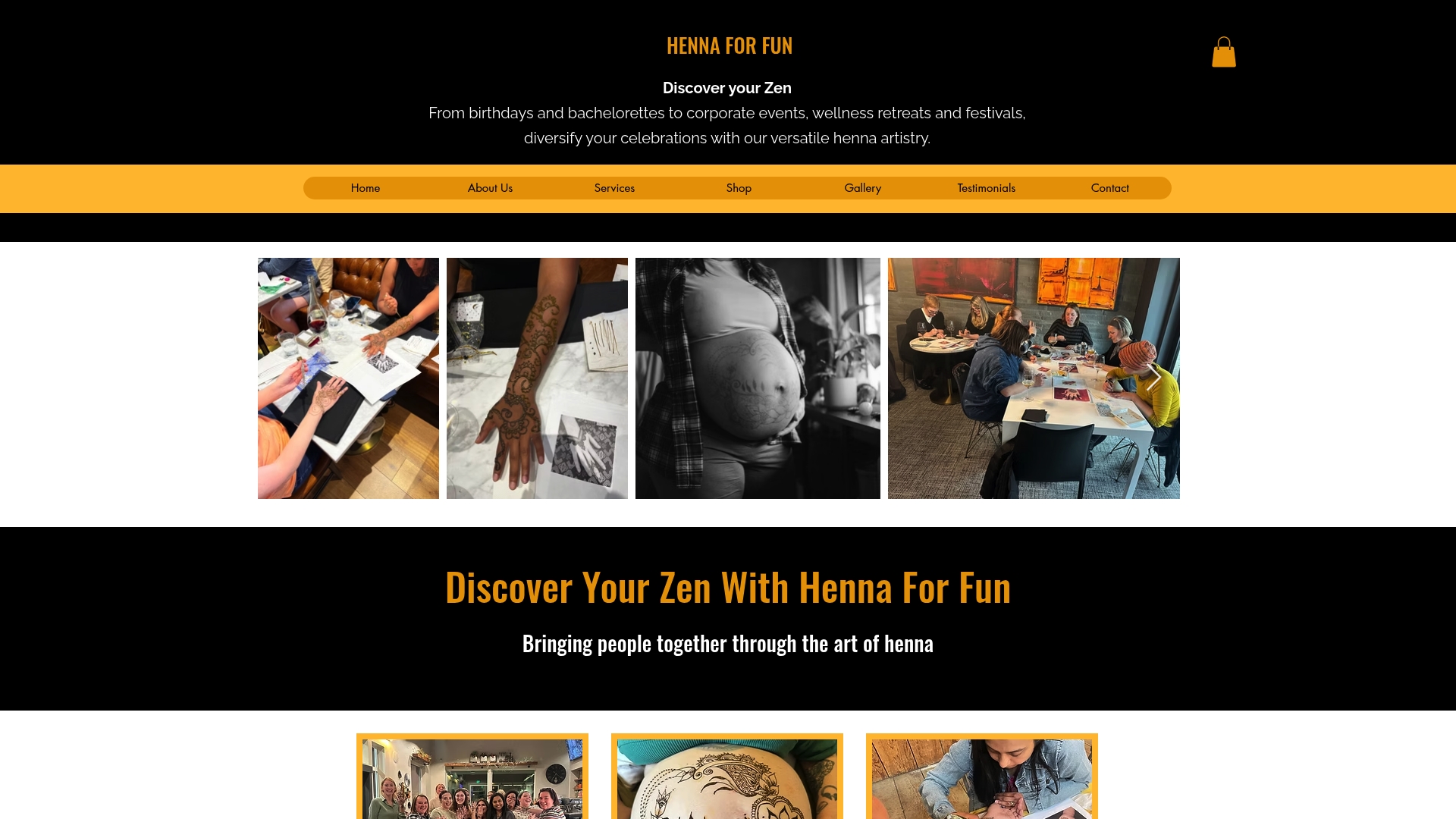
Book a private lesson and you get one-on-one instruction tailored to your current skill level, whether you are holding a cone for the first time or refining your technique before a bridal booking. For artists who want to start selling immediately, the shop carries handmade cones and DIY kits made with natural ingredients, so you are not guessing about supply quality on your first paid gig. And if you want to see what a well-run henna event actually looks like, Hennaforfun’s Whenna Events model at wineries, homes, and corporate venues is a live template you can study and adapt.
The next step is simple: visit the Hennaforfun services page to book a lesson, order a starter kit, or inquire about event support. Most new artists who commit to a private lesson are ready for their first paid booking within four to six weeks.
Useful sources and quick references
These are the primary references used throughout this article, organized by what they help you do.
Legal and permit research:
U.S. Small Business Administration — Licenses and Permits: start here for local zoning, vendor, and body-art permit searches
A Touch of Business — Henna Tattoo Business Guide: covers business registration, EIN, sales tax, and model-specific compliance steps
Gopi Henna — How to Start a Henna Business: FBN filing requirements and insurance guidance
Safety and supply vetting:
Henna King — How to Start a Henna Tattoo Business: PPD and black henna warnings, pricing guidance, and supply sourcing tips
Pricing and client strategy:
Hennapreneur — How to Attract Quality Clients: value-based pricing, client targeting, and building a differentiated brand
Learning and supplies (Hennaforfun):
Private lessons: one-on-one instruction in the Kirkland/Bellevue/Snohomish area
Shop for cones and kits: vetted natural supplies for new artists
Services overview: full list of event, lesson, and product offerings
Recommended
Comments