18 Hands On Workshop Ideas U.S. Organizers Can Run This Month
The strongest hands-on workshop ideas fall into four categories: creative craft, culinary, collaborative build/challenge, and skills labs. If you need a quick, versatile pick today, a group painting session or a low-fi maker challenge (think cardboard tower races) will work for almost any budget, group size, or venue. Every idea below comes with runtime, materials, and group-size notes so you can plan a session in the next twenty minutes, not next week.
TL;DR:
Hands-on workshops are most effective for team bonding, relationship building, and applied skills, rather than strict compliance or technical instruction.
Group size, duration, and delivery setup influence which workshop type suits your event, with larger groups benefiting from station-based crafts and small groups excelling in skills labs.
Planning logistics like space, safety, allergies, and cleanup beforehand is essential to prevent issues that could spoil the session.
Starting small with clear objectives and focusing on fun and experimentation increases participant engagement and workshop satisfaction.
Hybrid sessions require advance shipment of materials and dedicated facilitators to ensure remote participants stay involved and the experience runs smoothly.
Table of Contents
What Makes a Workshop “Hands-On,” and When Should You Use One?
Workshop Types and Formats: Matching the Session to Your Goal
Facilitation, Icebreakers, and the Logistics That Make or Break the Session
Running Workshops in Small Groups, Short Slots, and Hybrid Setups
Three Things I’ve Learned Watching Hands-On Workshops Succeed (and Fail)
What Makes a Workshop “Hands-On,” and When Should You Use One?
A hands-on workshop swaps passive listening for active doing. Participants get a short burst of instruction, then spend most of the session working with their hands, testing ideas, and getting immediate feedback rather than sitting through slides. That combination of brief expert input plus collaborative tasks is what Instruqt’s glossary uses to define the format, and it’s the reason these sessions outperform lecture-style training for skill retention and team bonding.
The mechanism is simple. When people build, mix, or draw something together, they solve small problems in real time, negotiate roles without being told to, and remember the experience because they made something. A slide deck rarely produces any of that. Lecture format transfers information; hands-on format builds relationships and muscle memory at the same time.
That makes hands-on workshops the right call for specific occasions, not every occasion:
Company retreats where the goal is bonding, not just information transfer
New-hire onboarding weeks, when you want people forming relationships fast
A single standout activity at a multi-day conference
Dedicated team-building days with no other agenda competing for attention
Off-sites where leadership wants candid conversation without a formal meeting structure
Skip the format when the real goal is compliance training or dense technical instruction. Hands-on works best when the objective is connection, creativity, or applied practice, not memorization of policy.
Workshop Types and Formats: Matching the Session to Your Goal
Five broad categories cover almost every hands-on workshop you’ll plan, and each one produces a different kind of outcome.
Creative craft workshops (painting, mosaic, pottery, henna) produce a tangible object participants keep. Culinary and mixology workshops produce a shared meal or drink and lean heavily on teamwork within small stations. Collaborative build/challenge workshops (scavenger hunts, tower-building races, escape-room style puzzles) produce a completed task or a winner, and they’re the fastest way to force cross-department collaboration. Skills labs (coding crash courses, design sprints, public-speaking drills) produce a new capability participants can use on the job. Wellbeing workshops (breathing techniques, journaling, chair yoga) produce a calmer group, useful as a palate-cleanser between heavier sessions.
Cvent’s rundown of popular workshop categories groups creative arts, culinary experiences, and build challenges together precisely because they share the same appeal: problem-solving, collaboration, and stress relief in one package.
Three variables decide which format actually fits your event:
Duration: micro-sessions run 30 to 45 minutes; standard workshops run 90 minutes to 2 hours; deep-skill labs often need a half day or longer
Group size: creative crafts scale well past 40 people with enough stations; skills labs and design sprints work best under 20 so everyone gets a turn
Delivery structure: station-based setups (rotate every 15 minutes) suit large, mixed-skill groups; single-table formats suit small teams working toward one shared output
Innovation-focused sessions often borrow structured formats like design sprints or hackathons, which SessionLab notes work well because they’re timeboxed and end in a concrete proposal or prototype rather than an open-ended discussion. For hybrid audiences, the same content usually survives the jump to virtual as long as remote participants get a physical kit shipped ahead of time and someone other than the main facilitator is watching the chat.
18 Hands-On Workshop Ideas You Can Run This Month
1. Group Painting Party
A guided canvas or watercolor session where everyone paints the same reference image at their own pace, no artistic background required. Time: 90 minutes. Group size: 10 to 40. Materials: canvases, acrylic paint sets, brushes, drop cloths. Facilitator role: walk the room offering technique tips, not corrections.
2. Henna Art Workshop
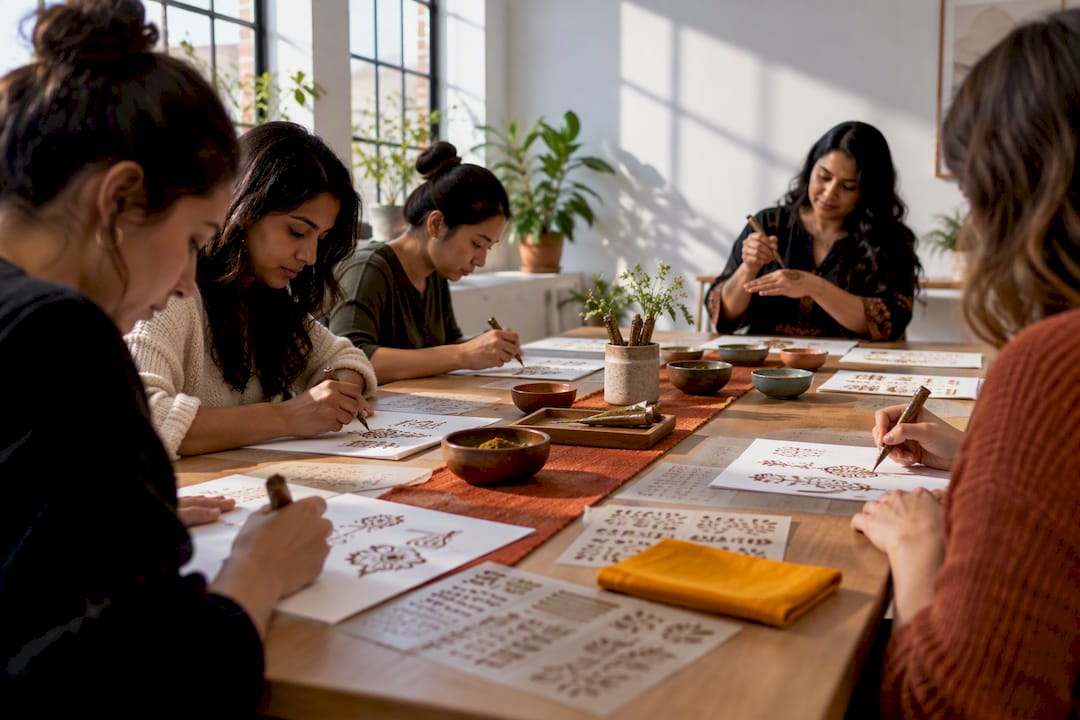
A henna artist demonstrates traditional patterns, then participants practice on paper before applying simple designs to each other’s hands. Time: 60 to 90 minutes. Group size: 8 to 25. Materials: henna cones, stencils, practice paper, aftercare cream. Facilitator role: demonstrate slowly and circulate for one-on-one help, since hand steadiness varies a lot by person.
3. Cocktail or Mocktail Mixing Class
Small teams compete to build the best original drink from a shared bar cart of spirits, mixers, and garnishes. Time: 75 minutes. Group size: 12 to 30. Materials: shakers, jiggers, ice, a rotating garnish station. Facilitator role: set flavor-pairing ground rules up front so teams don’t just dump sugar into everything.
4. Terrarium or Succulent Building
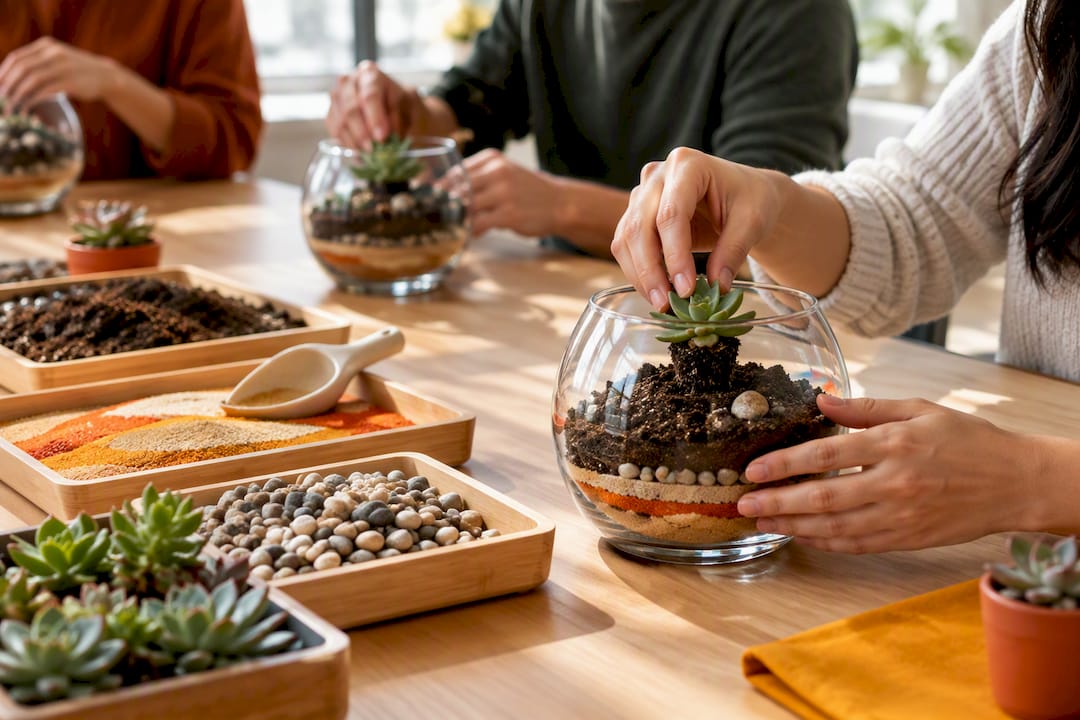
Participants layer soil, rocks, and small plants into a glass container to take home. Time: 60 minutes. Group size: 10 to 50. Materials: glass jars, potting soil, succulents, decorative sand. This is one of the easiest workshops to scale because stations don’t need to interact with each other.
5. Soap or Candle Making
Melt-and-pour bases let participants add scent and color without any dangerous equipment. Time: 75 minutes. Group size: 10 to 30. Materials: melting stations, fragrance oils, molds, colorants. Facilitator role: manage the melting queue so people aren’t standing around waiting.
6. Cardboard Tower Challenge
Teams get identical kits of cardboard, tape, and string and race to build the tallest freestanding structure. Time: 45 minutes. Group size: 15 to 60, in teams of four to six. Materials: cardboard sheets, masking tape, scissors, a measuring tape for judging. Tactile, competitive, and cheap. That combination is exactly why Eventbrite lists tangible-output activities as reliable engagement boosters.
7. Corporate Scavenger Hunt
Teams solve clues around the venue or neighborhood, photographing proof at each checkpoint. Time: 60 to 90 minutes. Group size: any, in teams of five to eight. Materials: clue sheets, phones or cameras, a shared submission channel. Facilitator role: stage a roaming “help desk” team in case a clue stumps everyone.
8. Design Sprint Mini-Session
A compressed version of the classic design sprint: define a problem, sketch solutions individually, then vote and prototype as a group. Time: 3 hours (can run as a half day). Group size: 6 to 16. Materials: sticky notes, dot stickers for voting, whiteboards or large paper. Best suited to teams actually trying to solve a live business problem, not a generic icebreaker crowd.
9. Beginner Coding Crash Course
Participants build a simple website or app feature using a no-code or low-code tool, working in pairs. Time: 2 hours. Group size: 8 to 20. Materials: laptops, Wi-Fi, a pre-built starter template. Facilitator role: have a second helper circulate, since debugging one-on-one eats time fast.
10. Photography Walk and Edit
Small groups shoot a themed photo set around the venue, then reconvene to pick and lightly edit their favorites together. Time: 90 minutes. Group size: 10 to 25. Materials: phones or cameras, a shared photo album link. Low-cost and works outdoors or indoors.
11. Pottery Wheel or Hand-Building Session
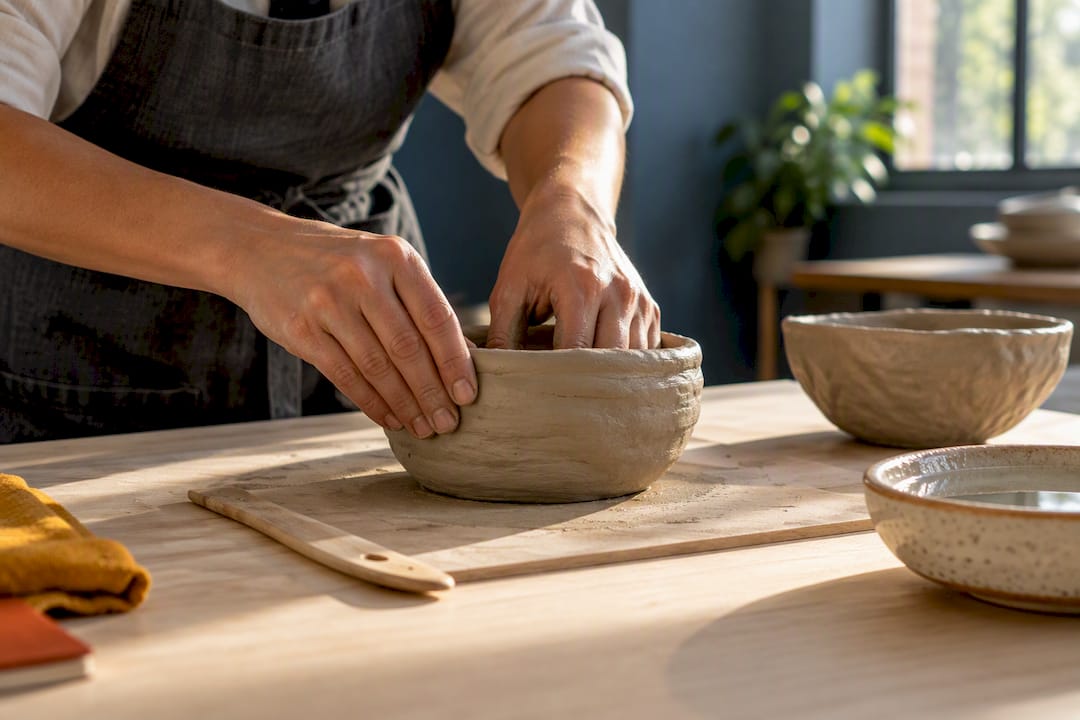
A ceramics instructor teaches basic wheel throwing or hand-coiling techniques for a simple bowl or mug. Time: 2 hours. Group size: 6 to 15 (limited by wheel or table access). Materials: clay, wheels or work tables, aprons. Runs slower than most crafts, so build in extra time for firing logistics if pieces are being glazed later.
12. Escape Room Puzzle Build
Teams design and physically build a mini escape-room puzzle for another team to solve, then swap. Time: 2 hours. Group size: 12 to 40, in teams of five. Materials: locks, boxes, props, printed clue templates. Doubles as a creativity exercise and a competition.
13. Cooking Class With a Shared Meal
Teams each prep one course of a meal, then everyone sits down together to eat what they made. Time: 2 to 3 hours. Group size: 10 to 30. Materials: cooking stations, ingredients, serving dishes. Facilitator role: stagger prep timing so all courses finish close together.
14. Improv or Storytelling Workshop
A trained facilitator runs short improv games that build listening and quick-thinking skills without any performance pressure. Time: 60 minutes. Group size: 8 to 25. Materials: none beyond open floor space. Works especially well as a warm-up before a heavier working session.
15. Public Speaking Drill Lab
Participants deliver a 90-second impromptu talk to a small group, get quick peer feedback, then repeat with adjustments. Time: 90 minutes. Group size: 6 to 12 per breakout. Materials: a timer, a topic list, feedback slips. Best for leadership development tracks, not general team bonding.
16. Journaling and Reflection Workshop
A guided prompt sequence walks participants through short writing exercises tied to goal-setting or gratitude. Time: 45 minutes. Group size: any. Materials: journals, pens, printed prompts. A good low-energy closer after a physically active session.
17. Trivia or Puzzle-Building Challenge
Teams build their own trivia round for a rival team, based on a theme you set (company history, pop culture, industry facts). Time: 60 minutes. Group size: 10 to 50. Materials: index cards, a buzzer app or bell, a scoreboard. Cheap, fast to set up, and needs almost no cleanup.
18. Chair Yoga or Breathing Technique Session
A short instructor-led session focused on stress relief, doable in office clothes without a mat. Time: 30 minutes. Group size: any. Materials: none required, chairs optional. Works as a mid-conference reset between denser sessions.
The scalable options here, terrariums, painting, trivia, and cardboard towers, handle large groups with minimal facilitator strain. The skills labs and public-speaking drills work better small, capped around 15 to 20, because feedback quality drops fast once a facilitator is stretched across too many people.
Facilitation, Icebreakers, and the Logistics That Make or Break the Session
Even a great idea falls apart with sloppy setup. Icebreakers matter more than most organizers think, but only when they’re matched to the goal. A short, low-pressure warm-up like Icebreaker Bingo or a rapid “72 Seconds of Fun” round works well right before a hands-on task, according to SessionLab’s icebreaker guidance, because it lowers social friction without eating into workshop time. Pick icebreakers that map to your actual objective. A connection-focused icebreaker (two truths and a lie, partner interviews) suits a bonding day. An ideation-focused icebreaker (rapid brainstorm rounds) suits a skills lab or design sprint, a distinction Figma’s icebreaker resource library makes explicit when sorting activities by goal.
Room setup depends on format. Station-based crafts need round tables spaced for elbow room and a clear supply-restock path. Build challenges need open floor space and enough separation between teams that nobody can eavesdrop on strategy.
A short safety and accessibility checklist prevents most on-site problems:
Confirm any sharp tools (craft knives, scissors) have safer alternatives available for participants who request them
Ask about allergies in advance for any culinary or scented workshop (soap making, cooking classes)
Offer seated alternatives for standing or floor-based activities
Keep noise-sensitive options nearby for sensory-sensitive participants during loud challenges
Post clear cleanup zones so the venue turnover doesn’t run long
Debrief the session with two or three quick questions: what surprised you, what would you change, what’s one thing you’ll use again. Facilitators who lean into process over product, praising effort and experimentation rather than judging the final output, get more honest participation, a point backed by research on process versus product in creative settings.
Pro Tip: Build in a micro-checkpoint every 15 to 20 minutes during longer creative sessions, just a quick “show your neighbor what you’ve got so far.” It keeps momentum up and stops the comparison spiral that kills confidence in slower participants.
How to Choose the Right Workshop for Your Group
Start with five questions before you look at a single vendor:
What’s the actual objective? Bonding, skill-building, and stress relief call for different formats entirely.
How comfortable is this group with physical or creative risk? A team that’s never done anything artistic will resist pottery wheels faster than a scavenger hunt.
What’s the real budget per head? Materials-heavy crafts (pottery, henna, soap making) cost more per person than a cardboard challenge.
What does the venue actually allow? Confirm floor space, water access, and whether open flame (candle making) is permitted.
What does success look like afterward? A tangible takeaway, a completed challenge, or a new skill each point toward a different category.
When vetting a facilitator or vendor, ask direct questions: How many people have you run this exact format for? What’s included in the quoted price, materials, cleanup, setup time? What happens if the group is smaller or larger than expected on the day? Red flags include vague pricing, no sample agenda, and facilitators who can’t describe what happens if something goes wrong mid-session.
Cost drivers worth asking about up front include material intensity (pottery and henna cost more than trivia), facilitator headcount needed for the group size, travel fees if the session is off-site, and whether cleanup is billed separately. A workshop that looks cheap per head can get expensive fast once you add setup and teardown time.
Running Workshops in Small Groups, Short Slots, and Hybrid Setups
A 30 to 45 minute micro-workshop needs ruthless editing. Cut the warm-up icebreaker down to sixty seconds, skip any activity with a multi-step setup, and pick one clear output rather than several. A trivia round, a quick journaling prompt, or a single-round design challenge all fit this window comfortably.
Small groups (under eight people) actually need more facilitator attention per person, not less, since there’s nowhere to hide and quieter participants need direct encouragement. Assign multiple roles per participant, note-taker, timekeeper, presenter, so everyone stays engaged instead of watching one dominant personality run the show.
Hybrid and virtual delivery works when you plan for it specifically, not as an afterthought:
Ship physical kits to remote participants at least a few days ahead, never the morning of
Assign a co-facilitator whose only job is watching chat and breakout rooms
Test the tech setup, screen share, breakout assignments, camera angles, the day before
Simplify supply lists for remote kits since you can’t troubleshoot a broken tool over video
That kit-plus-co-facilitator combination is the single biggest factor separating hybrid sessions that work from ones that quietly fall apart in silence.
How Henna For Fun Runs Hands-On Corporate Workshops
Henna For Fun’s corporate workshops follow a repeatable structure built from running henna sessions at wineries, offices, and private events. A typical 90-minute session looks like this:
0 to 10 minutes: Welcome and a quick henna history demo to lower first-timer hesitation
10 to 25 minutes: Guided practice on paper before anyone touches actual skin
25 to 75 minutes: Rotating one-on-one application time with the artist while others socialize
75 to 90 minutes: Group photos and aftercare instructions
Lessons learned across repeated bookings: prep extra cones since usage runs higher than organizers expect, pace application slots so no one waits more than a few minutes, and offer a stencil option for participants who want a design without freehand artwork. Post-event feedback usually centers on wanting more one-on-one time, which is why smaller group sizes tend to score higher satisfaction than oversized ones.
Three Things I’ve Learned Watching Hands-On Workshops Succeed (and Fail)
Start smaller than feels necessary. Organizers consistently overestimate how much a first-time group can handle in ninety minutes, and a workshop that runs long because the scope crept feels worse than one that ends five minutes early with everyone satisfied.
Prioritize fun over polish. The workshops people talk about months later aren’t the ones with the most professional output, they’re the ones where people laughed, got a little messy, and left with a story. A slightly imperfect painting beats a rigid, over-instructed one every time.
Plan cleanup before you plan the activity, not after. The single biggest predictor of whether an organizer runs a second workshop is whether the first one left them scrubbing a table at 9 p.m. Budget the time and the hands for teardown the same way you budget for setup.
Collect feedback with two questions, not twenty, and actually read the answers before booking the next session. Iteration beats a perfect first attempt every time.
— Angana
Book a Turnkey Hands-On Workshop With Henna For Fun
If you’ve read this far, you already know the hardest part of a hands-on workshop isn’t the idea, it’s the execution: sourcing materials, briefing a facilitator, and hoping the group actually engages. Henna For Fun removes that risk by running the whole session for you, artist, supplies, and structure included, so you show up and participate instead of managing logistics.
Corporate teams book the dedicated Corporate Workshops package for full-group henna sessions with built-in facilitation. For open-format events like retreats or offsites, the Whenna Events packages start at $25 per participant for the Basic tier, with Premium options available for groups wanting personalized designs. Expecting parents planning a celebration can also look at the pregnancy henna services, starting at $89 for baby shower packages. If your team wants to build the skill themselves rather than book an artist, the private henna lessons run from $111 for a 3-day course.
Check open dates and request a quote through the Corporate Workshops page to get your session on the calendar.
Sources
For deeper templates and format ideas beyond this list, see SessionLab’s workshop idea library, Cvent’s workshop event guide, Instruqt’s hands-on workshop definition, and Eventbrite’s engagement tips. For group-bonding formats beyond crafts, the Italian on Waiheke’s guide to bonding experiences covers additional angles worth adapting.
FAQ
What are some creative ideas for a hands-on workshop?
Painting parties, henna art sessions, terrarium building, and soap or candle making top the list because they produce a tangible takeaway participants keep, which reinforces memory of the event according to Eventbrite’s engagement research. Henna For Fun runs several of these as ready-to-book event packages.
What are good topics for a corporate workshop?
Team bonding, applied skill-building (design sprints, coding basics), and stress relief are the three topics that consistently justify a hands-on format over a lecture. Pick the topic based on your actual objective, connection versus capability versus recovery, rather than picking whatever looks trendiest.
What activities work best for a small workshop group?
Design sprints, public speaking drills, and journaling sessions all work well under 15 people, since smaller groups need more facilitator attention per person, not less. Multi-role assignments (note-taker, timekeeper, presenter) keep quieter participants engaged when there’s nowhere to blend into a crowd.
How do I pick the right hands-on workshop for my team?
Answer five questions first: your objective, your group’s comfort with creative risk, your per-head budget, your venue’s constraints, and what success looks like afterward. A vendor who can’t give you a clear agenda or pricing breakdown when asked is a red flag worth walking away from.
What does a corporate henna workshop cost?
Henna For Fun’s group event packages start at $25 per participant for the Basic tier through Whenna Events, with Premium design options available at higher tiers. Corporate workshop pricing is available on request through the Corporate Workshops page.
Recommended
Comments